The Atomic Anarchist Returns: Kazuhiko Hasegawa’s ‘The Man Who Stole the Sun’ Receives Stunning 4K Restoration

By Alex Billington | September 27, 2026
"A movie like this will never be made again!" The sentiment is not merely promotional hyperbole; it is a sober assessment of one of the most audacious, subversive, and technically daring films ever produced in the history of Japanese cinema. As Toho officially unveils a brand new 4K restoration trailer for The Man Who Stole the Sun (Taiyō o Nusunda Otoko), a new generation of cinephiles is about to discover why this 1979 masterpiece has remained a whispered legend among film scholars and cult enthusiasts for nearly five decades.
Returning to Reiwa-era screens this October—coinciding almost exactly with its 47th anniversary—the film arrives not just as a piece of nostalgia, but as a chillingly relevant exploration of power, individual agency, and the terrifying fragility of the state.
The Premise: A High-Stakes Game of Nuclear Poker
The narrative of The Man Who Stole the Sun is as absurd as it is gripping. It follows Makoto Kido (played by the legendary Kenji Sawada), a lackluster high school science teacher who finds himself the constant target of his students’ ridicule. Kido is an ordinary man living an invisible life, until a harrowing school bus hijacking changes his perspective on the world.
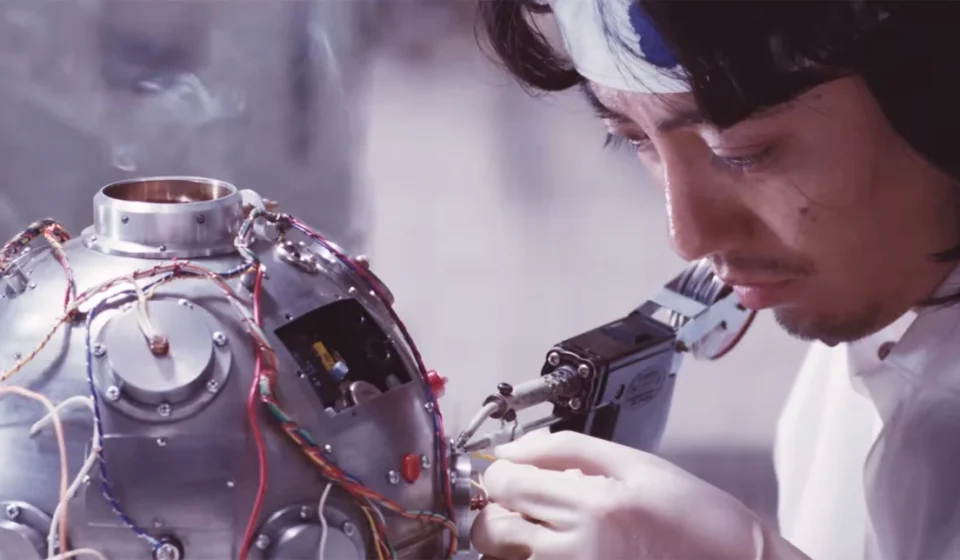
Driven by a combination of existential boredom and a sudden, dark enlightenment, Kido decides to perform the ultimate act of rebellion: he builds an atomic bomb in his cramped apartment. What follows is not a typical thriller, but a psychological tug-of-war between Kido and the relentless police inspector played by the iconic Bunta Sugawara. Kido doesn’t want money, fame, or political power in the traditional sense; he wants to hold the Japanese government hostage to his own whims, effectively declaring war on the state. It is a premise that captures the frantic, nihilistic energy of the late Japanese New Wave, blending dark humor with genuine, heart-pounding suspense.
Chronology: From 1979 to the 4K Era
To understand the weight of this re-release, one must look at the timeline of the film’s existence:

- October 6, 1979: The film premieres in Japan. Directed by Kazuhiko Hasegawa, it immediately sparks a sensation, praised for its guerrilla filmmaking style and provocative subject matter.
- The 1980s–2010s: The film gains a global cult following, often passed around via grainy VHS tapes and bootleg DVDs. It is cited as a major influence on directors who appreciate the "gonzo" approach to political thrillers.
- January 2026: Kazuhiko Hasegawa, a pivotal figure in Japanese cinema, passes away. The loss of the director adds a layer of solemnity and reverence to the upcoming restoration.
- October 16, 2026: Toho schedules the wide 4K theatrical re-release in Japan, marking 47 years since its debut.
The restoration process, overseen by Toho, has been described as a "rebirth," bringing the film’s gritty, Tokyo-soaked visuals into sharp relief for modern projection systems. The 4K scan manages to preserve the intentional grain and raw energy of Hasegawa’s vision while clarifying the complex lighting and frantic action sequences that defined the film’s aesthetic.
Supporting Data: The Talent Behind the Madness
The film is the second and final directorial feature from Kazuhiko Hasegawa, following his 1976 work The Youth Killer. While his filmography is small, his impact is immense. The production of The Man Who Stole the Sun was a collaborative effort of immense talent:
- The Screenplay: Written by Leonard Schrader and Kazuhiko Hasegawa. Leonard, the brother of legendary filmmaker Paul Schrader, was a significant force in bridging American sensibilities with Japanese storytelling (also noted for his work on The Yakuza and Mishima: A Life in Four Chapters).
- The Cast: The film features a powerhouse ensemble. Beyond Kenji Sawada’s transformative performance as Kido and Bunta Sugawara’s commanding turn as the inspector, the cast includes Kimiko Ikegami, Kazuo Kitamura, Shigeru Kamiyama, Kei Sato, Yunosuke Ito, Morio Kazama, Toshiyuki Nishida, and Yutaka Mizutani.
- The Production: Produced by Mataichiro Yamamoto and Kei Ijichi, the film was famous for its guerrilla-style filming. The crew often operated without the extensive permits required today, capturing a version of Tokyo that feels lived-in, dangerous, and overwhelmingly kinetic.
Official Responses and Cultural Impact
Toho’s official marketing campaign for the 4K re-release emphasizes that the film is "born of extraordinary passion and madness." The official website, launched specifically for the 4K initiative, highlights the technical achievements of the restoration, noting that the color grading was calibrated to match the original laboratory prints from 1979.
Critics who have had early access to the restoration have noted that the film feels remarkably contemporary. In an age where digital surveillance and state security are subjects of constant debate, Kido’s decision to build a weapon of mass destruction in his own home serves as a terrifying metaphor for the democratization of violence.
"This isn’t just an old movie," says one Tokyo-based film historian. "It is a time capsule of a Japan that was rapidly modernizing and, in the process, losing its mind. The 4K restoration brings out the sweat, the grime, and the manic look in Kenji Sawada’s eyes. It’s an essential watch."
Implications: Why It Matters Now
The decision to restore The Man Who Stole the Sun in 4K is part of a larger trend in global cinema to preserve "guerrilla" masterpieces before their original negatives degrade. However, this specific film holds a unique place in the canon of anti-establishment cinema.

The Guerrilla Filmmaking Legacy
One of the most significant implications of this re-release is the spotlight it places on the "guerrilla" technique. Hasegawa’s ability to shoot scenes in busy Tokyo intersections, subway stations, and government districts without modern logistical hurdles is something that would be effectively impossible in 2026. This film acts as a record of a bygone era of production, where the chaotic energy of the streets was part of the film’s texture.
The Political Allegory
The film’s central question—what happens when the individual decides to act as a sovereign power against the state?—remains as potent today as it was in the late 70s. While nuclear proliferation is the literal subject, the thematic core is about the alienation of the modern citizen. Kido is not a villain in the classical sense; he is a byproduct of a society that ignored him until he made himself impossible to ignore.
The Loss of a Visionary
With the passing of Kazuhiko Hasegawa earlier this year, this re-release serves as a final bow for the director. It provides an opportunity for audiences who only knew him by reputation to engage with his work on the big screen, as intended. It is a reminder that the Japanese New Wave wasn’t just about high-concept art; it was about visceral, dangerous, and deeply human storytelling.
Conclusion: A Must-See Event
As of now, the 4K restoration is confirmed for Japanese cinemas beginning October 16th, 2026. While an international distribution deal has yet to be finalized, the buzz surrounding the release is palpable. For fans of thrillers, sci-fi, and historical cinema, The Man Who Stole the Sun is a non-negotiable entry on the "to-watch" list.
It is rare to see a film that is simultaneously a tense cat-and-mouse thriller, a black comedy, and a profound existential tragedy. By bringing this masterpiece into the 4K era, Toho has ensured that the "madness" of 1979 will continue to haunt and inspire audiences well into the future. If you have the chance to see it, do not hesitate—films like this really will never be made again.
For more information on showtimes and the history of the production, visit the official The Man Who Stole the Sun 4K website.