
The Midlife Reckoning: Why Sharon Horgan’s ‘Youth’ Is the Defiant Comedy We Need

"When did it all stop being fun?"
This singular, haunting question serves as the heartbeat of Youth, the latest HBO series from the brilliant mind of Sharon Horgan. For Horgan, who has spent decades dissecting the messy, often excruciating transition into adulthood, this inquiry isn’t just a line of dialogue—it is a thematic North Star. As we follow Alex, a fifty-something publishing associate and single mother, we are invited to witness a midlife crisis that feels less like a cliché and more like an urgent, necessary reclamation of the self.
The Evolution of Horgan’s Anti-Heroines
To understand the stakes of Youth, one must look at the blueprint Horgan has been sketching for years. Her career has been defined by characters standing at the precipice of "expected" life choices, only to find themselves paralyzed by the looming specter of mediocrity.
In her breakout series Pulling, Horgan introduced us to a protagonist who famously bailed on her long-term fiancé simply because she couldn’t stomach the predictable, beige future stretching out before her. In Catastrophe, co-created with the inimitable Rob Delaney, she navigated the volatile intersection of a frivolous fling and the weight of lifelong commitment. Even in Bad Sisters, the tone took a darker, more murderous turn—a black comedy where five siblings unite to eliminate a toxic in-law, proving that the struggle to protect one’s joy can lead to truly extreme measures.
Even when she wasn’t on screen, as with the HBO series Divorce, Horgan’s fingerprints were everywhere. She possesses a unique, almost surgical ability to peel back the layers of a domestic union that has lost its vitality, asking the audience: What do we do when the joy has evaporated, and we’ve forgotten how to conjure it back?
A Chronology of Crisis: The Premise of ‘Youth’
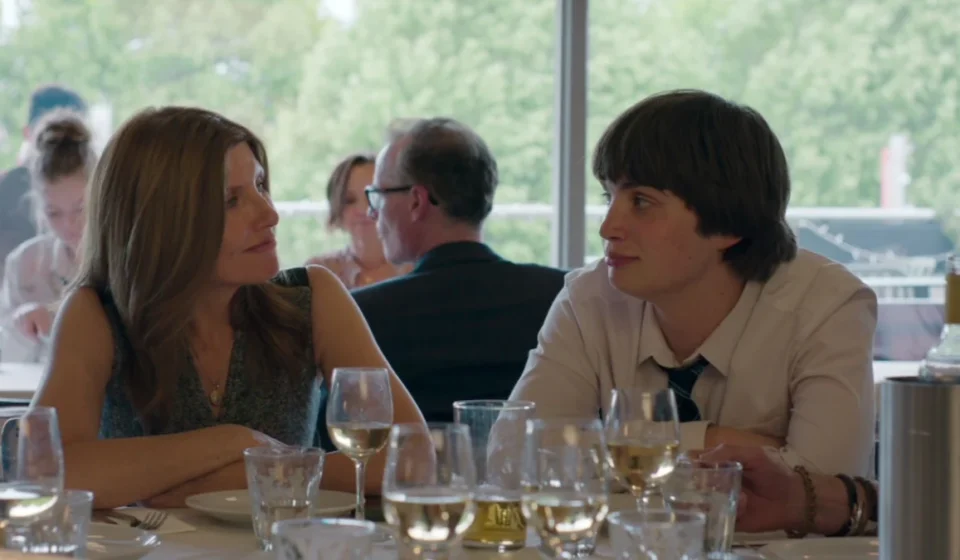
The narrative of Youth begins with a cruel bait-and-switch. We meet Alex at a moment of transition; her son, Ruari (played with quiet intensity by Aran Murphy), is set to leave for university. For any parent, this is a milestone, but for Alex, it represents a long-awaited horizon. It is the moment she has been promised—the freedom to pivot back to her career, explore the dating scene, and finally evolve into the person she put on hold for her child.

But the universe, as it often does in Horgan’s world, has other plans.
Ruari returns home, unannounced and uncommunicative. Simultaneously, Alex experiences a physical manifestation of her mounting stress: she develops lockjaw during a high-stakes professional meeting. When she asks her doctor if this is the start of a "general decline," the dismissive response—"it’s just an age thing"—serves as the catalyst for the season’s central tension.
Alex is suddenly caught between two worlds: the safety of the status quo and the chaotic, frightening, and exhilarating prospect of reinventing her fifties.
Supporting Data: The Weight of Expectations
The conflict in Youth is layered, manifesting in both the professional and the personal. At her publishing firm, Alex is pressured to pursue a commercially lucrative but revolting author, while her heart pulls her toward an unknown genius who lacks mass-market appeal. It is a microcosm of her life: should she play it safe, or should she bet on her own instincts?
Her romantic life is equally fraught. She is courted by a "nice" older gentleman who offers stability and companionship—yet she finds herself physically repulsed by the prospect of intimacy with him. Enter Patrick (Rupert Friend), a younger, charming, and perpetually single former flame who represents everything Alex is afraid to choose: risk, passion, and the potential for heartbreak.
The domestic front provides no sanctuary. Her ex-husband, Logan, is a textbook narcissist, and her aging parents are battling the slow, mundane indignities of health complications. Ruari, meanwhile, remains a closed book. Alex is left to navigate a labyrinth of questions: How much space do you give a child? When does parenting end and interference begin? And perhaps most importantly, when can she trust herself to prioritize her own happiness without the crushing guilt of parental obligation?

Official Perspectives and Behind-the-Scenes Insights
In many ways, Youth occupies the space between the brutal, sharp-edged humor of Divorce and the defiant, romantic spirit of Catastrophe. Horgan’s mastery lies in her ability to keep the tone light enough to remain watchable, while ensuring the underlying emotional tremors are felt.
One of the most profound moments in the series occurs when Ruari finally departs for school. Horgan, playing the scene with raw, unvarnished vulnerability, portrays the erratic nature of grief and relief. As the car pulls away, she chases it, stops, then chases again. It is a physical comedy of errors that pivots into a soul-crushing realization of loss. She is laughing at her own desperation one minute and sobbing while cleaning his empty room the next. This dual-state of existence—holding on and letting go—is the defining struggle of the middle-aged experience.
The chemistry between the cast is a major draw. The dynamic between Alex and Ruari is refreshingly balanced, refusing to vilify either the mother’s need for space or the son’s need for silence. Similarly, the scenes between Horgan and Rupert Friend crackle with a tension that is as intellectual as it is physical. They are two people who see each other clearly, and the audience is invited to empathize with both sides of their complicated attraction.
Implications: The Defense of "Fun" as a Right
The philosophical backbone of the series can be traced back to the pilot of Pulling. When Horgan’s character is confronted for "destroying a life for fun," she initially attempts to apologize, only to realize the truth of her own statement.
Youth acts as an expansion of this thesis. It posits that "fun"—or, more accurately, the pursuit of one’s own desires—is not a selfish indulgence, but a fundamental human right. When one is pulled in a thousand directions by the demands of the modern world, the act of carving out time for one’s own joy is an act of rebellion.
Alex’s journey is not always clean. She makes mistakes, she pushes people away, and she occasionally chases her "bliss" with a reckless speed that borders on the dangerous. Yet, as the season progresses, the series makes a compelling argument: the long-term repercussions of having "too much fun" are far preferable to the slow, agonizing erosion of the soul that comes from having too little.

Conclusion: A Must-Watch Premiere
Youth is not a show that offers easy answers. It does not suggest that Alex will find a perfect balance between her career, her love life, and her role as a mother. Instead, it promises a messy, honest, and consistently self-aware exploration of what it means to be alive when you feel you are "past your prime."
Through its blend of sharp writing, empathetic character studies, and a refusal to shy away from the absurdities of aging, Youth marks another high point in Sharon Horgan’s career. It is a reminder that the midlife crisis is not a destination, but a transition—a painful, awkward, and ultimately beautiful opportunity to begin again.
Grade: B
Youth premieres on Sunday, September 20 at 10 p.m. ET on HBO and is available to stream on Max. New episodes will roll out weekly, culminating in the Season 1 finale on November 8. If you have been waiting for a show that respects the intelligence of its audience while providing a cathartic, humorous look at the "general decline" of the middle years, this is your next obsession.