From Glasgow to the Pulpit and Beyond: The Spiritual Evolution of James McAvoy

In the landscape of modern cinema, few actors possess the chameleon-like versatility of James McAvoy. From the telepathic heights of Professor Charles Xavier in the X-Men franchise to the visceral, grounded intensity of his latest project, the spiritual drama Faith, the Scottish actor has consistently defied categorization. However, a recent, candid conversation with the actor reveals that his current artistic path is a far cry from the life he envisioned as a young boy in Glasgow, where he once seriously contemplated entering the priesthood.
A Vocation Deferred: The Early Call to the Cloth
Long before he was a household name or a fixture of the international film festival circuit, a young James McAvoy found himself captivated by the prospect of a life dedicated to the Church. It is a revelation that feels jarring when contrasted with the man today—a performer known for his sharp wit and occasional propensity for colorful language.
"I thought about it fucking seriously," McAvoy admitted during a recent interview. The thick, rhythmic cadence of his native Glasgow burr punctuates his words, adding a layer of authenticity to the confession. For the young McAvoy, the appeal of the priesthood was not necessarily rooted in deep theological fervor, but rather a romanticized vision of the world. "I wanted to travel. I wanted to get away, and I thought the priesthood might be a good way to do that. I specifically thought about missionary work because I thought I could travel to incredible places."
The aspiration, however, was destined to be short-lived. Like many facets of adolescence, the call to the church was drowned out by the biological imperatives of puberty. At thirteen, the realities of the Catholic vow of celibacy began to clash with the burgeoning complexities of his teenage life. "I don’t think I quite appreciated the idea of celibacy," he recalled with a laugh. "When I started thinking about girls, the priesthood sort of drifted away."
Chronology of a Career: Navigating Between Belief and Performance
McAvoy’s journey from a potential missionary to one of Britain’s most respected actors is a study in evolution. His career has been marked by a deliberate oscillation between the high-octane world of blockbuster filmmaking and the quiet, introspective rigor of independent drama.

The Rise of the Leading Man
After his early ambitions in the church faded, McAvoy found his true calling in the performing arts. His rise was steady, moving from television work to breakthrough roles in films like The Last King of Scotland and Atonement. These early performances showcased a rare ability to convey vulnerability and moral complexity—traits that would serve him well in his later career.
Embracing the Blockbuster
In the late 2000s and early 2010s, McAvoy stepped into the global spotlight as the face of the X-Men prequel trilogy. While these roles brought fame and financial security, they also introduced him to the unique pressures of massive, high-budget productions. Yet, even amidst the spectacle of superhero cinema, McAvoy maintained a grounded perspective, viewing his work with the same artistic integrity he applied to smaller, more intimate projects.
A New Chapter: The Directorial Pivot
Most recently, McAvoy has stepped behind the camera, marking his debut as a director with the musical biopic California Schemin’. This transition into directing has provided him with a new lens through which to view the film industry, transforming his relationship with the "impossible choices" that define a production schedule.
Supporting Data: The Artistic Philosophy of ‘Faith’
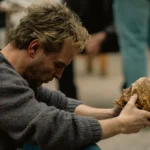
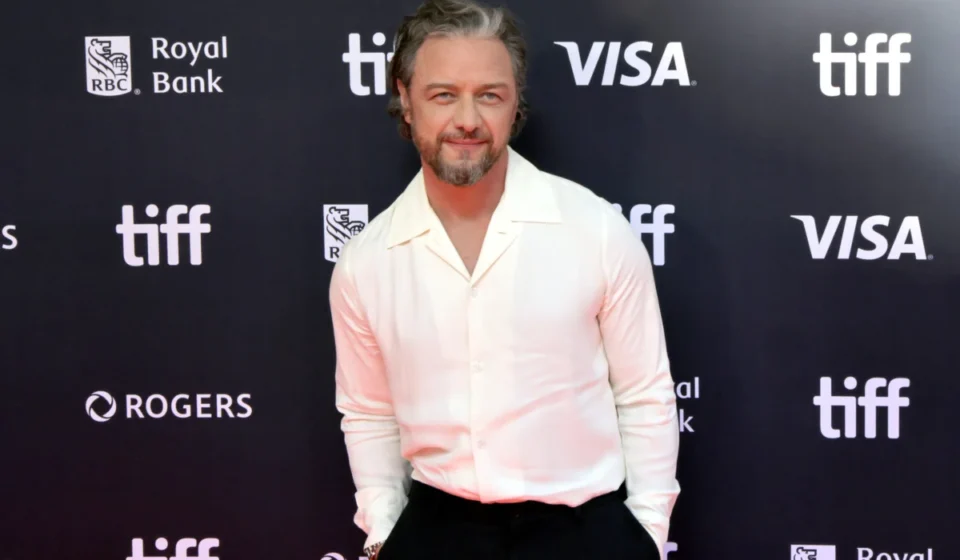
The actor’s latest project, Faith, which recently premiered at the Toronto International Film Festival (TIFF), has reignited questions about his personal spiritual beliefs. In the film, McAvoy plays Michael, a mysterious stranger who enters the life of a grieving mother—portrayed by the Adolescence breakout Erin Doherty. The film explores themes of the afterlife and divine intervention, yet it does so with an ambiguity that sets it apart from traditional faith-based cinema.
"I’m definitely not religious and I’m not particularly spiritual," McAvoy clarifies. "But I do fucking wank on and eulogize about acting and art and all those things in a way that you could point the finger at me and say I’m kind of spiritual about that."

He acknowledges that his upbringing, while no longer a defining factor in his belief system, still leaves its mark. "Hopefully, I’ve managed to emancipate myself from Catholic guilt, but sometimes I still bear its scars."
When pressed by colleagues on set about his involvement in a film that grapples so directly with spirituality, McAvoy’s answer is characteristically pragmatic. "On set, people would ask, ‘Do you believe in God?’ And I was like, ‘Don’t think so.’ And they’re like, ‘Oh, why are you doing this film?’ And I was like, ‘Well, I do films about superheroes and wizards, and they don’t exist.’"
For McAvoy, the draw was the narrative structure of the script by Paul Andrew Williams. "My character has a secret, but it felt like the film had a secret too, and that was compelling," he notes. "There’s a mystery to the whole thing."
Professional Insights: The Craft of Acting and Directing
McAvoy’s approach to his craft is refreshingly devoid of the "method" posturing often found in Hollywood. Regarding his performance in Faith, he describes the process as almost effortless, crediting his co-star, Erin Doherty, for providing the emotional weight of the film.
"It just flowed out," McAvoy says. "I’ve been doing this for thirty-odd years, and I’ve definitely learned that what people want to hear is that you made it as hard as possible for yourself. You know, that you lived in a coffin for six months to understand what it was like to die. It just doesn’t feel like acting sometimes, and that sounds like I’m patting myself on the back. It just felt like all I needed to do was be relaxed."

This ease stands in stark contrast to his upcoming work in the Sky series Meantime, where he plays a narcotics and alcohol-addicted murder suspect. "I was in literally every single scene," he shares. "It’s a very dark comedy, but the darkness of it frightened me. There’s substance abuse and child loss and ultimately the darkness gets to you after four months working on something like that."
The Directorial Challenge
His experience directing California Schemin’ has further deepened his empathy for the production process. He describes the balancing act of a director: "There’s so much internal push, push, push when you’re directing. You’re always thinking, ‘I need to get this performance out of this actor, but I need them to remain relaxed. I can’t rush them. But at the same time, if I don’t get these three extra shots that I’m in danger of losing today, we’re screwed.’"
Implications: The Future of a Versatile Icon
The implications of McAvoy’s recent shift are clear: he is entering a phase of his career where he is increasingly interested in the mechanics of storytelling rather than just the performance. By oscillating between the high-pressure environment of a lead actor in a dark drama like Meantime and the collaborative, visionary role of a director, McAvoy is cementing his place as an industry veteran capable of navigating any genre.
While Faith continues its search for U.S. distribution, the buzz surrounding the film suggests that audiences are still hungry for stories that tackle the big questions of existence—even when the actor delivering them remains grounded in the here and now.
Ultimately, James McAvoy’s story is one of secularization—a move away from the literal church toward a metaphorical one, where the "holy" is found in the flickering light of a projector and the quiet, human moments shared between characters on screen. He may have traded his priestly collar for the craft of the actor, but his commitment to his "vocation" remains as steadfast as ever.