
The Karlovy Vary International Film Festival (KVIFF) is more than a seasonal gathering of cinephiles; it is a living monument to survival. As the festival marks its 60th edition—a milestone spanning eighty years of tumultuous Central European history—it stands as a testament to the resilience of art in the face of shifting geopolitical tides. From its humble origins in the wake of World War II to its current status as an A-list titan of the festival circuit, Karlovy Vary has mastered the art of balancing nostalgia with a restless, forward-looking pulse.
A Legacy Forged in Fire: The Historical Chronology
To understand the significance of this year’s "Vary Special" anniversary, one must look back to 1946. Established just one year after the liberation of Czechoslovakia from Nazi occupation, the festival predates the inaugural Cannes Film Festival by a matter of weeks. It was a bold declaration of cultural restoration, a signal that the nation intended to reclaim its identity through the lens of the moving image.
However, the path was never linear. By 1958, despite the iron grip of state communism, the International Federation of Film Producers Associations (FIAPF) designated KVIFF a "Category A" festival—placing it in the same elite tier as Cannes, Venice, and Berlin. This recognition brought both prestige and political shackles. From 1959 until 1994, the Soviet Union imposed a restrictive scheduling mandate: Karlovy Vary was forced to alternate years with the Moscow International Film Festival, a geopolitical maneuver designed to consolidate Eastern Bloc cultural influence. It was only following the dissolution of the Soviet sphere and the emergence of the independent Czech Republic that the festival was able to break its cycle of biennial dormancy and establish itself as an annual pilgrimage for global cinema.

The Sanatorium of Cinema: Atmosphere and Infrastructure
KVIFF’s identity is inextricably linked to its physical home. The spa town of Karlovy Vary, with its curative waters and baroque architecture, provides a surreal contrast to the festival’s nerve center: the Hotel Thermal. A masterpiece of Brutalist architecture, the hotel functions as a "sanatorium for cinephiles." The harsh, concrete lines of the building serve as a reminder of the festival’s Communist-era heritage, yet the programming within those walls is proudly progressive and defiantly eclectic.
The festival’s operational philosophy is designed to prioritize the viewer’s experience. A strict cap of three tickets per day prevents the "festival fatigue" common at larger, more frantic events, encouraging a deliberate, meditative approach to the schedule. Attendees navigate a bifurcated menu: one half features the polished, high-profile regional debuts from Sundance, Berlin, and Cannes, while the other serves as an archive of Eastern European history, excavating deep cuts and forgotten masterpieces that define the region’s complex soul.
Cinematic Rituals: The Crystal Globe and the Cassavetes Masterclass
Tradition at KVIFF is not merely performative; it is a foundational component of the festival’s charm. Foremost among these are the iconic black-and-white festival trailers, directed by Ivan Zachariáš. These short, eccentric vignettes—which feature recipients of the festival’s prestigious Crystal Globe award—have become a beloved staple. Whether it’s Mel Gibson fending off robbers with a blowgun or Stellan Skarsgård using the golden statuette as a fishing lure, these trailers capture the self-deprecating humor that defines the festival’s spirit.

Simultaneously, artistic director Karel Och has maintained a long-running, informal masterclass, dedicating a slot in every year’s program to a John Cassavetes film. This multi-year commitment to the American independent auteur anchors the festival, serving as a reminder of the aesthetic rigor that KVIFF values above mere commercial viability.
The Retrospective: "Out of the Past – KVIFF 60/80"
This year’s centerpiece, Out of the Past – KVIFF 60/80, acted as a cinematic historiography. The section curated milestone films that mirrored the festival’s own survival. Attendees were treated to a rare screening of Powell and Pressburger’s A Matter of Life and Death (1946), a film that reached Czechoslovak audiences just as they emerged from the shadows of the Nazi regime.
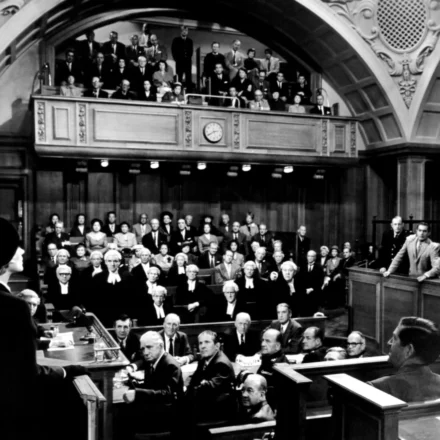
The retrospective also highlighted the festival’s role as a barometer of political tension. From Ján Kadár and Elmar Klos’s 1964 courtroom drama The Defendant to the post-Prague Spring triumph of Ken Loach’s Kes (1970), the selections traced the uneasy relationship between the artist and the state. Crucially, the section shone a light on previously suppressed works, such as Juraj Jakubisko’s Birds, Orphans and Fools (1969), which remained shelved by censors for over two decades. By exhibiting these works alongside global pioneers like Glauber Rocha’s Barravento (1962), the festival demonstrated that its appetite for international, boundary-pushing cinema has always transcended the limitations of the Iron Curtain.

The Competitive Landscape: Proxima and the Crystal Globe
The festival’s two competitive tiers continue to evolve. The Proxima section, which replaced the old "East of the West" competition, has shed its regional branding to become a truly global showcase for emerging talent. The Grand Prix winner, Martina Buchelová’s Lover, Not a Fighter, captured the restless energy of the contemporary youth experience. Through a chaotic, innovative montage of vertical phone footage and reflexive subtitles, Buchelová created a portrait of modern intimacy that felt both raw and startlingly familiar.
Meanwhile, the main Crystal Globe competition leaned into the works of established auteurs. The top prize went to Aung Phyoe’s Fruit Gathering, a delicate exploration of labor and love in Yangon, while Ivan Ostrochovský’s Only Beautiful Things to Look At claimed the FIPRESCI award.
The Political Fable: Black Money for White Nights
Perhaps the most discussed film of the festival was the Bulgarian drama Black Money for White Nights, directed by Kristina Grozeva and Petar Valchanov. While some critics viewed it as a scathing critique of Bulgarian systemic corruption, the film functions more effectively as a cautionary fable about the illusion of political neutrality.

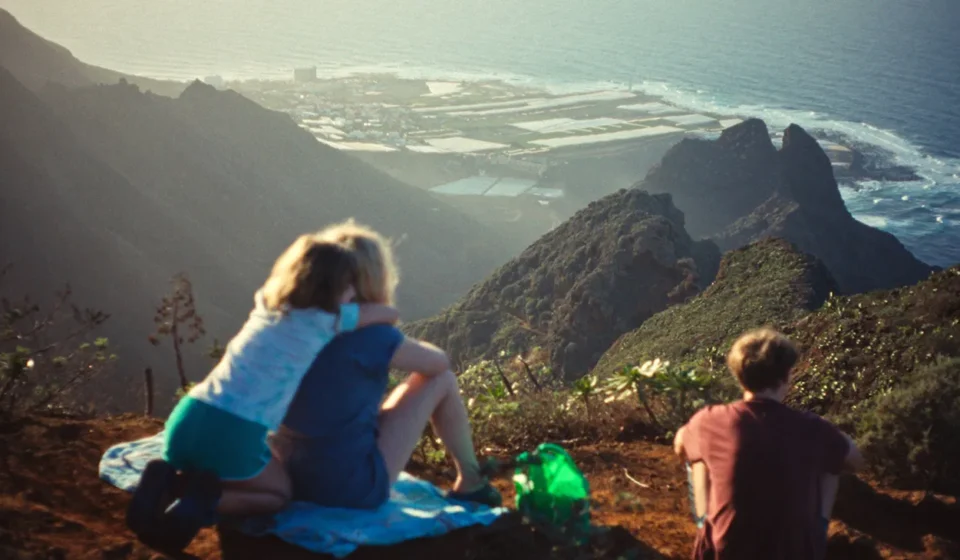
The story of an elderly couple attempting to purchase a dream trip to St. Petersburg in the shadow of the invasion of Ukraine acts as a chilling mirror to the festival’s own history. The couple’s attempt to ignore the news, wallpapering their lives with the romanticized imagery of Russian literature, is eventually shattered by reality. The film’s high-key, artificial aesthetic underscores the couple’s detachment, making the inevitable collapse of their domestic fantasy all the more devastating.
Looking Ahead: The Implications of Persistence
The festival also showcased recent works like Emmanuel Marre’s A Man of His Time and Sandra Wollner’s Everytime. Both films grapple with the weight of history and memory—the former as an examination of the banality of evil during the Vichy regime, and the latter as a haunting meditation on childhood grief.
The success of these films, when juxtaposed with the historical retrospective, reinforces the core strength of KVIFF: its refusal to be defined by its trauma. By acknowledging its origins as a tool of state policy and actively deconstructing that past, the festival has achieved a rare level of authenticity.

As KVIFF concludes its 60th edition, the implications are clear: the festival is no longer merely a participant in the global film market; it is a curator of the European conscience. It serves as a space where the "Brutalist" architecture of the past is not torn down but repurposed as a sanctuary for the future. In an era where cultural institutions are increasingly homogenized, the Karlovy Vary International Film Festival remains a stubborn, vital, and necessary outlier—a place where, as the festival’s history proves, art can flourish even in the most improbable of conditions.