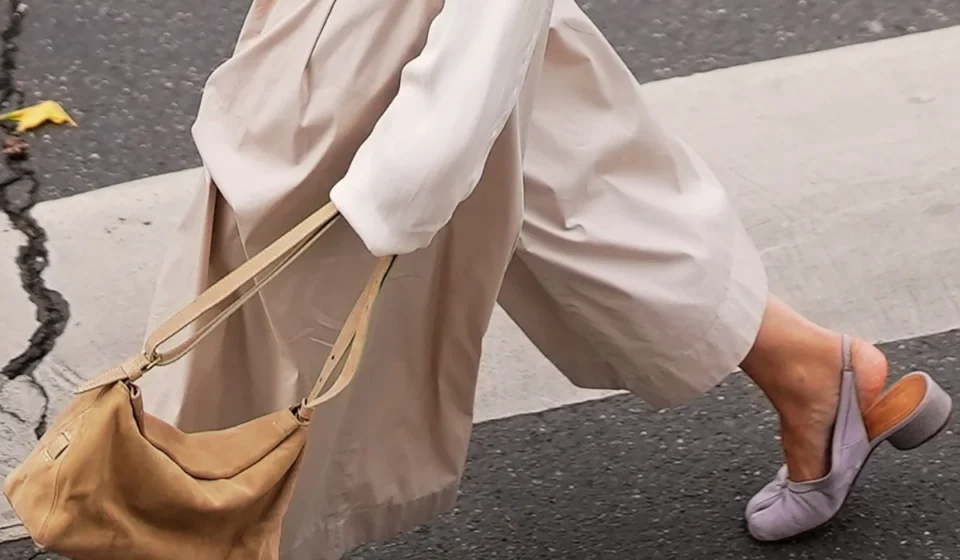

If you have spent the better part of the last few years harboring a deep-seated skepticism toward the “ugly shoe” trend—specifically the split-toe Tabi—it is time to reconsider your stance. Once relegated to the fringes of avant-garde high fashion and the specific tastes of industry insiders, the Tabi flat has officially crossed the Rubicon into mainstream ubiquity. What was once dismissed by critics as a “cloven-hoof” curiosity is now being hailed as the season’s most essential, chic, and versatile footwear staple.
From the front rows of New York Fashion Week to the viral corners of TikTok’s “#FashionTok,” the Tabi is no longer just a luxury statement piece; it is a full-blown cultural phenomenon. Whether you are a minimalist looking for a clean silhouette or a trendsetter chasing the next big aesthetic, the Tabi has cemented its place in the modern wardrobe.
The Origins: A 15th-Century Legacy
To understand the current obsession with the Tabi, one must look far beyond the contemporary runways of Paris. The design is deeply rooted in 15th-century Japanese tradition. The word Tabi refers to traditional socks that feature a separation between the big toe and the rest of the digits, designed specifically to be worn with thonged footwear known as Zori (sandals made from rice straw, wood, or cloth).
Historically, the split-toe design was a functional necessity, allowing the wearer to maintain better balance and grip while walking on uneven surfaces or climbing. It wasn’t until the late 20th century that the design was decontextualized and elevated into the sphere of high fashion. The Belgian design house Maison Margiela is widely credited with bringing the Tabi to the global stage. Since its introduction in the brand’s debut 1989 collection, the Maison Margiela Tabi has remained a polarizing signature of the house, evolving from boots to loafers, heels, and the now-ubiquitous ballet flat.
Chronology of a Trend: From Runways to the FYP
The trajectory of the Tabi from a niche fashion curiosity to a mass-market essential is a fascinating study in modern trend cycles.
- 1989: Martin Margiela debuts the first Tabi boot, forever linking the split-toe aesthetic with high-concept, deconstructed fashion.
- 2010s: The Tabi gains a cult following among fashion editors, stylists, and celebrities, cementing its status as an "insider" shoe.
- 2023: The "Tabi Swindler" viral moment on TikTok—where a woman claimed her date stole her pair of Maison Margiela Tabis—catapulted the silhouette into the mainstream consciousness, turning the shoe into a meme-worthy object of desire.
- 2024: High-street retailers and accessible fashion brands begin mass-producing Tabi-inspired flats, moving the style from a $1,000 investment piece to a $50 wardrobe staple.
- Fall 2024/2025: The Tabi is officially declared the "shoe of the season," appearing in street style photography across major global fashion capitals.
Supporting Data: The Rise of the “Dupe” Economy
The most significant shift in the Tabi’s history is the democratization of the design. While an authentic pair of Maison Margiela Tabi flats can retail anywhere from $800 to several thousand dollars, the market has seen an explosion of accessible alternatives.
Data from social media analytics platforms shows a 400% increase in searches for “Tabi dupes” over the last 18 months. This surge is largely driven by the affordability factor. Brands like Cushionaire, Steve Madden, and VBDB have stepped in to fill the void, offering the signature split-toe aesthetic for under $100. This shift is critical: it removes the barrier to entry, allowing the average consumer to participate in a trend that was once gated by extreme wealth.
The Aesthetic Implications: Styling the Split-Toe
The primary hurdle for most first-time Tabi wearers is the visual disconnect—the question of "how do I make this look normal?" The answer, according to stylists, lies in the versatility of the ballet flat silhouette.
Because the Tabi flat shares the same profile as a traditional ballet flat, it is surprisingly easy to style. The split-toe acts as a subtle, sophisticated detail that elevates a basic outfit without appearing garish.

- For the Minimalist: Pair neutral-toned Tabi flats with straight-leg denim and an oversized blazer. The shoe adds a layer of interest to an otherwise understated ensemble.
- For the Romantic: Style a pair of Mary Jane-inspired Tabi flats with a midi-length dress or a pleated skirt. The feminine silhouette of the Mary Jane balances the slightly edgy nature of the split toe.
- For the Street-Style Enthusiast: Use the Tabi to anchor bold textures, such as leather trousers or wide-leg wool pants.
For those concerned about comfort, the "cloven" design does not require a change in gait, but it does require specialized hosiery. The recent rise of split-toe socks—which are now widely available—ensures that the style can be worn comfortably in cooler weather without compromising the integrity of the shoe’s design.
Editorial Selection: The Best Tabi-Inspired Flats
Our team has curated a list of the most reliable, stylish, and comfortable Tabi-inspired flats currently dominating the market:
- CUSHIONAIRE Maki Tabi Flats: A TikTok favorite, these are lauded for their cushioned footbed. They are the ideal choice for those who prioritize daily comfort without sacrificing the trendy aesthetic.
- Steve Madden Calico Bone Mesh: An editor’s pick for its unique mesh texture. It offers a more breathable, delicate take on the trend that is perfect for transitioning between seasons.
- VBDB Tabi Ballet Flats: The ultimate entry-level shoe. With 11 different colorways and textures, it offers the most variety for those looking to experiment with different materials.
- Jeffrey Campbell Pit Lane Flats: Featuring a higher vamp and smooth leather construction, this option provides a more structured, high-end feel.
- Matisse Mason Split Toe Ballet Flat: A classic ballet-inspired design that includes a charming bow detail, making it the most feminine option on the market.
- Bronx Semm-ie Split Toe Ballerina Flats: For those who prefer a "grounded" aesthetic, this pair features stud detailing and a warm brown palette that screams autumnal fashion.
- Jeffrey Campbell Saturna Mary Jane: A sophisticated take on the trend, featuring wraparound laces that add a touch of balletcore elegance to the split-toe look.
- Steve Madden Cyra Black Leather: For those who want a slight elevation, this 1.25-inch heel provides a modest lift while maintaining the classic Tabi shape.
Official Responses and Industry Outlook
Fashion critics remain divided but increasingly vocal about the Tabi’s staying power. While some traditionalists still find the split-toe design jarring, industry analysts argue that the Tabi has achieved "classic" status.
"The Tabi represents a shift in fashion toward ‘intelligent design’—where the aesthetic has a history and a purpose," says one industry consultant. "It is no longer just about looking pretty; it’s about signaling an appreciation for fashion history while remaining grounded in modern comfort."
The implications of this trend are clear: the fashion industry is moving away from the era of hyper-branded logos and toward silhouettes that are distinct, sculptural, and conversation-starters. As we head deeper into the fall season, the Tabi flat will undoubtedly remain the anchor of the "off-duty model" look.
Final Verdict
If you are still hesitating, consider this your invitation to embrace the split-toe. Whether you choose to invest in an authentic Maison Margiela pair or start your journey with a high-quality dupe, the Tabi flat is an exercise in fashion confidence. It is a shoe that demands to be seen and, once worn, is surprisingly difficult to stop wearing.
The "ugly shoe" debate is effectively over. The Tabi has won, and it is here to stay.
Note: All items listed in this article were selected by our editorial team based on current market trends and user reviews. Pricing and availability are accurate as of the time of publication. The retailers mentioned are independent of the editorial staff.