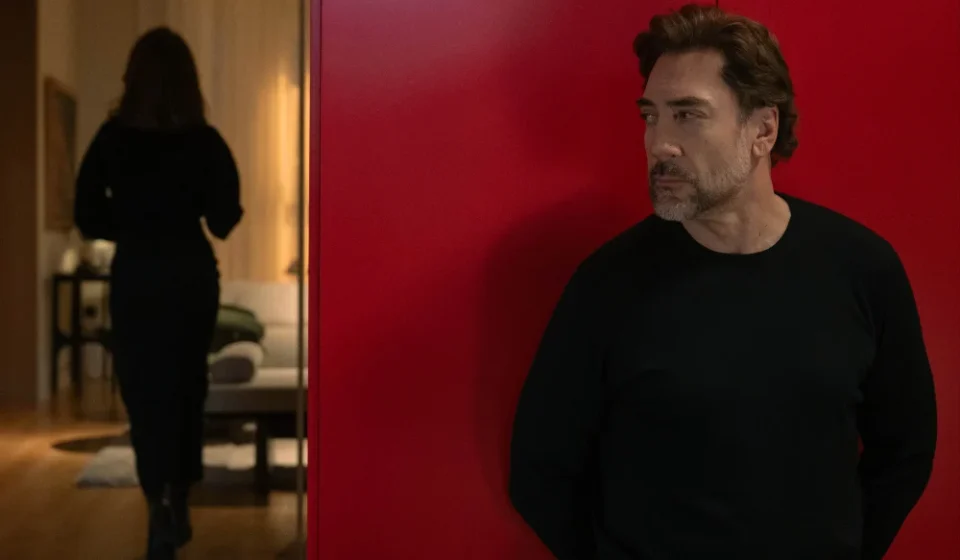

The modern cinematic landscape has seen a resurgence of the "eat the rich" subgenre, but few filmmakers approach the concept with the surgical, psychological precision of Florian Zeller. In his latest feature, Bunker, Zeller moves away from the haunting cognitive decline of The Father and the heavy-handed domestic tragedy of The Son to explore a more systemic, yet equally intimate, form of decay. Set within the sleek, concrete-and-glass confines of an East London townhouse, Bunker is a searing examination of privilege, the fragility of the nuclear family, and the literal and metaphorical walls the elite build to keep the "outside" at bay.
Starring the powerhouse duo of Javier Bardem and Penélope Cruz, the film serves as both a high-stakes domestic drama and a darkly comedic thriller. It explores the lives of Miguel and Sofia Moreno, an upscale Spanish expat couple whose existence is as meticulously curated as the modernist interior of their Victorian home. However, as Zeller expertly demonstrates, the more one reinforces a structure, the more apparent its cracks become.
Main Facts: A Study in Modernist Paranoia
At its core, Bunker is a narrative of intrusion. The story centers on Miguel (Bardem), a prize-winning architect whose philosophy revolves around "culture and silence," and Sofia (Cruz), a high-level literary editor. They live in a home that a realtor would describe as a "Tardis"—a quaint, traditional Victorian exterior that hides a vast, multi-level labyrinth of timber, concrete, and floor-to-ceiling glass.
The film’s title, Bunker, is a multi-layered signifier. It refers simultaneously to:
- The Physical Home: The Morenos’ East London residence, which functions as a fortress against the gentrifying but still gritty neighborhood around them.
- The Professional Project: A literal apocalypse bunker Miguel is commissioned to design for a shadowy tech billionaire in Hawaii.
- The Psychological State: The emotional isolation of the characters, who communicate through screens and headphones rather than eye contact.
The production is bolstered by a stellar supporting cast, including Stephen Graham as the "neighbor from hell" and Paul Dano in a chillingly detached cameo as a tech mogul. The film’s aesthetic, captured by cinematographer Ben Smithard and production designer Alain Bainée, emphasizes a "cashmere stillness"—an atmosphere of expensive calm that feels perpetually on the verge of shattering.
Chronology: From Sanctuary to Siege
The narrative arc of Bunker unfolds with the steady, rhythmic tension of a ticking clock. The film begins by establishing the "perfect" life of the Moreno family. Their routines are silent and digital; Miguel is preoccupied with his accolades, Sofia with her manuscripts, and their teenage daughter Lucia (Chloe Conh) with her noise-canceling headphones. Only the youngest daughter, Rosa, and the family’s slate-gray Abyssinian cat, Blue, seem to inhabit the physical space with any genuine presence.
The Breach
The equilibrium is shattered by a literal hole in the wall. Their neighbor Toby (Stephen Graham), a working-class Londoner who resents the "gentrifying colonizers" of his neighborhood, begins a renovation. He intends to put a window in his garage—a window that would look directly into the Morenos’ private garden. This minor property dispute serves as the inciting incident, triggering a cascade of territorial anxiety in Miguel.
The Hawaiian Proposal
Parallel to the neighbor dispute, Miguel is contacted via Zoom by an unnamed tech mogul (Paul Dano). The mogul offers Miguel a staggering sum to design a "long-term survival habitat" in Hawaii. The mogul speaks of the "full-scale collapse of the system," an apocalypse that he is actively helping to fund through his own business practices. This offer acts as a catalyst for Miguel’s descent into paranoia. He begins to see his own home not as a sanctuary, but as an insufficiently protected target.
The Descent into Farce
The second act of the film shifts gears into a psychological thriller tinged with dark farce. Miguel becomes obsessed with security, installing a high-tech, AI-driven surveillance system that begins to malfunction almost immediately. As the system "locks down" the house due to false alarms, the family finds themselves literally trapped within their own luxury. The "Tardis" becomes a prison, and the silence Miguel so cherished becomes a vacuum of communication.
Supporting Data: The Craft of the "Unseen"
The effectiveness of Bunker relies heavily on its technical execution and the pedigree of its creators. Florian Zeller, primarily known as a world-class playwright, brings a specific "spatial" intelligence to the film.
- Production Design as Character: Alain Bainée, who previously worked with Zeller on The Son, creates a set that feels both aspirational and oppressive. The use of "pillarbox red" in the kitchen—a nod to the aesthetic of Pedro Almodóvar—serves as a visual warning sign against the cool grays and whites of the rest of the house.
- The Bardem-Cruz Dynamic: This marks another collaboration between real-life spouses Javier Bardem and Penélope Cruz. Their chemistry is utilized here not to show passion, but to show the "intuitive, anticipatory intimacy" of a failing marriage. They know exactly how to hurt or ignore one another with surgical precision.
- Cinematic Metaphor: The film utilizes recurring motifs of "permeability." The hole in the garden wall, the Zoom calls that bypass physical security, and the "dead air" of their digital lives all point to the impossibility of true isolation in a connected world.
Official Responses: Critical Reception and Thematic Critique
Early reviews of Bunker have been largely positive, though critics have noted Zeller’s tendency toward "over-explaining" his metaphors.
The Performance Factor:
Critics have been unanimous in their praise for the lead duo. Bardem’s portrayal of Miguel is a masterclass in the erosion of "alpha" confidence. As he loses control over his property and his family, his physical stature seems to shrink. Cruz, meanwhile, is described as reaching "desolate melodramatic depths," particularly in scenes where she confronts Miguel about his willingness to work for the tech mogul. Her delivery of the film’s central thesis—"Things last when you consider them fragile; it’s when you perceive things as solid that they eventually break"—has been cited as a standout cinematic moment.
The Script Critique:
Some reviewers have pointed out that Zeller, the playwright, occasionally overshadows Zeller, the director. The film’s verbal unpacking of its metaphors can feel redundant given how strong the visual storytelling is. The irony of an architect building a bunker while his own home is being "invaded" by a neighbor’s window is a sharp one, but the script occasionally circles back to this point too many times, perhaps distrusting the audience’s ability to grasp the subtext.
Implications: The "Bunker" Mentality in the 21st Century
The film arrives at a time when "prepper" culture has moved from the fringes of society to the highest echelons of Silicon Valley. The implications of Bunker extend far beyond a simple domestic dispute; they speak to a global shift in how the wealthy perceive their responsibility to the rest of the world.
The Privatization of Survival
The Paul Dano character represents a real-world trend of "exit strategies" for the ultra-rich. By hiring Miguel to build a bunker, he is essentially opting out of the social contract. The film asks: if the most brilliant minds are focused on building walls rather than bridges, is the "collapse" they fear an inevitability or a self-fulfilling prophecy?
Gentrification and Class Warfare
The conflict with Toby (Stephen Graham) highlights the friction of modern urban living. The Morenos are not "villains" in the traditional sense; they have the legal right to privacy. However, their refusal to engage with their neighbor as a human being—viewing him instead as a "violation" of their space—illustrates the empathy gap created by extreme wealth.
The Fragility of the "Solid"
Ultimately, Bunker serves as a warning about the illusion of security. Whether it is a marriage of 17 years or a reinforced concrete wall, nothing is truly "solid." Zeller suggests that the act of "bunkering down"—withdrawing from the world to protect what we have—is the very thing that ensures our eventual destruction. By turning inward, the Morenos lose the ability to see the threats—and the joys—that exist right in front of them.
In conclusion, Bunker is a provocative, beautifully acted piece of cinema that challenges the audience to look at their own "walls." While it occasionally leans too heavily on its own symbolism, the powerhouse performances of Bardem and Cruz ensure that the film remains a visceral, human experience. It is a haunting reminder that the most dangerous holes are not the ones in our walls, but the ones in our lives.