The Architect of the Power Chord: Pete Townshend and the Anatomy of Rock’s Greatest Intellectual

Introduction: The Circular Motion of Fury
Every rock god possesses a signature gesture, a physical manifestation of their sonic philosophy. For Jimi Hendrix, it was the ritualistic burning of his Stratocaster; for Mick Jagger, it was the peacock strut. But for Pete Townshend, the primary architect of The Who, the ultimate gesture of power was the "windmill." With his arm outstretched and twirling in a giant, centrifugal arc, Townshend would gather the kinetic energy of a stadium and slam his pick through the strings, creating what many consider the loudest, most definitive power chord in human history.
This gesture was never merely theatrical. It was an act of "auto-destructive art," a concept Townshend imported from his days in British art schools. It represented a destructive fury that laid the groundwork for both the stadium-filling grandeur of Led Zeppelin and the raw, nihilistic energy of punk rock.
The man behind this gesture is now the subject of a new, deeply introspective documentary, Pete Townshend: Behind Blue Eyes. Directed by industry veterans Frank Marshall and Nigel Sinclair, the film recently premiered at the Telluride Film Festival, offering a "serviceable rock ride" that attempts to peel back the layers of a man who has spent six decades balancing the roles of a "blokeish" Mod, a rock intellectual, and a tortured poet. While the film provides unprecedented access to archival treasures, it also raises significant questions about what we choose to remember—and what we choose to omit—when documenting the lives of our cultural icons.
Main Facts: A New Lens on an Old Legend
Pete Townshend: Behind Blue Eyes is not a standard, chronological hagiography. Instead, it positions itself as a character study, focusing on the psychological tremors that shaped Townshend’s songwriting. The documentary’s primary value proposition for fans lies in its "lost" footage. The filmmakers culled hours of material from 16mm reels shot at Holmhurst Manor in 1972—a period when The Who were at their creative and commercial zenith but were also fracturing under the weight of their own ambition.
Key Elements of the Film:
- Unseen Archival Footage: Includes outtakes from the legendary 1970 Isle of Wight performance and Townshend’s private home movies.
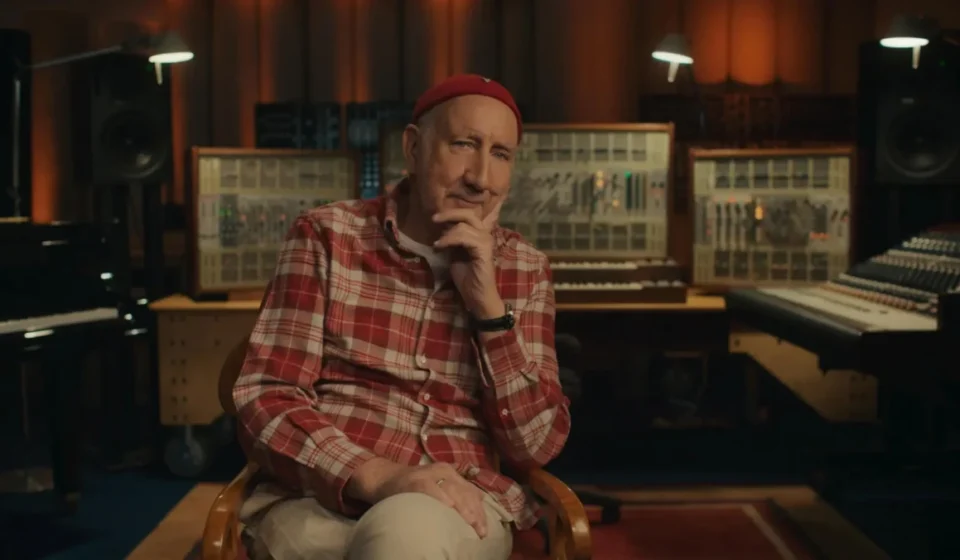
- Contemporary Interviews: Townshend, now 81, provides a candid, often "gentle" retrospective of his career, seated in a red wool cap, reflecting on his younger, more volatile self.
- The Focus on "Tommy": The film places the 1969 rock opera Tommy at the center of Townshend’s universe, linking the "deaf, dumb, and blind kid" directly to Townshend’s childhood trauma.
- The "Lifehouse" Obsession: Significant screen time is dedicated to Lifehouse, the aborted science-fiction project that nearly drove Townshend to a mental breakdown but eventually birthed the masterpiece Who’s Next.
Chronology: From Art School to Addiction
To understand the documentary, one must understand the timeline of the man it portrays. Townshend’s trajectory is a study in the evolution of rock as an art form.
1960s: The Mod and the Art Student
Townshend did not set out to be a career musician. As a student of avant-garde art, he was fascinated by classical musicians who destroyed pianos as a form of performance art. When he joined The Who, he brought this intellectualized violence to the stage. The film captures the early energy of 1965, showing a young Townshend "bopping" to the tight, R&B-influenced chords of "I Can’t Explain." During this era, Townshend was the quintessential Mod—a subculture defined by fashion, amphetamines, and a desperate need for identity.
1969–1971: The "Tommy" Phenomenon and the Void
The success of Tommy transformed The Who from a singles band into a cultural institution. However, as the documentary reveals, this success was a double-edged sword. Townshend had written Tommy as a response to a period of his childhood (around age four) when he was sent to live with his "sexually debauched" grandmother. Though he denies direct physical abuse, the psychological abandonment caused him to "tune out" reality, effectively becoming the inspiration for the titular character.
The film captures the "frozen fear" on Townshend’s face during this era. Having achieved the "majestic success" of Tommy, he was terrified of what came next. This led to the Lifehouse project—a sprawling, proto-internet concept about a society connected by a "grid"—which proved too complex for his bandmates and his audience to grasp at the time.
1972–1980s: The Holmhurst Manor Years and the Descent
The 1972 footage at Holmhurst Manor (Roger Daltrey’s Jacobean estate) shows a band in creative limbo. They were "noise-making British aristocrats" hashing out their future in a country house, yet Townshend was increasingly isolated. The documentary touches on his eventual descent into addiction, where he transitioned from the "burn-it-all-down" leader to a "junkie" drinking three bottles of cognac a day.
Supporting Data: The Archival Treasure Trove
The documentary’s strength lies in its visual evidence. The 16mm reels from 1972 provide a fly-on-the-wall perspective of a band struggling to reconcile their working-class roots with their new status as rock royalty. These scenes draw a parallel to the creative crisis faced by bands like U2 during the Achtung Baby! era—a moment where a group must either evolve or vanish.
Furthermore, the outtakes from the 1970 Isle of Wight performance serve as a reminder of why The Who were considered the greatest live act of their generation. The "windmill" is seen here in its purest form, a tool used to bridge the gap between the audience and the stage. The film argues that while Townshend wanted rock to be an "art form," he never lost the "blokeish" desire to make the loudest noise possible.
Critical Gaps and Omissions: What the Film Leaves Out
Despite its intimate tone, Behind Blue Eyes has been criticized for "fuzzy" storytelling and jarring omissions. For a film that purports to be an exploratory biography, several key pillars of The Who’s history are mysteriously absent:
- "My Generation": Perhaps the most baffling omission is the lack of focus on "My Generation." As one of the ten most influential songs in rock history, it provided the blueprint for punk. The film discusses Townshend’s later attempts to "cozy up" to Johnny Rotten and the Sex Pistols, yet fails to mention the very song that made that connection possible.
- The Keith Moon Tragedy: While the film acknowledges the death of drummer Keith Moon from a clomethiazole overdose, it curiously avoids discussing his legendary, self-destructive alcoholism. To understand The Who’s chemistry, one must understand Moon’s chaos, yet the film keeps this at arm’s length.
- The Ken Russell "Tommy" Film: The documentary mentions Townshend’s reluctance to turn Tommy into a movie but ignores the massive cultural impact of Ken Russell’s 1975 fever-dream adaptation, which further cemented Townshend’s status in the zeitgeist.
- Personal Relationships and Sexuality: The film offers almost no insight into Townshend’s two marriages. More significantly, it ignores a pivotal 1980 interview where Townshend acknowledged a period of "leading a gay existence," a confession that was revolutionary for a rock star at the time and speaks directly to the "complexity" the film claims to explore.
Official Responses and Perspectives
Pete Townshend’s Reflection
In his contemporary interviews, Townshend appears "open and circumspect." At 81, the "doomy drama queen" of the 1970s has been replaced by a man of "disarming gentleness." He speaks of his bandmates—Keith Moon, John Entwistle, and Roger Daltrey—with a mix of frustration and wistful affection. He notes that while he was obsessed with the spiritual and artistic implications of their music, the "other three just wanted to party and sleep around."
Roger Daltrey’s Contribution
Roger Daltrey also provides commentary, offering a grounding perspective to Townshend’s intellectualism. The tension between the two—Daltrey the powerhouse vocalist and Townshend the cerebral songwriter—is presented as the "engine" that drove the band, though the "feuds and valleys" of their relationship are now viewed through a lens of aged reconciliation.
Implications: The Legacy of the "Rock Intellectual"
Pete Townshend: Behind Blue Eyes ultimately serves as a reminder of a specific era of rock history—one where the music was expected to be "bigger, bolder, and more confessionally grandiose." Townshend was a pioneer in treating rock and roll as a serious medium for exploring childhood trauma and societal shifts.
However, the documentary’s "scattered" nature suggests that Townshend remains an elusive subject. By skipping over the grit of Keith Moon’s decline and the nuances of Townshend’s own personal life, the film risks being categorized as "hagiographic," despite its focus on his "anguished moody side."
For the audience, the implication is clear: even at 81, Pete Townshend remains a man of contradictions. He is the "art school student" who smashed guitars and the "sad man" behind the lyrics of "Behind Blue Eyes." While the film may not be the definitive portrait—that title still likely belongs to 1979’s The Kids Are Alright—it offers a valuable, if filtered, glimpse into the mind of a man who didn’t just play rock music; he tried to save his soul through it.
The documentary leaves us with the image of a man who has scaled the heights and survived the "bottoming-out," yet still seems to be searching for the reason why he descended into the dark in the first place. As a piece of journalistic record, it is a fascinating, if incomplete, addition to the canon of The Who.