The Ghost in the Machine: ‘Elsinore’ and the Tragic, Triumphant Final Act of Ian Charleson

In the annals of British theater, few moments are as legendary or as shrouded in myth as the night in 1989 when Daniel Day-Lewis walked off the stage of the National Theatre mid-performance. Playing the title role in William Shakespeare’s Hamlet, the young actor—already known for an intensity that bordered on the volatile—allegedly saw the ghost of his own father instead of the actor playing King Hamlet’s spirit. He left the stage, never to return to the production, marking the first of many "extreme" departures that would define his mercurial career.
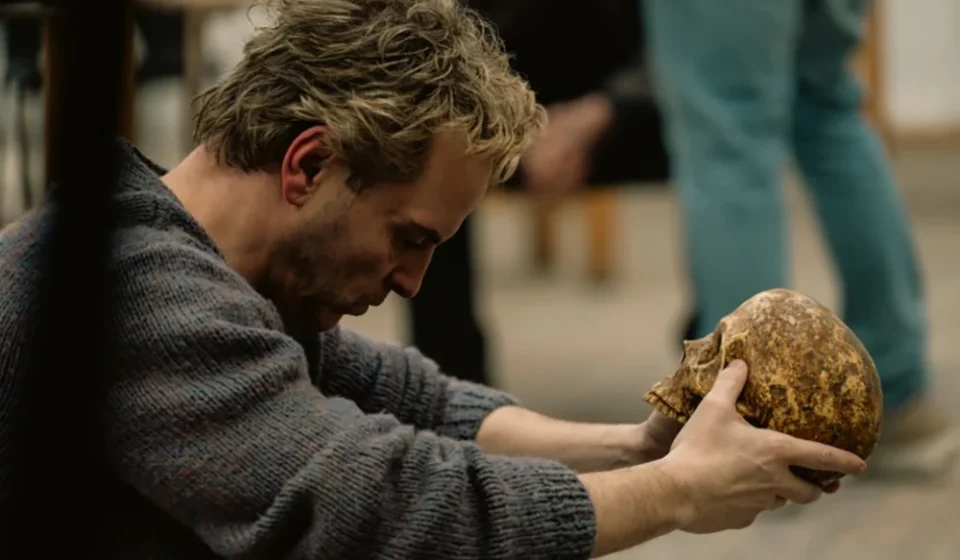
However, the new film Elsinore, directed by Simon Stone and written by Stephen Beresford, suggests that the most compelling story of that 1989 production didn’t end with Day-Lewis’s exit. Instead, it began with the man who replaced him. Elsinore is a searing, sophisticated biographical drama that centers on Ian Charleson, the Scottish actor who stepped into the role of the Prince of Denmark while secretly battling the terminal stages of AIDS.
Featuring a career-defining performance by Andrew Scott, the film is more than a mere theater biopic; it is a profound meditation on the intersection of art and mortality, the claustrophobia of the closet, and the enduring power of the Elizabethan stage to provide a vessel for human suffering.
Main Facts: A Production Defined by Crisis
Elsinore opens not on a movie set, but in the gritty, frantic backstage of the National Theatre’s Olivier stage. The atmosphere is one of professional ennui mixed with sudden, jarring chaos. We see the technicians—bored, cynical, and amused—watching the drama unfold through monitors. The production is falling apart: the veteran actor playing the Ghost is fumbling his lines, and Day-Lewis is reaching a breaking point. When the star finally stalks off, the production is left in a state of paralysis.
Enter Ian Charleson. To the public of 1989, Charleson was still primarily recognized as Eric Liddell, the devout Christian sprinter from the 1981 Best Picture winner Chariots of Fire. However, as Elsinore vividly depicts, the eight years following that Oscar win had not been kind to Charleson’s career. At 39, he found himself relegated to "has-been" status, struggling to reconcile his "straight" public image with his vibrant, if private, life as a gay man in London’s West End.
The central tension of the film arises when director Richard Eyre (played by Johnny Flynn) asks Charleson to replace Day-Lewis. It is the opportunity of a lifetime—the chance to prove he is more than just "the guy from the movie with the Vangelis music." But there is a devastating caveat: Charleson has just discovered a Kaposi’s sarcoma lesion on his temple. He is dying, and he knows it.
Chronology: The Race Against Time
The narrative of Elsinore follows the final months of Charleson’s life, structured around the grueling rehearsal process and the eventual performances of Hamlet.
1. The Diagnosis and the Dilemma
The film meticulously recreates the medical landscape of the late 1980s. For Charleson, the diagnosis of HIV was a death sentence. At the time, AZT was the only available treatment, and its efficacy was widely questioned; Charleson, as portrayed in the film, views it as a "lame leftover chemo drug" and refuses it. The discovery of the first lesion marks a psychological turning point. He is forced to choose between a quiet, secluded decline or a public, exhausting final stand on the hallowed stage of the National.
2. The Shadow of ‘Chariots’
Throughout the first act, the film explores Charleson’s resentment of his own success. Chariots of Fire had become a "badge of shame." In a particularly poignant and darkly comic scene, Charleson enters a cab only for the driver to humiliate him by humming the iconic Vangelis synthesizer theme. The film suggests that Charleson viewed Hamlet not just as a role, but as a way to scrub away the "stiff-upper-lip" artifice of his early career and replace it with something raw and authentic.
3. The Rehearsal and the Conflict
As Charleson begins rehearsals under Richard Eyre’s direction, the physical toll of the disease becomes impossible to ignore. He is under the care of Dr. Margaret Johnson (Olivia Colman), a physician who represents the vanguard of AIDS treatment in London. Their relationship forms the emotional backbone of the film’s middle section—a tug-of-war between a doctor trying to preserve a life and an artist trying to fulfill a destiny.
Supporting Data: The Cultural Context of 1989
To understand the stakes of Elsinore, one must understand the socio-political climate of the United Kingdom in the late 1980s.
The AIDS Epidemic in the UK
By 1989, the British government’s "Don’t Die of Ignorance" campaign had been running for two years, but stigma remained at an all-time high. Section 28, a legislative piece that prohibited the "promotion" of homosexuality by local authorities, had been enacted just a year prior in 1988. For an actor like Charleson, coming out was not merely a personal choice; it was a career-ending risk.
The National Theatre and Richard Eyre
The National Theatre, under the leadership of Richard Eyre, was the epicenter of British culture. Replacing a star of Day-Lewis’s caliber was a logistical nightmare. The film highlights the "heavy lifting" of the role: Hamlet consists of 4,167 lines of dialogue, more than any other Shakespearean character. For a man whose immune system was failing, the physical demand of performing this three-hour play for an audience of 1,100 nightly was almost superhuman.
The Radical Influence of Derek Jarman
A crucial supporting character in the film is the avant-garde director Derek Jarman (David Dawson). Jarman, who was himself living with HIV, serves as a foil to Charleson. While Charleson attempted to maintain a "straight" image to keep his career afloat, Jarman was fiercely, transgressively out. Their interactions in the film highlight the internal rift within the gay community at the time: the struggle between the need for radical visibility and the instinct for professional survival.
Official Responses and Critical Reception
While Elsinore is a dramatized retelling, it draws heavily from the real-life accounts of those who were present at the National Theatre in 1989.
Director Simon Stone’s Vision
Simon Stone, known for his modern theatrical adaptations, approaches Elsinore with a kinetic, often claustrophobic style. In press notes, Stone has emphasized that the film is not intended to be a "raw, in-your-face AIDS drama" in the vein of Longtime Companion or The Normal Heart. Instead, it is a character study of an actor using his craft as a shield against the inevitable.
Critical Analysis of Andrew Scott’s Performance
Early reviews have hailed Andrew Scott’s performance as a "masterclass in layered vulnerability." Scott, who famously played a modern Hamlet to great acclaim in 2017, brings a meta-textual depth to the role. He captures Charleson’s "delicate and abashed manner" while slowly revealing the "whiplash ferocity" beneath. Critics have noted that Scott’s portrayal avoids the pitfalls of hagiography, showing Charleson as a man who could be difficult, ambitious, and occasionally vain, making his eventual sacrifice all the more moving.
Olivia Colman as the Moral Compass
Olivia Colman’s portrayal of Dr. Margaret Johnson has been praised for its "crisp delectability." As the antagonist who is secretly an ally, Colman provides the necessary friction to the narrative, reminding the audience—and Ian—of the brutal reality of his physical condition.
Implications: The Legacy of a Ghost
The final act of Elsinore depicts Charleson’s actual performance as Hamlet. Despite his failing health—and the need to use heavy makeup to hide his lesions—his portrayal was hailed by critics of the time as one of the greatest in the history of the National Theatre.
A New Understanding of Hamlet
The film posits that Charleson’s condition gave him a unique, haunting insight into the character. Hamlet is a play obsessed with death, ghosts, and the "undiscovered country." For Charleson, the line "The readiness is all" was not a philosophical abstraction; it was his reality. By the time he reached the final duel on stage, the boundary between the actor and the character had dissolved.
The Path to Visibility
Ian Charleson died eight weeks after his final performance as Hamlet. He was the first high-profile British show-business figure to die of AIDS-related complications and to have it openly acknowledged in his obituary. His death, and the bravery of his final performance, acted as a catalyst for a shift in public perception in the UK.
Conclusion: Art as Immortality
Elsinore succeeds because it refuses to treat Charleson as a victim. Instead, it frames him as a victor. The film suggests that while the body may fail, the "incandescent life of the theater" offers a form of immortality. In the final scenes, as Scott’s Charleson looks death in the face through the eyes of the Prince of Denmark, the movie achieves a transcendent power. It serves as a reminder that in 1989, amidst a plague and a culture of silence, one man used the oldest stories we have to tell the most urgent truth of his life.
Elsinore is an indelible journey—a film that honors the memory of Ian Charleson not just as a statistic of a tragic era, but as an artist who, when faced with the end, chose to step into the light.