
Innovation Unleashed: Television Academy and NATAS Honor the Architects of Modern Storytelling

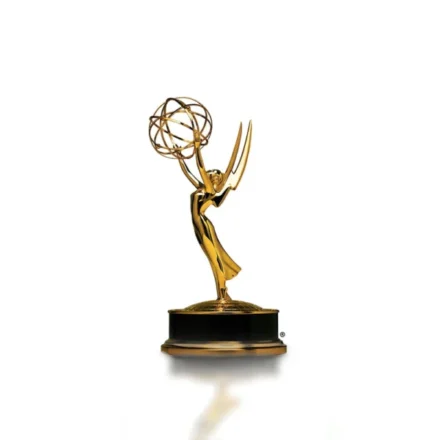
The landscape of modern television is defined not just by the performances on screen, but by the invisible, intricate web of engineering that makes those stories possible. On Wednesday, October 14, the Television Academy and the National Academy of Television Arts & Sciences (NATAS) will convene at the Saban Media Center in North Hollywood to celebrate this silent engine of the industry. The upcoming Engineering, Science & Technology Emmy Awards ceremony serves as a high-profile recognition of the innovators whose work has pushed the boundaries of what, where, and how television is produced.
This year’s ceremony holds particular significance, as the two academies continue to explore a formal reunification—a move that would consolidate the prestige and resources of both organizations. By joining forces for this event, the academies are signaling a unified vision for an industry currently undergoing its most radical technological transformation since the transition to high-definition broadcast.
The Pillars of Progress: A Historical Context
The history of the Emmy Awards for engineering is a reflection of the medium’s own evolution. From the early days of analog broadcast to the current era of generative AI and global satellite connectivity, these awards have consistently identified the "necessity and ingenuity" that drives progress.
The collaboration between the Television Academy and NATAS is not without precedent; the organizations previously merged their engineering ceremonies for the 2014 season. This year’s joint effort, however, comes at a pivotal moment. As the industry grapples with the complexities of remote production, cloud-based workflows, and the integration of artificial intelligence, the need for a standardized, unified recognition of technological excellence has never been greater.
Honoring the Architects of Industry
The ceremony will bestow top honors upon individuals and institutions whose long-term contributions have created the foundation upon which contemporary television stands.
The Charles F. Jenkins Lifetime Achievement Award: Barry B. Zegel
The Television Academy has awarded the Charles F. Jenkins Lifetime Achievement Award to Barry B. Zegel. A veteran of CBS, Zegel’s career represents the bridge between traditional broadcast infrastructure and the modern, digital-first landscape. As the former senior vice president and general manager of CBS Television City, Zegel was instrumental in guiding the industry through the high-definition transition. Beyond his operational success, Zegel is recognized for his commitment to industry governance and his role in founding the Television Academy’s Science & Technology Peer Group. By establishing a permanent home for engineers within the Academy, Zegel ensured that the architects of the technology would have a seat at the table alongside creators and performers.
The Philo T. Farnsworth Corporate Achievement Award: Chapman/Leonard
For over eight decades, Chapman/Leonard Studio Equipment Inc. has been the silent partner of cinematographers and directors. Founded by Ralph Chapman in 1945, the company has fundamentally altered the physical language of television. From the introduction of the Hercules Mobile Crane—the first to feature hydraulic self-leveling—to the modern Hydroscope, Chapman/Leonard’s equipment has expanded the visual vocabulary of the medium. Today, under the leadership of Charles Leonard, the company remains a cornerstone of production, proving that mechanical innovation remains as vital as digital advancement.
Transforming the Edit Suite: Software and Workflow Innovations
The 2026 awards highlight a shift toward software-defined production. Leading this charge is Adobe Inc., honored for the development of Adobe Premiere. Over two decades, Premiere has evolved from a simple editing tool into a comprehensive ecosystem that has democratized high-end post-production. Its format-agnostic architecture and integration of machine learning and generative AI have accelerated creative workflows, allowing productions to iterate faster and more affordably.

Parallel to this, Avid Technology receives recognition for the Avid DNx codec family. By providing a "mezzanine" standard that carries creative intent from acquisition to final delivery, Avid has effectively solved the "format friction" that previously plagued multi-camera, multi-codec television production. This standardization allows editors to focus on narrative and performance rather than the technical burdens of transcoding and rendering.
Bridging the Physical and Digital Worlds
Modern production often requires the simulation of reality or the bridging of massive distances. Several recipients this year were chosen specifically for their ability to solve these logistical hurdles:
- Starlink Services, LLC: By deploying a constellation of low-orbit satellites, Starlink has effectively ended the tyranny of geography in television production. With latency reduced to approximately 25 milliseconds, producers can now film, stream, and collaborate from the most remote locations on Earth with the same responsiveness as an in-studio setup.
- Snow Business USA: The creators of "Snowbase," a wood-pulp-based, biodegradable artificial snow, have revolutionized set design. By creating a product that is safe for the environment, easily applied to any surface, and capable of mimicking the physical properties of real slush, they have slashed production costs and strike times for location shoots.
- Accentize (Chameleon): Using neural networks, Chameleon allows audio engineers to match the reverberation characteristics of different spaces instantaneously. This technology has become essential for integrating ADR (Automated Dialogue Replacement) into location-captured audio, ensuring seamless sonic continuity.
- Hitomi (MatchBox Glass): This tool has turned the ubiquity of the iPhone into a professional-grade measurement instrument for audio/video synchronization, replacing expensive, specialized hardware and simplifying the complexities of distributed, live production.
- ARRI (Trinity 2): The Trinity 2 stabilizer system has redefined what a camera operator can do. By enabling fluid, 360-degree transitions and complex trajectories that would have previously required multiple pieces of equipment, ARRI has empowered cinematographers to capture continuous, immersive takes in previously impossible environments.
NATAS Excellence: Engineering the Future of Live Broadcast
The NATAS awards focus heavily on the infrastructure of live, large-scale event television. Key winners include:
- Web-Based Remote Monitoring: Recognizing the collaborative effort of SipRadius, NBCU, Grass Valley, and others, this award honors the systems that enabled real-time, high-quality production during the isolation of the pandemic, which have now become the standard for distributed global broadcasts.
- ATSC 3.0 NextGen TV: The Advanced Television Systems Committee is being honored for the successful standardization of the first fully IP-based broadcast standard. This achievement is not merely technical; it represents a fundamental shift in the broadcast business model, enabling UHD, interactive services, and enhanced connectivity.
- AI-Based Face Replacement: Acknowledging the work of Disney Research, Rising Sun Pictures, Digital Domain, and Metaphysic, this award addresses the controversial but rapidly growing field of AI-assisted performance preservation. This technology allows for seamless de-aging and visual effects while maintaining the integrity of the actor’s performance, setting a new bar for visual storytelling.
Implications for the Industry
The 2026 Emmy Awards for Engineering, Science & Technology serve as a barometer for the state of the medium. The focus on AI, IP-based workflows, and remote accessibility points to a future where the "studio" is no longer a fixed location, but a dynamic, cloud-connected state of mind.
"Television has always been shaped by those who dare to imagine what’s possible," said Cris Abrego, chair of the Television Academy. His sentiment is echoed by NATAS chair Terry O’Reilly, who noted, "The most meaningful technological innovations don’t simply improve television; they redefine what it can be."
As the industry looks toward the October ceremony, the focus remains on the intersection of human creativity and technical mastery. The nominees for "Excellence in Production Technology," including the team behind Star Wars: Skeleton Crew and the Prime Vision NFL broadcast, further emphasize that these tools are only as powerful as the stories they enable.
In an era of rapid technological disruption, the 2026 Emmy Awards do more than hand out statues; they validate the rigorous, often invisible work that ensures the television industry remains a vibrant, evolving, and essential component of global culture. Whether it is through the deployment of low-orbit satellites or the development of a biodegradable snow, these innovators are the ones writing the next chapter of the medium.