Beyond the Screen: How Streaming Giants Are Redefining Entertainment in the Post-Blockbuster Era

For decades, the metric for success in the entertainment industry was singular and rigid: box office receipts, Nielsen ratings, and the critical acclaim of a feature film or a primetime series. Hollywood was built on the foundation of the “appointment viewing” model—a captive audience tuning in at a specific time for a specific story. But the digital landscape has shifted beneath the feet of traditional media conglomerates.
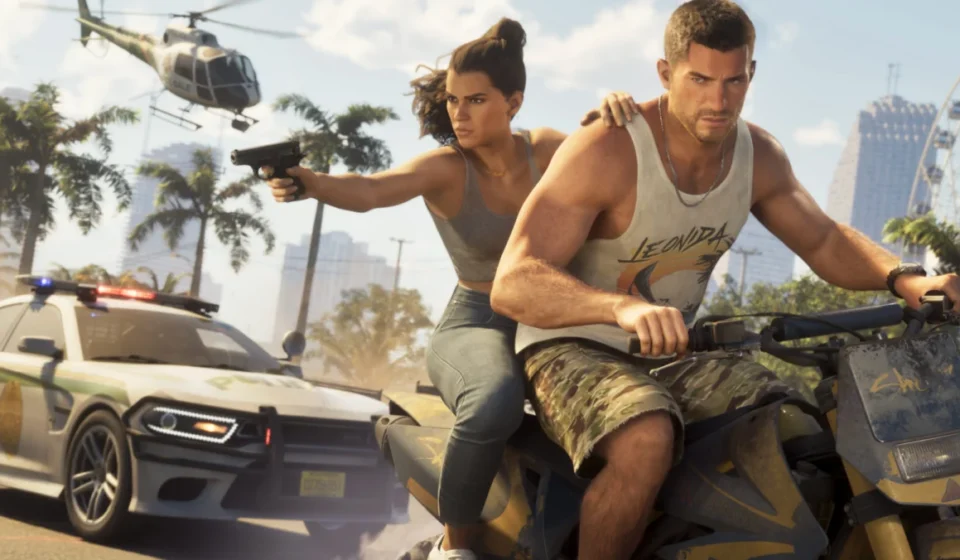
In late August, a seismic event occurred on Netflix that underscored this transformation. A 26-minute “extended look” at Grand Theft Auto VI—the most anticipated video game in history—debuted on the platform. It wasn’t a movie, nor was it a television series. Yet, it shattered records, causing global traffic spikes and crashing servers as millions of users logged on simultaneously to witness the spectacle. It outperformed prestige dramas and high-budget thrillers, proving that the modern definition of “content” has irrevocably expanded.
The New Metric of Engagement: Data and Dominance
The success of the GTA VI trailer was not a fluke; it was a symptom of a broader strategic pivot. On Netflix’s internal charts, this “first-of-its-kind” premiere captured 31.1 million views, securing the No. 1 spot in 87 countries. To put this into perspective, the new Robert De Niro thriller The Whisper Man trailed significantly behind with 23.2 million views.
The impact was immediate and measurable. According to Sensor Tower, app downloads for Netflix surged by 24 percent on the day the trailer dropped. This highlights a critical reality for streaming executives: in an era of hyper-competition, traditional narrative content is no longer the sole driver of user acquisition.
Chronology of a Digital Shift
- Early 2020s: Streaming platforms begin experimenting with interactive content (e.g., Black Mirror: Bandersnatch), testing the waters of non-linear engagement.
- July 2024: Disney announces a landmark partnership with TikTok, integrating creator-led content directly into the Disney+ ecosystem to capture mobile-first audiences.
- Late August 2024: The Grand Theft Auto VI trailer debuts on Netflix, effectively functioning as a “blockbuster” and proving that video game marketing can command higher engagement than traditional cinema.
- July 2024 (Ongoing): Amazon Prime Video officially integrates a dedicated “Games” tab, positioning the platform as a holistic entertainment portal rather than a siloed streaming service.
The Mobile-First Mandate: Why TikTok and Games Matter
As streaming platforms compete for a finite resource—the consumer’s time—they are confronting the reality that long-form content is not always the most effective way to maintain daily active users.
Disney, a company synonymous with cinematic storytelling, has made the most surprising pivot by embracing the bite-sized nature of TikTok. Recognizing that younger demographics are spending the majority of their screen time on mobile devices rather than living room televisions, Disney is actively bridging the gap between its legacy assets and modern social media consumption. By curating fan-led TikTok content within Disney+, the company is attempting to keep its brand relevant in the chaotic, high-velocity world of social feeds.
This trend is mirrored by NBCUniversal’s Peacock and Warner Bros. Discovery’s HBO Max. Peacock, in particular, has leaned into mobile-first vertical video. The platform has experimented with AI-generated avatars—such as a digital version of Andy Cohen—to guide users through the “Bravo-verse,” and has integrated daily interactive games like Jeopardy! Today and Public Eye. These are not merely distractions; they are retention tools designed to keep users within the app ecosystem even when they aren’t looking to commit two hours to a feature film.
Official Perspectives: The Philosophy of Convergence
Industry leaders are no longer shy about acknowledging that the “streaming wars” have entered a new, more complex phase. Matt Strauss, chairman of NBCUniversal Media, notes that the evolution is driven by consumer behavior rather than artistic preference.
“Increasingly, we’re finding that people are watching our shows, and then they’re going on social media, they’re looking for community,” Strauss explains. “If you want to create the best experience, you have to go beyond the premium content and you have to start thinking differently about what’s the modality of the device that they’re using. And what’s the behavior of how they’re engaging with other content.”
This sentiment is echoed by Amazon’s leadership. Jeff Gattis, GM of gaming for Amazon, views the integration of video games into Prime Video as a natural evolution. When Amazon folded games like Hogwarts: Legacy and Indiana Jones and the Great Circle into the Prime bundle, it signaled a move away from the “streaming-only” identity.
“What I see is this continued convergence between television, movies, and video games,” Gattis says. “We kind of started with [a model where] you’d see a movie and then a video game would get made after it, or you’d see a video game and a TV show get made, but you’re increasingly seeing these things come closer and closer together as entertainment lines blur.”
Implications for the Future of Hollywood
The implications of this shift are profound. For decades, the “core competency” of a major studio was the production of high-quality narrative content. Today, the core competency is the management of an “attention ecosystem.”
1. The Death of the Silo
The traditional wall between gaming, social media, and prestige streaming is collapsing. Platforms that refuse to adapt are finding themselves losing market share to those that offer a comprehensive suite of digital experiences. If a user can find a game, a social media feed, and a movie in one app, they are significantly less likely to exit that app for a competitor.
2. The Rise of "Interactive Blockbusters"
As demonstrated by the GTA VI trailer, marketing materials themselves have become premium content. We are approaching a future where the launch of a product—whether it be a game, a sneaker line, or a tech release—is packaged as a streaming event. This effectively turns the streaming platform into a global digital town square.
3. Monetization of Community
By leaning into TikTok creators and interactive games, platforms are effectively outsourcing their community engagement. Instead of spending millions to keep users interested in a legacy franchise, they are empowering fans to create content that sustains interest, which the platform then hosts and monetizes.
4. The Challenge of Brand Identity
The risk for these companies is a dilution of their brand. If a platform tries to be a movie theater, a gaming arcade, and a TikTok feed, does it lose its identity? Disney is currently navigating this by carefully curating the TikTok content it allows on its platform, ensuring that the "Disney magic" remains intact even when presented through a modern, mobile-first lens.
Conclusion: The New Entertainment Landscape
The era of the purely passive viewing experience is drawing to a close. While television and film will remain the heart of the streaming business, they are no longer the entire body. The successful platforms of the next decade will be those that master the art of convergence—creating spaces where the line between a viewer and a player, or a fan and a creator, is permanently erased.
As the battle for consumer attention intensifies, the definition of a “streaming platform” will continue to expand. If a video game trailer can command more attention than a star-studded feature film, then the industry must accept that the old rules no longer apply. The future of Hollywood isn’t just about what we watch—it’s about where we engage, how we play, and how deeply integrated these platforms become into our daily digital lives. We are no longer just audiences; we are participants in an ever-expanding, interconnected entertainment network.