

The 79th Cannes Film Festival concluded with a prevailing narrative among the international press corps: a "ho-hum" edition devoid of singular, consensus-shattering masterpieces. Yet, this dismissive refrain served only to obscure a more profound, subterranean shift occurring across the Croisette. Beneath the surface of the much-debated Competition, 2026 proved to be a year defined by the "accumulative" film—works that eschewed the white-knuckle, visceral shocks of previous years in favor of incremental, muscle-memory-building emotional narratives.
The Competition: A Study in Contrasts
The festival’s top prize, the Palme d’Or, was awarded to Cristian Mungiu’s Fjord, a sprawling, multilingual indictment of the Norwegian child protective services. While the film’s technical proficiency is undeniable, its win sparked intense debate. Critics noted that Fjord leaned into a reactionary, "stacked-deck" narrative structure—a stark departure from the nuanced, collaborative cinema favored by other contenders. For many, Mungiu’s second Palme felt like a retreat into a button-pushing cynicism that stands in direct opposition to the year’s more daring, empathetic works.
Chief among those neglected by the jury was Ryusuke Hamaguchi’s All of a Sudden. A masterclass in the "adventure of reflection," the film tracks an evolving, organic friendship between a Japanese playwright (Mari) and a French eldercare manager (Marie-Lou). Rather than relying on traditional dramatic conflict, Hamaguchi crafts a dialogue-driven lifeline that mirrors the modern human condition: the narrowing distance between mundane daily check-ins and existential dread regarding the world’s decline. While the film missed the Palme, the jury recognized the lead performances of Virginie Efira and Tao Okamoto with a joint Best Actress win—a necessary nod to a film that transformed the Lumière Theater into a space of profound, shared intimacy.
Chronology of Discovery: From Borderlands to Pompeii
The festival’s pacing was, as ever, a subject of contention. The placement of Valeska Grisebach’s The Dreamed Adventure—a three-hour-plus triumph—on the final afternoon of premieres was viewed by many as a scheduling misstep. However, the film emerged as a definitive highlight.
Set in the post-Soviet borderlands, the film follows Veska (Yana Radeva), an archaeologist navigating a landscape defined by performative masculinity and outdated gangster tropes. Grisebach’s directorial approach—rooted in years of lived-in research—delivers a sharp, bluff critique of power dynamics. When asked about her focus on the struggle between the strong and the weak, Grisebach offered a frank assessment of her cinematic intent: "It was more interesting to address ideas about who is strong and who’s weak… Who is, to speak frankly, fucking, and who is being fucked?"
The festival also saw a significant pivot toward historical re-examination. Pawel Pawlikowski’s Fatherland offered a fleet-footed, elegant road movie capturing the 1949 speaking tour of Thomas Mann. By juxtaposing 19th-century philosophical principles against the crumbling ruins of postwar Germany, Pawlikowski created a chilling mirror to our own era’s resurgent authoritarianism. Similarly, Emmanuel Marre’s A Man of His Time utilized the aesthetic of hard-lit 16mm film to ground its depiction of a Vichy-era bureaucrat’s moral rot, grounding the abstract horror of fascism in the mundane, paper-pushing reality of its protagonist.
The Critics’ Week and the Shift in Hierarchy
One of the most heartening developments of 2026 was the ascent of titles outside the traditional Competition hierarchy. Marine Atlan’s La Gradiva, which premiered in the Critics’ Week, was widely regarded as the festival’s best-reviewed discovery. Filmed on location in Pompeii, Atlan’s debut is an electric, tender observation of a school trip that refuses to condescend to the teenage experience. By treating adolescent angst with the same seriousness as historical tragedy, Atlan established herself as a vital new voice, securing US distribution via 1-2 Special and earning the kind of critical fervor that often bypasses the Grand Théâtre Lumière.

Other notable debuts included the Camera d’Or winner, Clarissa, a Nigerian-led reimagining of Virginia Woolf’s Mrs. Dalloway by Arie and Chuko Esiri. The film’s bold integration of colonialist critique—filtered through a lens inspired by Chinua Achebe—offered a fresh, sophisticated perspective on the classic literary adaptation.
Supporting Data and Sidebar Successes
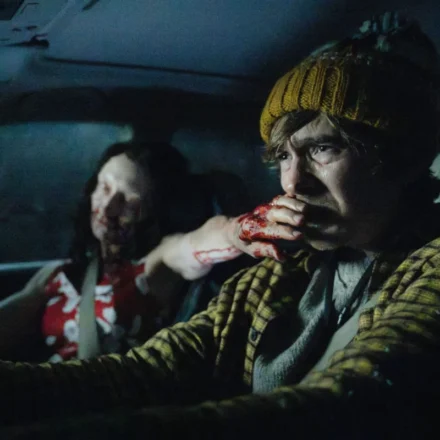
The festival was defined by a diverse array of genre-bending experiments, many backed by NEON. These included the visceral, monster-driven horror of Hope and the classical family tragedy of James Gray’s Paper Tiger. In the Un Certain Regard section, the prize went to Sandra Wollner’s Everytime, a film lauded for its innovative sound design and its ability to map the disparate, mysterious pathways of grief.
Perhaps the most polarizing and haunting entry was Arthur Harari’s The Unknown. Featuring a vulnerable performance by Léa Seydoux, the film defies simple categorization. While critics attempted to frame it as a standard body-swap narrative, Harari’s work functions more as a floating signifier for trauma and the estrangement of the self. It remains a testament to the festival’s ongoing ability to foster films that refuse to meet traditional audience expectations.
Official Responses and Political Implications
Cannes 2026 concluded not just with artistic debate, but with an explicit anti-authoritarian stance. Andrei Zvyagintsev, the Grand Prix winner for his film Minotaur, used his platform to deliver a searing critique of Vladimir Putin. His call for an end to the war in Ukraine resonated through the industry, emphasizing the festival’s enduring role as a geopolitical stage.
The presence of films like Radu Jude’s update of Diary of a Chambermaid—which highlights the modern "double binds" of labor and migration—further underscored the industry’s shift toward documenting the precarity of the current era. These films, alongside Ira Sachs’ The Man I Love, suggest a cinematic landscape that is moving away from the "wham-bam" spectacle toward a more introspective, performance-driven examination of identity and loss.
The Legacy of the 79th Edition
While pundits may continue to label 2026 as a "muted" year in terms of star power, such an assessment ignores the reality of the films themselves. The true legacy of this edition is the reclamation of the "gradualist" film. From the quiet, organic connection between the leads of All of a Sudden to the devastating, lingering grief in Everytime, the festival proved that the most impactful stories are not those that scream for attention, but those that seep into the viewer’s consciousness, building a "dramatic muscle memory" that persists long after the credits roll.
As the curtains closed on the Lumière Theater, the consensus among those who looked past the surface was clear: Cannes 2026 was not a failure of imagination, but a victory of patience. It was a festival that demanded more from its audience—more reflection, more empathy, and a greater willingness to sit with the uncomfortable, quiet truths of our time. Far from a year to be forgotten, 2026 will likely be the year scholars and cinephiles return to, identifying the moment when the "masterpiece" was redefined as a cumulative, living experience rather than a singular, explosive event.