
HBO’s Lanterns has rapidly established itself as more than just a procedural featuring the Green Lantern Corps; it is quickly revealing itself to be a foundational pillar of James Gunn and Peter Safran’s new DC Universe (DCU). While the series focuses on the terrestrial and cosmic trials of John Stewart and the legacy of Hal Jordan, it has consistently served as a breadcrumb trail for the arrival of the caped crusader. With the release of its third episode, the show has dropped a cryptic hint that suggests the presence of one of Gotham’s most volatile criminal masterminds: Black Mask.
The Foundation of a Shared Universe: Connecting the Dots
To understand why a background advertisement in Lanterns matters, one must look at the structural groundwork laid by the series since its premiere. Lanterns has been meticulous in establishing its place within the broader DCU timeline. Episode 1 provided much-needed clarity, confirming that Kyle Chandler’s Hal Jordan revealed himself to the public in 1996—placing the veteran Lantern nearly three decades ahead of the events seen in James Gunn’s Superman.
This temporal placement allows the show to function as a bridge between the "old guard" of the DC legacy and the new dawn of heroes. The show also introduced Aaron Pierre as John Stewart, grounding his origin as the son of a Marine and setting a gritty, grounded tone. However, the most vital narrative thread began with a subtle piece of dialogue. When Sheriff Kerry Kane (Kelly Macdonald) was heard on the phone during the premiere, she dropped a seemingly innocuous instruction: "Tell Barb I said hey."
In the landscape of DC lore, "Barb" is almost universally understood to be Barbara Gordon. When Episode 2 confirmed that Sheriff Kane hails from Gotham City, the implication became undeniable: she has ties to the GCPD, likely to Commissioner James Gordon himself. This transformed a throwaway line into a significant piece of world-building, signaling that the Gotham of the DCU is already populated and functional, waiting for its Dark Knight to step into the light.
Janus Cosmetics and the Rise of Roman Sionis
The narrative tension reached a new height in Episode 3. As John Stewart navigates an abandoned mall—a sequence heavy with atmospheric dread—the camera lingers on a sign for "Janus Cosmetics." For the casual viewer, it is set dressing. For the devoted comic book reader, it is a flashing neon sign pointing toward Roman Sionis, the man behind the terrifying Black Mask.

In the source material, Janus Cosmetics is the corporate entity originally founded by Charles Sionis. The tragedy of the company lies in the hands of his son, Roman Sionis. Debuting in Batman #386 (1985), Roman is a cautionary tale of generational wealth gone wrong. A childhood friend of Bruce Wayne, Roman’s life took a dark turn after he murdered his own parents to inherit their company. His subsequent mismanagement, fueled by ego and cruelty, led the firm to ruin.
When Lucius Fox and Wayne Enterprises intervened to acquire the failing company, Roman was ousted, a humiliation that served as the catalyst for his transformation into Black Mask. He became a crime lord, leading the "False Face Society," and donned a mask carved from the wood of his father’s coffin. By placing a Janus Cosmetics advertisement in Lanterns, the showrunners are doing more than paying homage; they are potentially establishing the economic and criminal backdrop of a Gotham City that has yet to be fully explored in this new cinematic universe.
Visual Storytelling: The Sinister Symbolism of the Ad
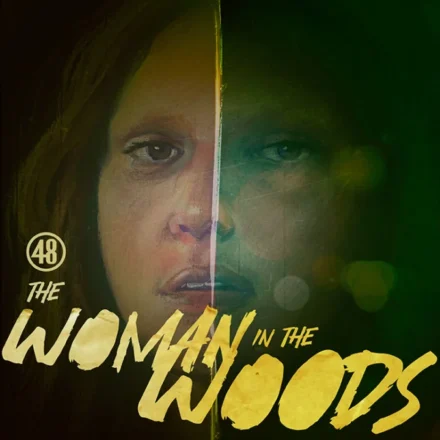
The execution of this Easter egg goes beyond the mere inclusion of a brand name. The advertisement featured in the episode displays a model with her face partially obscured by the leaves of a black plant. This is a multi-layered reference. Firstly, it echoes the dark, botanical imagery often associated with DC’s more macabre aesthetics. Secondly, and more disturbingly, it mirrors the history of Janus Cosmetics within the comics, where Roman Sionis’s final product line—a toxic, disfiguring makeup—caused catastrophic harm to its users.
The placement of this ad next to a "Coming Soon…" poster adds an eerie sense of foreboding. It suggests that the show is not just referencing history, but perhaps teasing an active criminal element currently operating in the shadows of the DCU. Given that we have yet to see a definitive, long-term iteration of Black Mask in live-action—despite appearances in Gotham, Batwoman, and the Birds of Prey film—this could be the "definitive" version the studio is currently constructing.
Implications for the ‘Brave and the Bold’
The burning question for fans is how this ties into the upcoming The Brave and the Bold film. While rumors have circulated that the project may be currently in a state of flux due to corporate restructuring at Warner Bros., the connective tissue being built by Lanterns suggests that the DCU’s Gotham is being developed with long-term intent.

If Black Mask is being positioned as a player in this universe, it changes the texture of the DCU’s Batman. Black Mask is not a super-powered cosmic threat; he is a gritty, brutal, and calculated crime lord. His inclusion would signal a tone for the DCU’s Batman that is closer to the street-level, detective-focused noir stories that many fans have been clamoring for.
Furthermore, the "Lanterns" series seems to be operating as an anthology of sorts, where every episode contains a specific, deliberate nod to the Bat-family. If this trend continues, the series may serve as the primary vehicle for introducing the status quo of Gotham before the Dark Knight makes his official, grand debut.
A Legacy of Lanterns and Masks
It is also worth noting the bizarre and compelling intersection between the Green Lantern Corps and Black Mask in the comics. During the iconic Blackest Night event, the cosmic threat of the Black Lantern Corps saw various deceased villains reanimated, including Black Mask. While it is unlikely that Lanterns will immediately jump to such a massive crossover, the mention of "Black Lanterns" in the current discourse surrounding the show’s potential future is telling.
Whether or not the showrunners intend to bring the character of Black Mask to life in the physical sense, the act of placing these "Easter eggs" serves a dual purpose. It satisfies the core fanbase’s desire for deep-cut lore, and it provides a cohesive, shared reality that makes the DCU feel lived-in and interconnected.
While Creature Commandos gave us our first, albeit animated, glimpse of the DCU’s Batman, the mystery surrounding the live-action iteration remains the most anticipated reveal of the current franchise. By utilizing Lanterns to flesh out the criminal underbelly of the world, DC Studios is demonstrating a patient, methodical approach to world-building.

Conclusion: The Dark Knight’s Shadow
As Lanterns continues its run, the focus remains firmly on John Stewart and his growth as a hero. However, the presence of these subtle, haunting references to Gotham City and its darker denizens suggests that the creative team is working toward a larger, grander narrative. The inclusion of Janus Cosmetics is a clear indication that the influence of the Batman rogues gallery is being felt throughout the DCU, even when the hero himself is not on screen.
For now, viewers should keep their eyes peeled. The next time a background sign appears in Lanterns, it may not just be a nod to comic book history—it may be the first piece of the puzzle for the most anticipated chapter of the DC Universe yet to come. Whether Black Mask is the primary antagonist of a future project or simply a fixture in the corrupt skyline of Gotham, his presence is a welcome sign that the DCU is leaning into the darker, more complex side of its legendary history.