

The death of Sam Neill at age 78 marks the end of an era for a specific, vanishing breed of leading man: the intellectually rigorous everyman who could transition seamlessly from the cerebral intensity of international arthouse cinema to the spectacle-driven machinery of the Hollywood blockbuster. A man of quiet cultivation, known as much for his organic vineyard in Central Otago as for his face appearing on screens across the globe, Neill’s passing has left a void in the cinematic landscape that feels uniquely profound. He was a performer who possessed the rare, alchemical ability to treat the most lurid genre material with the gravity of Shakespeare, all while retaining a self-deprecating wit that made him one of the industry’s most beloved figures.
A Legacy Written in Celluloid: A Chronological Retrospective
To trace the arc of Sam Neill’s career is to trace the evolution of modern genre cinema. While his global stardom was cemented in the mid-1990s, his foundations were built in the gritty, experimental landscapes of the late 1970s and early 80s.
The Formative Years: From Arthouse to Antichrist
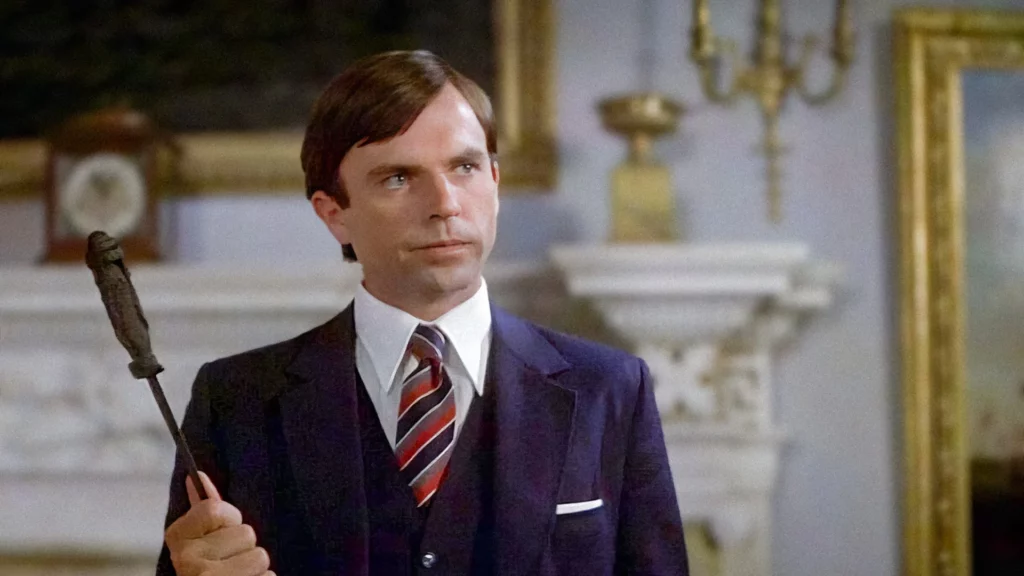
Neill’s breakthrough arrived with Gillian Armstrong’s 1979 classic My Brilliant Career. As the refined, brooding suitor to Judy Davis’s aspiring writer, Neill exhibited a screen presence that felt both period-accurate and startlingly modern. His performance caught the eye of industry titans, including James Mason, whose recommendation paved the way for Neill’s entry into American horror with The Omen III: The Final Conflict (1981). Playing the Antichrist, Neill brought a chilling, corporate-slick menace to the role, proving that he could command a screen as a villain just as easily as a romantic lead.
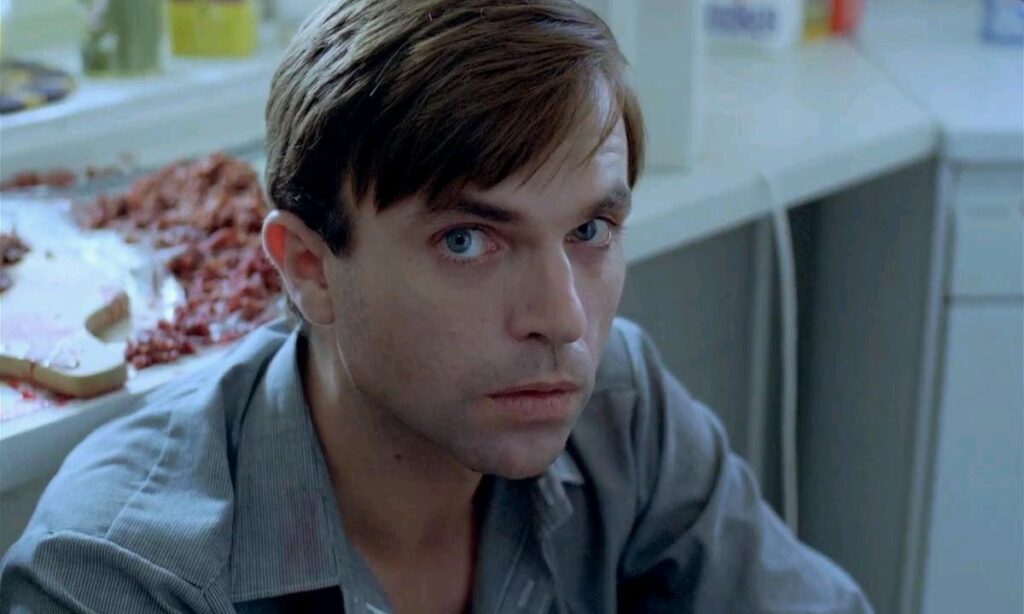
However, it was his 1981 collaboration with Andrzej Żuławski in Possession that truly showcased his range. In a role that required him to navigate intense psychological trauma and bizarre, surrealist horror, Neill displayed an uncanny ability to ground the most extreme scenarios in raw, human emotion.

The Blockbuster Pinnacle
By the early 90s, Neill was a veteran of the screen, perfectly positioned to anchor Steven Spielberg’s Jurassic Park (1993). As Dr. Alan Grant, Neill delivered a masterclass in reactionary acting. His portrayal was a study in rationalism under pressure; he was the audience’s proxy, wide-eyed and skeptical, navigating a world that had moved past the constraints of his scientific understanding. His performance established a "Spielbergian" archetype—the heroic intellectual—that would define his commercial appeal for decades.
The Genre Alchemist: Madness and Beyond
Following his global success, Neill leaned into the strange, the cosmic, and the macabre. His work with John Carpenter in In the Mouth of Madness (1994) remains a cult touchstone. As John Trent, a cynical insurance investigator who descends into a Lovecraftian nightmare, Neill turned in a performance of desperate, manic brilliance. He treated the B-movie premise as if it were high tragedy, anchoring the film’s tentacled horrors with his own palpable, human suffering. This was followed by Event Horizon (1997), where he pushed his physical and psychological limits further, portraying a character whose transition from man to monster was rendered with terrifying conviction.
Supporting Data: The Anatomy of a Collaborator
Beyond his individual performances, Neill’s reputation was defined by his extraordinary ability to elevate his co-stars. His filmography is littered with performances where he acted as a force multiplier for his female leads. In The Piano (1993), A Cry in the Dark (1988), and Dead Calm (1988), Neill displayed a unique capacity for "chemistry through restraint."
Whether he was playing opposite Nicole Kidman, Holly Hunter, or Meryl Streep, Neill never competed for the spotlight; he reflected it. He understood the fundamental physics of a scene: if you ground your reality, the audience will believe whatever else you place in the frame, whether it’s a dinosaur, a ghost, or a psychological obsession.

Furthermore, his commitment to his craft was matched only by his commitment to his homeland. His co-directed documentary, Cinema of Unease (1995), remains a vital piece of scholarship on New Zealand’s cultural identity. It showcased a man who was deeply reflective about the "troubled reflection" of his country’s history, willing to use his platform to interrogate the religious, racial, and social undercurrents of his society.
Official Responses and the "Good Guy" Narrative
In the wake of his passing, the outpouring of grief from peers has been both extensive and notably sincere. Director John Carpenter’s public tribute, characterizing Neill as a "remarkable actor, father, farmer, and friend," highlights the dual life the actor successfully navigated.
The industry consensus on Neill is rare in its unanimity: he was one of the "good guys." This wasn’t merely a Hollywood platitude; it was evidenced by his transparent, candid approach to life. His social media presence, under the handle @TwoPaddocks, became a digital diary of a life well-lived. Whether he was documenting his yoga sessions with his pigs, sharing a quiet moment with a duck during times of global anxiety, or championing his organic wine estate, Neill offered a blueprint for the "celebrity as human."
His departure from Twitter following its acquisition by Elon Musk was emblematic of his personal integrity. He refused to inhabit a space that prioritized anger and divisiveness, opting instead to walk away quietly—a final act of professional and moral consistency.
Implications: The Loss of a Modern Anchor
The loss of Sam Neill represents more than the passing of a talented actor; it marks the fading of a particular archetype of stardom. In an age of high-concept digital franchises and social media-curated personas, Neill stood as a bridge to an older tradition. He was a man who worked hard, spoke plainly, and never lost his sense of wonder or his sense of humor—even in the face of his own mortality.
When he was diagnosed with non-Hodgkin lymphoma in 2023, he met the news with the same pragmatism he brought to his roles. His refusal to be defined by his illness, and his public declaration that he simply wanted to "keep living" because he "really enjoyed living," serves as a final, poignant script for his life.
A Cinematic Finality
There is a poetic resonance in how many have chosen to remember him: as John Trent in In the Mouth of Madness, sitting in the theater, eating popcorn, watching the world unravel with a wry, knowing smile. He knew the absurdity of the "show," he knew the terror of the "unknown," and yet, he remained in his seat, fully present until the final frame.
Sam Neill leaves behind a body of work that is as eclectic as it is enduring. He was a man who could command the attention of a global audience with a single, terrified glance at a brachiosaurus, yet found his true joy in the quiet corners of his farm in New Zealand. He showed us that the "mouth of madness" is only a temporary state; the real, enduring power lies in the humor, the pathos, and the grace we carry with us while we’re still here.
As we look back at his extensive filmography, we are reminded that while the "rationalist coming unglued" was a recurring role for him, in his own life, Sam Neill was the very definition of stability—a man who anchored our collective imagination, one frame at a time. He has exited the stage, but the light he cast upon the screen remains, undimmed by time or circumstance.