
After nearly twenty years of development hell, spanning multiple continents and shifting creative landscapes, the acclaimed Japanese director Sabu is finally bringing his ambitious thriller, Arrested Memory, to the screen. Set for high-profile debuts at both the Venice and Toronto International Film Festivals, the film represents more than just a completed project—it is the culmination of a long-gestating artistic vision that has evolved alongside its creator.
Variety is exclusively unveiling the first trailer for Arrested Memory, a film that Sabu believes is profoundly better for having waited. "I was confident that the script had something special, so I always believed that it would eventually be made," Sabu tells Variety. "It was really a matter of waiting for the right opportunity and the right timing. Compared with the film I envisioned in 2007, I think the finished version has more tension and a greater sense of poignancy."
The Long Road to Production: A Global Journey
The journey of Arrested Memory is a testament to the persistence required in modern independent filmmaking. Over the last two decades, the project faced numerous stalled attempts to move into production, with potential shoots planned for Germany, South Korea, the United States, and Japan. Each of these geographic shifts brought with it a different set of challenges and creative inspirations.
Ultimately, it was Taiwan that provided the stable ground necessary for the project to flourish. The final production was a truly multicultural endeavor, featuring a cast and crew drawn from Taiwan, Japan, Hong Kong, and France. This international collaboration, according to Sabu, injected a unique energy into the film—a synthesis of sensibilities that would have been impossible had the film been anchored in a single, homogenous culture.
"Working with people from different filmmaking cultures created a unique atmosphere that could not have been achieved otherwise," the director notes. "Through this experience, I’ve become even more interested in making films in different countries and places. I feel that working with people from different countries and cultures creates the possibility of discovering something new that I could never have imagined on my own."
The Evolution of the Protagonist: From Corruption to Redemption
At the heart of the film’s narrative evolution is the protagonist, Lee. In the original 2007 draft, Lee was conceived as a cynical, corrupt detective. Sabu’s initial script explored the degradation of a man who once held a strong sense of justice but, over twenty years, allowed his convictions to wither, eventually descending into corruption.
However, as the project sat in development, Sabu’s perspective shifted. He began to see the story not as a cautionary tale of a "bad cop," but as a more complex meditation on the nature of identity and the potential for a return to one’s core self.
"Now, 20 years later, rather than simply portraying him as a ‘bad cop,’ I thought it would be more convincing and interesting to show someone who was once trusted by those around him gradually returning to his more innocent, authentic self after losing his memory," Sabu explains.
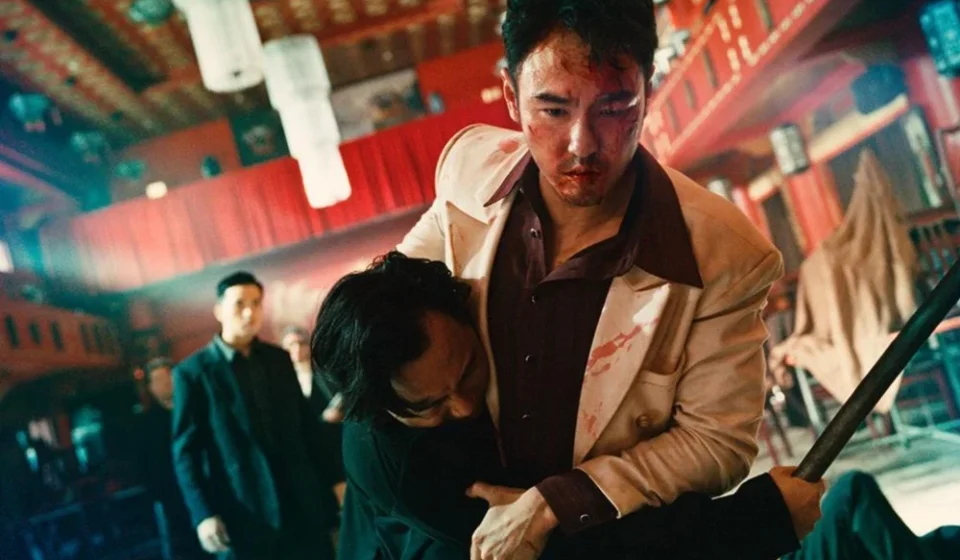
To ground this transformation, Sabu introduced a new element: judo. By making the character a judo-trained officer, the director sought to express Lee’s humanity through physical action rather than dialogue. "I felt that adding judo would allow me to express Lee’s humanity—the idea that he protects people through his actions rather than through words," he says.
The Sabu Methodology: Tension, Comedy, and Precision
Sabu’s career, which began with his 1996 directorial debut Dangan Runner, has been defined by his mastery of "tension-and-release" comedies, including cult favorites like Postman Blues, Monday, and Miss Zombie. His work is characterized by a specific brand of genre-blending that keeps audiences perpetually off-balance.
For Arrested Memory, Sabu utilized a rigorous, almost mathematical approach to filmmaking. Before a single frame was shot, he had already completed nearly 2,000 storyboarded shots. His commitment to the editing process was equally exhaustive, with the film going through 58 distinct versions before reaching its final cut.
When asked if such a grueling process is difficult, Sabu remains remarkably zen. "It’s not particularly difficult. In fact, I expect something to emerge that goes far beyond what I imagined, so I’m completely comfortable with it," he admits.
This philosophy extended to his work with lead actor Ethan Juan. Known for his serious dramatic chops, Juan was pushed by Sabu into a performance that required a delicate balance of gravity and humor. "I needed someone who could deliver a truly excellent serious performance. My comedies are built on tension and release. The more seriously an actor plays a situation, the more humor can emerge from it," Sabu says, noting that Juan’s unique interpretation added a layer of poignancy that wasn’t present in the original writing.
Philosophical Underpinnings: Identity and Memory
Beyond the mechanics of the thriller genre, Arrested Memory serves as a vehicle for Sabu to explore the philosophical implications of identity loss. The premise—a detective losing his memory—allows the film to strip away the "information or set of conditions" that usually define a human being.
"When there is no information or set of conditions influencing us, we open our hearts to kindness when it is offered. If we are pursued or attacked, we run away or fight back. Human relationships are always a process of reflecting one another, and those accumulated interactions ultimately shape who we are," Sabu reflects.
The film serves as an observation of this process, asking how our environment and our interactions with others reflect our true selves. By detaching his protagonist from his past, Sabu is able to present a clean slate, allowing the audience to witness the raw, unfiltered formation of identity through the character’s reactions to the world around him.
Implications for the Future: A New Chapter
After three decades of working across action, comedy, horror, and fantasy, Sabu remains clear about his primary objective: to entertain. While he is certainly an auteur with a philosophical bent, he rejects the idea of art for art’s sake. "I make films to entertain audiences. I’ve always wanted to make films that leave people in a slightly better mood than when they started watching," he states.
The success of Arrested Memory seems to have rejuvenated the director’s creative drive. He already has two fully completed scripts ready for production—one written seven years ago and another from two years ago. While he remains coy about the specifics of his next venture, he offers a tantalizing hint, describing his next project as "a love story that will make you cry."
Regarding his creative process, he describes the spark of inspiration with a touch of mysticism: "When I write a script and approach it with genuine commitment and sincerity, ideas come down from somewhere about 45 degrees to the upper right. Please look forward to what comes next."
As Arrested Memory heads to the festivals, the film stands as a testament to the idea that some stories are worth the wait. In the hands of a director like Sabu, the passage of time—once an obstacle—has become the film’s greatest asset, imbuing it with a depth of maturity and perspective that a younger version of the project could never have achieved.
Lucky Number is currently handling international sales for the film, which promises to be one of the most anticipated international releases on the festival circuit this year. As the world finally gets a look at the trailer, it is clear that for Sabu, the twenty-year journey was merely the preamble to a much larger conversation about memory, humanity, and the enduring power of film.