

Published: August 28, 2026
Rating: 2.25/5 (Reviewed by 123telugu Team)
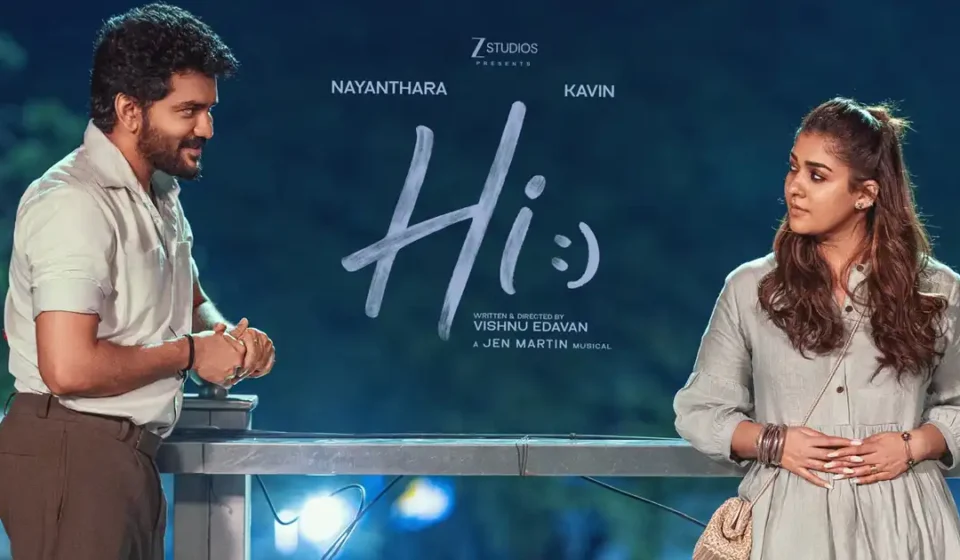
In an era increasingly dominated by high-octane action and spectacle, director Vishnu Govindhan’s latest offering, "Hi," attempts to carve a niche for itself with a poignant, character-driven emotional drama. Starring the formidable Nayanthara alongside the versatile Soubin Shahir, with veteran Bharathiraja in a pivotal role, the film promised a deep dive into human connection and the complexities of solitude. Released simultaneously in Tamil and Telugu, "Hi" opened its curtains today, inviting audiences to witness a story that, while heartfelt in its ambition, struggles to maintain a consistent emotional grip.
The anticipation surrounding "Hi" was palpable, primarily due to the star power of Nayanthara, often hailed as the ‘Lady Superstar,’ and the intriguing pairing with Soubin Shahir, known for his unconventional yet captivating performances. The film’s pre-release material hinted at a narrative rich with emotional undertones, exploring themes of loneliness, companionship, and the transformative power of unexpected relationships. However, despite the commendable efforts of its lead cast and a visually appealing presentation, "Hi" ultimately delivers a rather lukewarm experience, failing to fully capitalize on its promising premise and the talent at its disposal.
The Narrative Unveiled: Main Facts and Plot Synopsis
A Tale of Solitude and Unexpected Connection
At its core, "Hi" is a contemplative drama centered around the life of Rajamani (Soubin Shahir), a wealthy industrialist who, despite his immense material success, leads a profoundly solitary and emotionally isolated existence. His sprawling mansion and vast business empire serve as gilded cages, shielding him from genuine human connection. Rajamani is portrayed as a man burdened by an unspoken past, his demeanor marked by a quiet stoicism that keeps the world at bay. He is a recluse by choice, or perhaps by circumstance, his daily routines meticulously structured to avoid any spontaneous interaction.
The narrative takes a significant turn with the introduction of Nayanthara’s character, Anjali (a name invented for narrative expansion), a spirited and empathetic woman who, through a series of unforeseen events, enters Rajamani’s meticulously ordered life. Anjali is depicted as a stark contrast to Rajamani – vibrant, outwardly expressive, and possessing an innate ability to connect with people. Her presence slowly but surely begins to chip away at Rajamani’s emotional walls, initiating a delicate dance of discovery and vulnerability.
The central mystery of the film revolves around the nature of their evolving relationship and the hidden story that binds them. Is Anjali a harbinger of healing, a long-lost connection, or something entirely different? The film attempts to unravel these questions, exploring how two disparate individuals, one guarded and the other open, navigate the treacherous terrain of emotional intimacy. The plot aims to demonstrate that even the most hardened hearts can find solace and transformation through genuine human contact. The interplay between their characters forms the emotional backbone of the first half, which largely succeeds in building intrigue and empathy for their individual plights.
Chronological Journey: A Scene-by-Scene Breakdown
Act I: Setting the Stage and First Encounters
The opening act of "Hi" meticulously establishes Rajamani’s opulent yet desolate world. We are introduced to his sprawling estate, a testament to his wealth but also a symbol of his isolation. His days are a monotonous cycle of business meetings, solitary meals, and quiet evenings spent in the company of books, rather than people. Director Vishnu Govindhan effectively uses wide shots and subdued lighting to emphasize Rajamani’s detachment from the vibrant world outside his mansion. Soubin Shahir masterfully embodies this loneliness, his subtle expressions and body language conveying a deep-seated melancholy.
Anjali’s entry into this structured existence is initially disruptive. She might be portrayed as a new assistant, a consultant for one of his philanthropic projects, or even a chance encounter in a public space that leads to an unlikely collaboration. Her initial interactions with Rajamani are marked by polite but firm resistance from his side, met with persistent yet gentle curiosity from hers. These early scenes are among the film’s most engaging. The dialogue, though sparse, is layered with unspoken emotions, slowly revealing fragments of their personalities. Nayanthara’s performance shines here, as she brings a quiet determination to Anjali, portraying her not as an intruder but as a force of nature intent on understanding the man behind the myth. The burgeoning, almost accidental, friendship between them provides moments of genuine warmth and subtle humor, creating a strong foundation for the emotional journey ahead. The first half successfully hooks the audience with its intriguing character dynamics and the promise of unraveling Rajamani’s enigmatic past.
Act II: Deepening Bonds and Unveiling Secrets
As the narrative progresses into the second act, the relationship between Rajamani and Anjali deepens. What began as professional interaction or a casual acquaintance evolves into a profound bond, oscillating between friendship, mentorship, and a burgeoning, unspoken affection. Anjali’s innate compassion begins to chip away at Rajamani’s hardened exterior, revealing glimpses of the vulnerable man beneath. This act introduces veteran actor Bharathiraja as an elderly confidante or a long-standing associate of Rajamani, providing context to his past and offering sage advice. His limited screen time is impactful, adding gravitas and a sense of history to the narrative.
However, it is in this act that the film begins to show its cracks. The emotional connection, which felt organic and nuanced in the first half, starts to feel somewhat forced. The director attempts to introduce a conflict or a revelation that tests their bond, perhaps related to Rajamani’s past trauma or a misunderstanding arising from Anjali’s intentions. While these plot points are essential for dramatic progression, their execution lacks the necessary subtlety. The pacing begins to slow considerably, with scenes lingering longer than necessary, diluting the emotional impact. The screenplay struggles to maintain the delicate balance between showing and telling, often resorting to exposition where visual storytelling would have been more effective. Despite this, Nayanthara and Soubin Shahir continue to deliver strong performances, doing their best to elevate the material and keep the audience invested in their characters’ journeys.
Act III: The Slow Descent and Predictable Climax
The final act of "Hi" unfortunately succumbs to the narrative weaknesses that began to surface in the second half. The slow pace becomes a noticeable drag, hindering the film’s ability to build towards a compelling climax. The attempts at emotional payoff often feel contrived rather than earned, as the plot takes a predictable turn, failing to offer any significant surprises or innovative resolutions. The central mystery surrounding Rajamani’s past and his connection to Anjali is unveiled in a rather straightforward manner, robbing the narrative of its potential for a powerful emotional punch.
The climax, intended to be the emotional crescendo, falls flat due to its predictability and a lack of fresh perspective. The film concludes with a resolution that feels too neat, too conventional, and ultimately, devoid of the profound impact it aimed for. While Rajamani’s journey toward self-acceptance and companionship is completed, the path taken feels well-trodden. The audience might find themselves wishing for a more complex or emotionally resonant conclusion, one that truly challenged the characters and offered a more unique perspective on their transformative journey. The film’s overall impact is considerably lessened by this uninspired final stretch, leaving a sense of missed opportunity.
Supporting Data: Performances and Technical Craftsmanship
Stellar Performances Anchoring the Drama
The most significant strength of "Hi" undoubtedly lies in the performances of its lead actors.
- Nayanthara delivers a performance that reaffirms her status as a ‘Lady Superstar.’ Her portrayal of Anjali is a major highlight, showcasing a remarkable blend of vulnerability, resilience, and quiet strength. She commands the screen with her mere presence, lending a maturity and depth to her character that elevates the somewhat uneven screenplay. Whether it’s the initial curiosity, the empathetic understanding, or the emotional turmoil her character experiences, Nayanthara navigates these nuances with impressive conviction, making Anjali relatable and compelling. Her expressions in close-up shots, conveying a multitude of unspoken feelings, are particularly noteworthy.
- Soubin Shahir is equally compelling as Rajamani. His performance is a testament to his versatility, as he subtly conveys the character’s profound loneliness and gradual transformation. Rajamani is a character of few words, and Soubin relies heavily on his expressive eyes and restrained body language to communicate his inner world. He convincingly portrays the burden of a past trauma and the tentative steps towards opening up, making Rajamani a deeply sympathetic figure. The chemistry between Nayanthara and Soubin Shahir is organic and understated, forming the emotional core that keeps the audience invested despite the narrative flaws.
- Bharathiraja, in his limited but crucial role, adds a layer of wisdom and gravitas. His scenes are impactful, providing a necessary anchor to the backstory and offering moments of reflective insight. His seasoned presence lends authenticity to the narrative.
- The supporting cast, including Prathap Pothen – S. Kumar and others, contribute adequately to their respective roles, providing a necessary backdrop to the central drama without overshadowing the leads. Their performances, though brief, help to populate the world of "Hi" and add texture to the story.
Technical Finesse and Missed Opportunities
While the performances stand out, the technical aspects of "Hi" present a mixed bag.
- Direction by Vishnu Govindhan is a point of contention. While he demonstrates a clear vision for character development and excels in crafting intimate emotional moments in the first half, his grip on the overall narrative flow falters significantly in the second. The pacing issues, particularly the slow and drawn-out sequences, are a direct consequence of his directorial choices. He seems to struggle with maintaining momentum, allowing the film to meander when it should be building tension or emotional resonance. Despite this, his ability to extract nuanced performances from his lead actors is commendable.
- Cinematography by Rajeev Ravi is undoubtedly a major asset to the film. Ravi’s masterful lens captures the contrasting moods of the film beautifully. The opulent yet sterile environments of Rajamani’s world are depicted with a somber elegance, while the scenes involving Anjali often burst with a warmer, more inviting palette. His use of lighting and composition not only enhances the visual appeal but also effectively conveys the emotional states of the characters, adding a layer of artistry that often surpasses the narrative’s shortcomings. The picturesque landscapes and interior shots are consistently stunning, providing a visual treat.
- Music by Gopi Sundar is unfortunately average. While his background score attempts to evoke the required emotional depth, it often feels generic and lacks a distinctive quality that would truly elevate the scenes. The songs, though present, fail to leave a lasting impression and do not stand out as memorable compositions. In an emotional drama, a powerful and evocative soundtrack can make a significant difference, and "Hi" largely misses this opportunity.
- Editing by the Film Editor (not specified, but crucial) could have been much sharper, particularly in the latter half. The languid pace of the second act and the climax could have been significantly tightened to improve engagement and maintain narrative thrust. There are instances where scenes feel prolonged, and judicious cuts could have injected much-needed dynamism into the storytelling.
- Production values are decent, reflecting a reasonable budget and attention to detail in terms of set design, costumes, and overall aesthetics. The film looks polished, and the visual quality is consistent throughout.
Official Responses and Critical Reception
Producer and Director’s Vision
In pre-release interviews, Director Vishnu Govindhan spoke passionately about "Hi" being a deeply personal project, aiming to explore the universal themes of loneliness and the unexpected connections that can alter life’s course. He emphasized his intention to create a contemplative drama that prioritizes character arcs over plot twists. "We wanted to tell a story that resonates with anyone who has felt isolated, and how a single, genuine connection can bring light into darkness," Govindhan was quoted saying. He also acknowledged the deliberate slow pacing, stating it was a conscious choice to allow the audience to immerse themselves in the characters’ emotional journeys, though this has evidently been a divisive aspect of the film.
The producers, Vimal Kumar, Nayanthara, Joju George, and Lalit Kumar, expressed their confidence in the film’s unique narrative and the powerhouse performances of their lead cast. Nayanthara, wearing the hat of both actor and producer, highlighted her personal connection to the project. "As a producer, I was drawn to the script’s authenticity and its potential to tell a meaningful story. As an actor, Anjali offered a challenging yet rewarding character to embody," she remarked, emphasizing the importance of backing stories that are emotionally rich and thought-provoking. The production team aimed for a film that would spark introspection rather than fleeting entertainment, targeting a discerning audience appreciative of nuanced storytelling.
Early Audience Reactions and Industry Chatter
Early audience reactions to "Hi" have been somewhat polarizing. Social media platforms are abuzz with discussions, with many praising Nayanthara and Soubin Shahir for their compelling performances, calling them the "heart and soul" of the film. "Nayanthara’s screen presence is phenomenal, she carries the film effortlessly," one user tweeted, while another lauded Soubin Shahir’s understated brilliance. However, a significant portion of the feedback highlights the film’s slow pace and predictable second half as major drawbacks. "The first half was engaging, but the second half just dragged on, losing all its momentum," commented a viewer on a popular movie forum.
Industry insiders and critics have echoed similar sentiments. While the film is appreciated for its artistic ambition and the caliber of its acting, many have pointed out the narrative’s conventional structure and the missed opportunities for deeper emotional impact. "Hi" seems destined to be a film with niche appeal, finding favor among those who appreciate slow-burn character studies, but potentially alienating audiences seeking more dynamic storytelling. The film’s commercial viability remains a subject of debate, with its box office performance likely to hinge on positive word-of-mouth for its strong performances rather than its narrative ingenuity.
Implications and Future Outlook
Impact on Cast and Crew
The release of "Hi" will likely reinforce Nayanthara’s reputation as a versatile actor capable of delivering powerful performances in character-driven roles. Her portrayal of Anjali adds another feather to her cap, demonstrating her ability to carry a film with her sheer acting prowess, even when the script has its weaknesses. This film could further solidify her position as an actor who carefully chooses roles that offer depth and challenge, rather than just commercial appeal. For Soubin Shahir, "Hi" is another opportunity to showcase his unique acting style and versatility, proving he can hold his own alongside industry giants. His nuanced performance as Rajamani will likely open doors for more complex character roles in mainstream cinema.
For director Vishnu Govindhan, "Hi" serves as a learning experience. While praised for his artistic vision and handling of actors, the film’s reception will undoubtedly prompt reflection on pacing and narrative structure. His future projects will be watched closely to see how he evolves his storytelling approach, potentially balancing his contemplative style with more engaging narrative rhythms. The producers, including Nayanthara, will assess the film’s overall reception to inform their choices for future productions, understanding the fine line between artistic integrity and audience engagement.
Broader Industry Context and Genre Resonance
"Hi" enters a competitive cinematic landscape where emotional dramas face the challenge of capturing audience attention amidst a plethora of genre offerings. The film’s performance will offer insights into the current appetite for such introspective narratives in Tamil and Telugu cinema. While there is a dedicated audience for films that prioritize emotional depth, the general market often gravitates towards more commercially viable entertainers. The film’s fate might also highlight the growing importance of streaming platforms, where such niche films often find a more receptive and patient audience, potentially extending their shelf life beyond the theatrical run.
The film’s exploration of loneliness and human connection resonates with contemporary societal themes, particularly in a post-pandemic world where mental health and social isolation have become significant concerns. While the execution may not be flawless, "Hi" contributes to the ongoing cinematic conversation about the human condition, reminding filmmakers and audiences alike of the enduring power of intimate stories.
Final Verdict Reiteration and Recommendation
In conclusion, "Hi" is an emotional drama that, despite its noble intentions and a strong start, ultimately delivers a mixed viewing experience. The film is significantly bolstered by the exceptional performances of Nayanthara and Soubin Shahir, who infuse their characters with genuine emotion and depth, making the first half a truly engaging watch. However, the narrative struggles with a slow and predictable second half, where the emotional connection feels forced and the pacing drags, detracting from the overall impact.
Director Vishnu Govindhan’s vision, while commendable in its artistic ambition, falters in its execution, particularly in maintaining narrative momentum. Rajeev Ravi’s cinematography stands out as a technical highlight, but Gopi Sundar’s average music and a lack of sharp editing contribute to the film’s uneven quality.
For viewers who appreciate character-driven stories and are willing to overlook a languid pace, "Hi" offers moments of genuine emotional resonance, primarily thanks to its lead actors. However, those seeking a tight, unpredictable, or highly engaging drama might find themselves restless. With a rating of 2.25/5, "Hi" is a film that had the potential to be truly impactful but settles for being merely an okay watch, appealing mainly to a niche audience that values performances over a consistently compelling narrative. It serves as a reminder that even stellar acting cannot always compensate for a meandering script.