
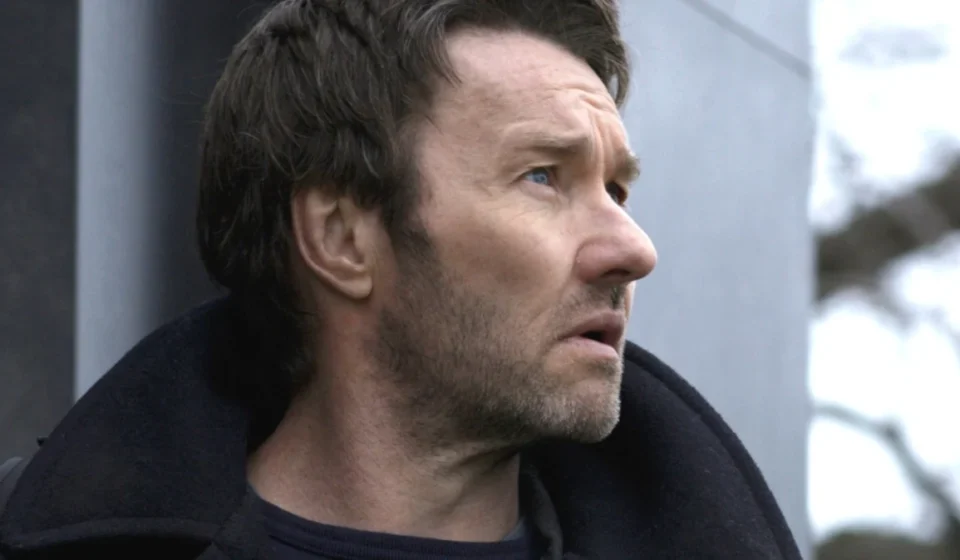
Back Into the Box: Why ‘Dark Matter’ Season 2’s Bold Creative Pivot is a High-Stakes Gamble

Warning: This article contains major spoilers for the Season 2 premiere of Apple TV+’s Dark Matter, titled "A Quiet Life."
When Apple TV+’s Dark Matter first arrived in 2024, it distinguished itself in a crowded landscape of multiverse-themed entertainment. While contemporary cinema and television have often treated the concept of the multiverse as a playground for cameos and chaotic fan-service, Dark Matter—based on the celebrated novel by Blake Crouch—took a different path. It used the "box," a quantum mechanical device that allows travel between alternate realities, as a mirror to examine the human condition: the weight of regret, the ache of nostalgia, and the haunting reality of the "paths not taken."
Now, as the series returns for its sophomore outing, it faces the ultimate challenge of any successful adaptation: how to continue a story that was, by all accounts, effectively concluded in its source material. In an audacious move, series creator Blake Crouch has opted not to tread water but to dismantle the hard-won peace established at the end of Season 1. The result is a status-quo reset that is already proving to be the most controversial decision in the show’s history.
The Chronology of Chaos: From Closure to Crisis
To understand the weight of the Season 2 premiere, one must revisit the emotional landscape of the Season 1 finale. After a grueling odyssey through infinite realities, Jason Dessen (Joel Edgerton) finally managed to secure a future with his wife, Daniela (Jennifer Connelly), and their son, Charlie (Oakes Fegley). The trio escaped their original timeline, leaving behind a world fractured by the machinations of "Jason2"—a version of Jason who had sacrificed his family for scientific success.
The Season 1 ending, while bittersweet, provided a sense of catharsis. The Dessens walked into an unknown world, choosing a blank slate over the trauma of their past. It was an optimistic conclusion: a promise that, regardless of the reality they occupied, the family unit remained intact.
"A Quiet Life," the premiere episode of Season 2, initially invites the audience into a false sense of security. It chronicles the seven months the family has spent in their new reality. They have established a rhythm; they are living a life of relative normalcy, masking the scars of their past with the veneer of suburban stability. However, Dark Matter is fundamentally a show about the inevitability of consequence. The peace is shattered when the multiverse inevitably bleeds into their sanctuary. The arrival of yet another iteration of Jason forces the family to abandon their hard-earned life, once again throwing them into a state of flight.
Supporting Data: Why the Reset Matters
The narrative choice to upend the finale is a calculated risk. By pulling the rug out from under the characters, Crouch is signaling that the "box" is not merely a plot device, but a prison.
The Psychology of the Multiverse
Scientific and philosophical consultants for the series have often noted that the show’s internal logic relies on the "many-worlds" interpretation of quantum mechanics. Every choice creates a branch. By forcing the Dessens to continue running, the show is essentially arguing that in a world of infinite possibilities, there is no such thing as a permanent "happily ever after."
The Creative Evolution
Blake Crouch is in a rare position for a novelist: he is the architect of both the original text and its televised expansion. Typically, sequels suffer when they move away from the author’s original vision. Here, the creative team is leaning into the tension. According to production insights, the decision to force the Dessens back into the box was made to prevent the show from stagnating into a procedural drama. If the family had simply stayed in their new world, the show would have lost its engine—the mystery of the box and the inherent instability of the multiverse.
Official Responses and Creative Direction
In recent interviews, the creative team behind Dark Matter has defended the "A Quiet Life" twist as a necessary evolution. The narrative intent is to transition the show from a "man on the run" thriller to a more expansive exploration of the multiverse’s systemic issues.
"The story isn’t just about Jason finding his way home anymore," a production source noted. "It’s about the fact that Jason has broken the rules of reality, and reality is starting to break back."
The introduction of Mitchel MacNamara (Chris Diamantopoulos) serves as the anchor for this new direction. While the Dessens are preoccupied with survival, MacNamara is operating from a position of systemic investigation, looking into the ripples caused by the various Jasons currently moving through the realities. This dual-track narrative structure suggests that the show is moving toward a grander, more interconnected confrontation than the intimate, character-focused drama of the first season.
Implications: The High Stakes of Season 2
The implications of this shift are profound, both for the characters and for the show’s standing in the streaming landscape.
1. Narrative Escalation
By stripping away the sanctuary of the Season 1 finale, the writers have raised the stakes. The Dessens are no longer just fighting for their lives; they are fighting for a permanent solution. The narrative arc for Season 2 now appears to be moving toward a resolution that involves closing the box for good, or perhaps addressing the root cause of the multiverse instability.
2. Character Deconstruction
Daniela Dessen’s arc is perhaps the most significant in the premiere. Forced to take extreme measures to protect her son, her characterization is shifting from the "long-suffering wife" to a pragmatic, hardened survivor. This evolution provides Jennifer Connelly with significant range, moving her character away from the reactive roles often seen in sci-fi dramas and into a more proactive, authoritative position.
3. The "Controversial" Factor
Why is this change considered controversial? For many viewers, the emotional resonance of Season 1 was tied to the idea that the Dessen family deserved peace. To take that away so abruptly can feel like a betrayal of the audience’s emotional investment. However, the show is gambling that the audience will value the intellectual challenge of the plot over the comfort of a traditional happy ending.
If Dark Matter can successfully navigate this pivot, it will cement its place as a rare, high-concept show that refuses to settle for the status quo. It is essentially saying that the "box" is not a destination, but a condition of existence.
Looking Ahead: A Risky Future
As the season progresses, the pressure on the writers to justify this reset will increase. The audience will be looking for answers: How many more Jasons are out there? What is the ultimate cost of the box? And can a family truly ever "go home" when the concept of home has become so fluid?
The inclusion of the MacNamara subplot provides a much-needed sense of scale. It suggests that the show is aware of its own scope and is attempting to weave a more complex tapestry than a simple chase narrative. Whether this pays off remains to be seen, but the confidence with which the show has discarded its own finale is a testament to the creative team’s ambition.
Dark Matter has always been a show about the "road not taken." By forcing its protagonists back onto the road, the series is asking a profound question: If you could escape your problems by jumping into a different reality, would you? And what happens when that reality, too, turns out to be a trap?
For now, the Dessens are back in the box, and the audience is along for a ride that promises to be as volatile as the quantum mechanics it explores. New episodes of Dark Matter continue to stream on Apple TV+ every Friday, and if the premiere is any indication, the path ahead is anything but quiet.