A Symphonic Legacy: Howard Shore’s Cinematic Universe Reimagined in ‘A Piano Tribute’

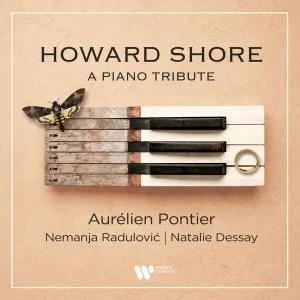
In a landmark celebration of one of the most prolific and influential careers in film music history, Warner Classics has announced the upcoming release of Howard Shore — A Piano Tribute. Scheduled for release on October 16, 2026, this ambitious collection arrives as a capstone to the 80th birthday celebrations of the Academy Award-winning composer. The album, produced by Dimitri Soudoplatoff, seeks to distill the sprawling, orchestral grandeur of Shore’s most iconic scores into the intimate, nuanced language of the piano.
Featuring the virtuoso performances of pianist Aurélien Pontier, the record is far from a standard "cover" album. It is a curated, deeply collaborative project that includes direct input from Shore himself, ensuring that the essence of his compositional voice—often characterized by dark, psychological depth and sweeping, operatic lyricism—is preserved even when stripped of its orchestral weight.
A Career Defined by Diversity: From Cronenberg to Middle-earth
To understand the weight of this tribute, one must look at the sheer breadth of Howard Shore’s filmography. For over five decades, Shore has defied genre pigeonholing. He is as comfortable navigating the visceral, body-horror soundscapes of David Cronenberg’s The Fly and Crash as he is crafting the lush, leitmotif-heavy tapestries of J.R.R. Tolkien’s Middle-earth.
The new album serves as a chronological and stylistic survey of this versatility. Listeners will find the haunting, minimalist piano lines of Seven and The Game juxtaposed against the ethereal, soprano-led vocalizations of the Lord of the Rings trilogy. By highlighting these disparate threads—the suspense of The Departed, the whimsical melancholy of Big, and the historical gravitas of The Song of Names—the album underscores a singular truth: Howard Shore is a master of emotional architecture.
The tracklist, which features 26 meticulously selected pieces, acts as a map of modern cinema history. From the early 1980s collaboration with Martin Scorsese on After Hours to the recent, introspective movements of Pieces of a Woman, the collection provides a rare glimpse into the connective tissue of Shore’s musical evolution.
The Artistic Vision: Bridging the Orchestral and the Intimate
The decision to reframe these epic compositions through the lens of a solo piano—or a piano accompanied by a select ensemble—is a bold artistic choice. Dimitri Soudoplatoff, the album’s architect, has worked to strip away the artifice of the recording studio, focusing instead on the melodic core of Shore’s work.
Aurélien Pontier’s performance is the heartbeat of this project. Known for his technical precision and expressive range, Pontier brings a transparency to the music that allows for a new appreciation of Shore’s harmonic structures. When Shore’s complex, multi-layered scores for The Lord of the Rings are reduced to a piano-led arrangement—often joined by the soaring violin of Nemanja Radulovic or the transcendent soprano of Natalie Dessay—the listener is invited to focus on the raw emotional resonance of the themes.
The production process involved extensive dialogue between the performer and the composer. Shore’s direct involvement is particularly notable in the track "After Hours: 9PM," where he performs alongside Pontier, marking a rare instance of the composer stepping into the role of performer for his own work. This collaboration elevates the album from a tribute to a definitive historical document, authorized by the architect of the music himself.
Tracklist and Curatorial Depth
The album is structured to provide both variety and thematic cohesion. Below is the full tracklist for the upcoming release:
- Hugo: The Thief (3:54)
- The Departed: Billy’s Theme (3:19)
- M. Butterfly (2:11)
- The Fly (2:11)
- Eastern Promises – Aurélien Pontier & Nemanja Radulovic (3:36)
- Big: Goodbye (3:47)
- The Silence of the Lambs (3:50)
- After Hours: 9PM – Aurélien Pontier & Howard Shore (3:34)
- Mrs. Doubtfire: Daniel & the Kids (2:12)
- Nobody’s Fool – Aurélien Pontier & Gladys Avignon (3:14)
- The Lord of the Rings: The Fellowship of the Ring: Concerning Hobbits – Aurélien Pontier, Frédéric Couderc & Nemanja Radulovic (2:39)
- The Lord of the Rings: The Fellowship of the Ring: Rivendell – Natalie Dessay & Aurélien Pontier (2:45)
- The Lord of the Rings: The Two Towers: Evenstar – Natalie Dessay & Aurélien Pontier (2:16)
- The Lord of the Rings: The Two Towers: The Hornburg (2:31)
- The Lord of the Rings: The Return of the King: Roots and Beginnings (4:05)
- The Lord of the Rings: The Return of the King: The Grace of Undómiel – Natalie Dessay & Aurélien Pontier (2:52)
- The Lord of the Rings: The Return of the King: For Frodo (2:58)
- The Hobbit: An Unexpected Journey: Dreaming of Bag End (1:49)
- The Hobbit: The Desolation of Smaug: Feast of Starlight – Natalie Dessay & Aurélien Pontier (2:31)
- Ed Wood (4:20)
- Esther Kahn: Five in the Gods (0:55)
- Seven: Apartment #604 (5:10)
- Crash (4:12)
- Pieces of a Woman: Ruin and Memory: Movement II. Largo (Excerpt) (1:53)
- The Song of Names – Aurélien Pontier & Nemanja Radulovic (3:12)
- The Game: Happy Birthday, Nicholas (3:25)
Implications for Film Music Preservation
The release of A Piano Tribute is significant for the broader film music community. In an era where digital streaming has made individual tracks easily accessible but often detached from their cinematic context, projects like this serve to "re-contextualize" scores as legitimate concert works.
By commissioning new arrangements of these pieces, Warner Classics is participating in a growing trend of elevating film scores to the level of classical repertoire. When a piece like "Concerning Hobbits" or the theme from The Silence of the Lambs is performed with the rigor of a classical recital, it forces the listener to grapple with the music’s inherent value, independent of the visuals they originally supported.
Furthermore, this album cements Howard Shore’s position in the pantheon of 20th and 21st-century composers. His ability to move seamlessly between the avant-garde (Cronenberg) and the populist (Jackson) is a rarity. This tribute ensures that his work will continue to be performed in concert halls and conservatories long after the films themselves have moved into the annals of history.
Official Responses and Availability
While Warner Classics has maintained a standard professional stance, the inclusion of Howard Shore’s direct participation speaks volumes about the project’s legitimacy. Shore, typically a private figure, has signaled his approval of the project by lending his time and his performance to the recording sessions.
For fans and collectors, the album represents a milestone. The digital and physical editions are slated for release on October 16, 2026, coinciding with the milestone of the composer’s 80th birthday. Pre-orders are currently active on Amazon, and anticipation is high for both the digital high-resolution files and the physical CD release, which collectors often prefer for the liner notes and artwork.
As a preview of the album’s sound, Warner Classics has released the track "Goodbye" from the 1988 film Big. The track, characterized by a delicate, poignant melody that feels both nostalgic and timeless, serves as an excellent entry point for the emotional tenor of the entire album.
Conclusion
Howard Shore — A Piano Tribute is more than just a commemorative gift for a legendary composer. It is an exploration of the power of the piano to distill complex, multi-layered cinematic narratives into singular, poignant moments of truth. Through the collaborative efforts of Aurélien Pontier, Dimitri Soudoplatoff, and Howard Shore himself, this collection promises to be an essential listen for film music enthusiasts and classical music lovers alike.
As we look toward the release this October, it is clear that Howard Shore’s legacy is not merely one of film soundtracks, but one of profound musical storytelling—a legacy that, even when played on a single instrument, resonates with the power of a full symphony.