The Future of Cinema or a Digital Distraction? Neon’s “Director’s Experience” Debuts with It Ends

The cinematic experience is undergoing a radical, albeit controversial, transformation. Neon, the powerhouse behind some of the most daring independent films of the last decade, is set to challenge the sanctity of the silent theater with a bold new initiative. Beginning August 28th, audiences heading to cinemas to see Alexander Ullom’s debut horror feature, It Ends, will have the option to bypass the traditional passive viewing experience in favor of something far more intimate—and perhaps, for some, intrusive.
In partnership with the audio-tech platform TheaterEars, Inc., Neon is launching the "Director’s Experience." This initiative allows moviegoers to listen to a synchronized, real-time commentary track provided by director Alexander Ullom and producers Carrie Carusone and Evan Barber directly through their personal smartphones while sitting in the dark of the theater.
The Mechanics of the "Director’s Experience"
The technology behind this experiment is deceptively simple. Moviegoers are encouraged to download the free TheaterEars app, available on both the Apple App Store and Google Play. Once at the theater, users select It Ends and their specific showtime within the app. Upon the start of the film, the user hits "play" on the app, and the software utilizes proprietary synchronization technology to align the filmmakers’ commentary with the projected audio on the screen.
The system is designed to work across all theater formats, including standard projection, RealD 3D, and the high-octane 4DX experience. Crucially, the service is free for the viewer—ad-supported and requiring no additional ticket upcharge. The catch, of course, is that the user must arrive equipped with their own pair of headphones, effectively creating a "private bubble" within the public space of the theater.
While the novelty of hearing a director break down a scene while it unfolds on the screen is an enticing prospect for film buffs who usually wait months for a DVD or Blu-ray special feature, the logistics raise immediate questions. Does this change the communal nature of cinema? Does the glow of smartphones in the theater—even if intended for a "good" purpose—threaten the immersive quality of a horror film?
A Chronology of the It Ends Journey
To understand why Neon is choosing It Ends for this experiment, one must look at the film’s unique production and reception history.
The SXSW Launch
It Ends first garnered significant industry buzz at the 2025 SXSW Film Festival. Critics were quick to praise the film’s claustrophobic intensity and its sharp, nihilistic dialogue. In his review for Dread Central, critic Rendy Jones described the film as "a phenomenal look at Gen-Z ennui," noting that its effectiveness lies in its ability to trap the audience alongside its characters.
The Production Constraints
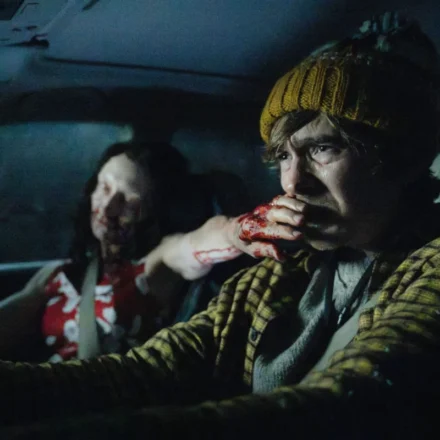
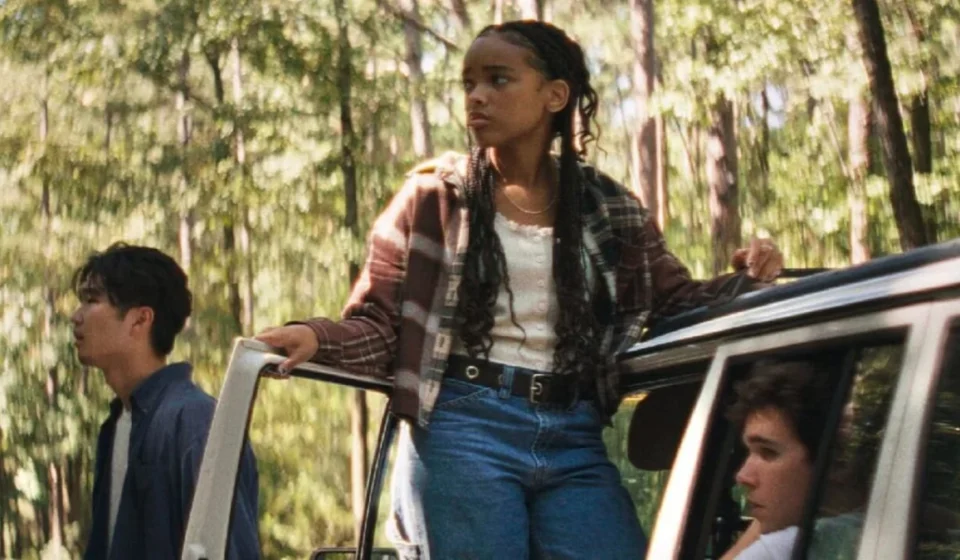
Written and directed by Alexander Ullom, the film was shot over a grueling twenty-day period. The story is a tight, character-driven horror piece centered on four recent graduates who embark on a late-night snack run, only to find themselves trapped on a two-lane road that refuses to end. The setting—almost entirely contained within the confines of a car—demanded a hyper-focus on performance and subtext.
The Nationwide Expansion
Following a successful limited engagement in the New York and Los Angeles markets, Neon is now preparing for a wider release on August 28th. The rollout of the "Director’s Experience" is strategically timed with this expansion, positioning the film not just as a horror release, but as an interactive event that aims to bridge the gap between digital content consumption and the traditional theatrical window.
Supporting Data: Bridging the Gap Between Screen and Viewer
The partnership with TheaterEars represents a deliberate attempt to capture the modern, digitally native audience. According to Dan Mangru, Founder and CEO of TheaterEars, the traditional model of commentary tracks is fundamentally flawed.
"Commentary tracks have always arrived after the fact, months later, on a disc or a stream, to an audience that has already moved on," Mangru stated in a recent press release. " It Ends is a film built out of conversation, and Alex is a filmmaker whose audience found him online and then showed up in theaters. Putting his voice in that room, while the film is still on screens, is exactly the thing we built this for."

This philosophy aligns with the shifting habits of younger demographics who are accustomed to "second-screen" experiences. Whether it is scrolling through social media, engaging with live-streamed commentary, or participating in real-time chats, the modern viewer is rarely satisfied with just watching a screen. They want to be part of the discourse.
Official Responses and Creative Intent
The creative team behind It Ends has been vocal about their support for the experiment. For a first-time director like Alexander Ullom, the opportunity to provide context while the film is still a "living" entity in theaters is invaluable.
"I made a movie that takes place almost entirely inside a car," Ullom noted. "So I spent a year thinking about what four people say to each other and what they don’t. Getting to sit next to an audience while they watch it and tell them what we were actually doing—in a theater, while it’s still in theaters—is not something I thought was possible when we were shooting this in twenty days."
Ullom’s enthusiasm highlights the director’s perspective: that the "Director’s Experience" is an educational and emotional extension of the film itself. By detailing the production hurdles, the specific improvisations during that twenty-day shoot, and the thematic layers of the script, the commentary serves as a "live" director’s cut that invites the audience into the inner circle of the production.
The Implications: Is This the Future of the Theater?
Despite the excitement from the filmmakers, the industry is split on the implications of this model. The "Director’s Experience" essentially asks the audience to split their attention between two sensory streams: the film’s sound design and the director’s voice.
The Argument for Innovation
Proponents argue that this keeps the theater relevant in an era of streaming dominance. If the "theater experience" is to compete with the comfort and control of home viewing, it must offer something that home viewing cannot. By providing an "event" atmosphere where the filmmaker is "present" with the audience, theaters can justify the cost of admission and the effort of leaving the house.
The Argument for Purism
Conversely, the "purist" camp—which includes many film critics and cinephiles—argues that the theater is meant to be a temple of focus. The presence of smartphones, even if used for a sanctioned, film-related app, introduces light pollution into the auditorium. Furthermore, for a horror film, where sound design and atmosphere are paramount, an overlay of conversational audio could potentially dilute the tension that the film works so hard to build.
The Market Test
The ultimate test will be the audience reaction during the August 28th expansion. If the program sees high adoption rates without significant complaints regarding phone usage, it could signal a shift in how studios view theatrical releases. We may see more "interactive" screenings, where the audience is encouraged to use their devices to enhance the narrative, rather than being told to keep them tucked away.
Conclusion
Whether one views the "Director’s Experience" as a brilliant piece of modern marketing or a desecration of the theatrical tradition, it is undeniably a landmark moment for film distribution. Alexander Ullom’s It Ends is more than just a horror movie about a road to nowhere; it is now the guinea pig for a new way of consuming art.
As we move toward the August 28th release date, the industry will be watching closely. Will audiences embrace the chance to hear the director’s thoughts in real-time, or will they find that the best way to watch a movie is, and always will be, in the quiet dark, with nothing but the film’s own voice filling the room? Regardless of the outcome, Neon has succeeded in doing one thing: they have started a conversation that, unlike the road in It Ends, refuses to stop.