The Last Hurrah of the World’s Greatest "Knuckleheads": An Audience with Jeff Tremaine

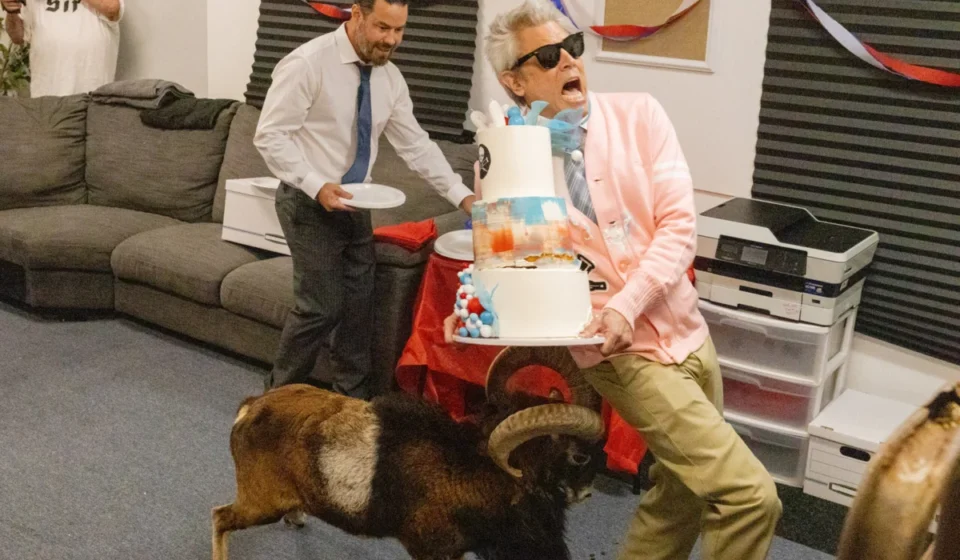
As the dust settles on two and a half decades of controlled chaos, broken bones, and iconic, low-brow imagery, the Jackass franchise finds itself at a poignant crossroads. With the release of Jackass: Best and Last (2026), the creative team behind the most influential stunt-comedy series in history is staring down the barrel of a potential conclusion. For director Jeff Tremaine, the man who has spent twenty-five years orchestrating the madness, the experience of looking back has been unexpectedly emotional.
The Evolution of an Unlikely Auteur
To the uninitiated, Jeff Tremaine is merely the ringleader of a traveling circus of sadists. However, behind the graying hair and the vintage Smiths T-shirt lies an artist whose sensibilities have defined a generation of pop culture. Despite holding an undergraduate degree in fine arts and possessing a background in painting and design, Tremaine has spent his career curating the “outrageous personalities” of his cohort rather than seeking the traditional trappings of a Hollywood director.
"I really felt it in the edit bay when we started opening up the old footage and looking back on how long we’ve been doing this," Tremaine reflected in a recent interview. "Seeing all these guys as babies—that hit me. We weren’t built to run long-distance. We thought we’d get one episode on TV, if we were lucky, and then get shut down. Somehow, we made it this far."
Chronology of a Cultural Phenomenon
The trajectory of Jackass is a study in exponential growth. What began as a ragtag group of skaters and personalities operating out of a single van has evolved into a global, multi-million-dollar industry.
- The Big Brother Era (Late 1990s): Tremaine’s tenure at Big Brother magazine served as the crucible for the franchise. It was here that he learned to curate personalities, recognizing that the magic wasn’t in the technical skill of the skaters, but in their willingness to push the boundaries of social norms.
- The Television Breakthrough (2000): The moment Johnny Knoxville filmed himself being shot while wearing a bulletproof vest served as the catalyst. It was a visceral, undeniable sign that the group’s chemistry was ready for a larger stage.
- The Cinematic Shift (2002–2010): The transition to film allowed for larger set pieces and a more deliberate, albeit still chaotic, production style. Jackass 3D marked a critical turning point, not just in production value, but in public perception.
- The Maturity of Chaos (2022–2026): With Jackass Forever and now Best and Last, the franchise has reached a reflective phase, balancing its trademark gross-out humor with a genuine, palpable sense of brotherhood and nostalgia.
The Artistic Eye Behind the Groin Kicks
While critics spent years dismissing the series as "sophomoric," the cultural impact of Jackass is undeniable. Tremaine’s direction has consistently championed a form of radical male vulnerability. By putting his cast in situations that require absolute trust and emotional transparency, Tremaine has inadvertently created a series that celebrates healthy, non-toxic male friendship—a stark contrast to the aggressive posturing typically associated with the genre.
"I don’t tell anyone what to say," Tremaine explains. "It is their real personalities. A lot of what I do is picking who I think is going to be the funniest guy for this bit and then surrounding him with as much magic as I can."
This "magic" involves a delicate balance of spontaneity and structure. Even as the production scaled up to massive, permit-heavy shoots, Tremaine fought to maintain the "punk rock" ethos that defined the early days. He recounts battles with the MPAA over full-frontal nudity, noting that he often uses restrictions as a creative springboard. When told he couldn’t have a long, slow-motion shot of a specific stunt, he utilized clever editing to circumvent the rules, proving that even in a corporate studio environment, the Jackass team could hold onto their rebellious spirit.
Supporting Data: The "MoMA" Effect
The critical reception of the franchise serves as an interesting case study in shifting cultural tides. For years, Jackass was the target of vitriolic reviews, a trend Tremaine says actually fueled his resolve. "It was ‘This is great, fuck you,’" he recalls.
However, when Jackass 3D premiered at the Museum of Modern Art, the conversation shifted. Critics began to analyze the series through an intellectual lens, recognizing the "sublime" nature of the stunts and the inherent performance art embedded within the vulgarity. While Tremaine remains humble—and slightly wary—of being called an auteur, he acknowledges that the intellectualization of his work is both hilarious and, at times, startlingly accurate.
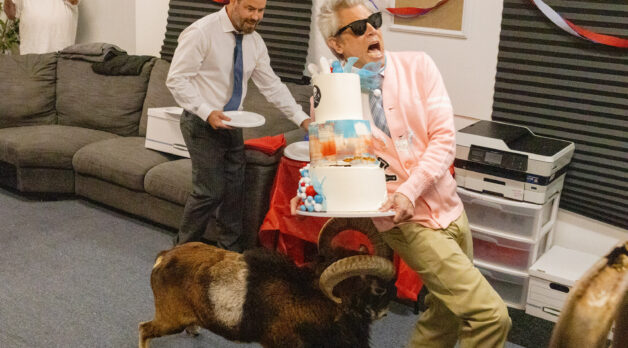
"They are much more psychologically in tune than I am with what’s happening," he admits. "But to me, it is just so surface-level. We’re magnifying stupid. That’s all it is."
The Burden of Success: "Safety Third"
The sheer scale of the current Jackass operation presents a unique paradox. Tremaine, who once kidnapped celebrities with zero notice and no permits, now oversees a slow-moving, deliberate machine. He expresses a deep longing for the "van days" while acknowledging the necessity of the current production structure.
Perhaps the most ironic turn in Tremaine’s career is his work on an American Airlines safety PSA. The man who made a career out of "safety third" being tasked with explaining flight safety protocols to the general public represents the ultimate synthesis of his underground roots and mainstream success. "I was so tickled," Tremaine laughs. "I wanted that so bad just to say I did it. You’re forced to watch it every flight!"
Implications: A Legacy of "Stupid"
As the curtain falls on the Jackass era, the question remains: what is the legacy of a series defined by its own lack of maturity?
For Tremaine, the answer is grounded in the music and the brotherhood that fueled the projects. Music, he notes, has always been a "foreground element" in his development. The soundtrack of the films, much like the stunts themselves, is a love letter to the punk rock culture that raised him.
"I’m almost 60 years old, and I still like to draw dicks on things," Tremaine says with a self-deprecating chuckle. "It’s weird to me that that is still funny to me. I’m waiting to grow up."
The implication of the Jackass legacy is perhaps more profound than its creator is willing to admit. By refusing to "grow up" and by continuing to find humor in the absurd, Tremaine has created a rare cultural space where men can be vulnerable, foolish, and deeply bonded without the need for traditional hierarchies.
Whether Jackass: Best and Last is truly the end of the line, the franchise has already cemented its place in the annals of film history. It wasn’t the project anyone expected to endure, and it certainly wasn’t the project anyone expected to be "touching." Yet, by staying true to their own brand of "stupid," Tremaine and his crew have achieved something remarkably meaningful. They have turned the act of falling down into a high art, ensuring that the sound of a spring-loaded hand slapping an unsuspecting victim will echo in the cultural consciousness for decades to come.