Blood, Heat, and High-Stakes Politics: Hulu’s ‘City of Blood’ Promises a Dystopian Reckoning in Berlin

By Editorial Staff | August 24, 2026
In a landscape where the streaming wars are increasingly dominated by high-concept genre fiction, Hulu has dropped a bombshell announcement that promises to redefine the intersection of climate fiction and supernatural horror. The platform has officially released the first trailer for City of Blood, a sprawling, German-language mini-series that imagines a near-future Berlin teetering on the edge of extinction. With a premiere date set for September 16, 2026, the series is already being hailed as a visceral, genre-bending exploration of power, survival, and the fluid definition of humanity.
The Premise: A City Divided by Glass and Gore
City of Blood is not merely a vampire story; it is a socio-political thriller set against the backdrop of a planet scorched by environmental collapse. The series draws its primary inspiration from the acclaimed German graphic novel Berlinoir, authored by Tobias O. Meißner with illustrations by the cult artist Reinhard Kleist.
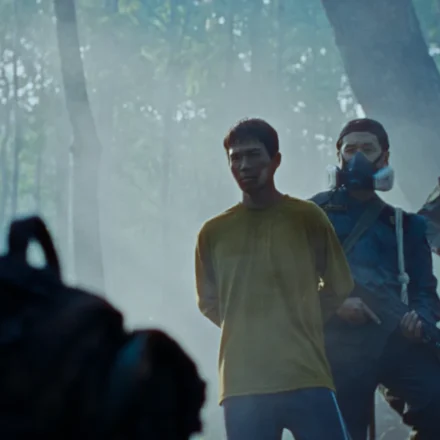
The narrative centers on a bifurcated society. Within the protective, climate-controlled walls of a high-tech dome, a privileged elite reside, buffered from the sweltering, ruined landscape of the outside world. Outside this sanctuary, the majority of the population battles for survival amidst rampant crime, extreme heat, and the slow decay of civilization.
The story ignites when sisters Bea and Phoebe are reunited after years of estrangement. Their reunion serves as the audience’s entry point into a terrifying reality: the vampire population, long relegated to the shadows, has begun a coordinated push for political supremacy. In this new world order, blood is no longer just a biological necessity; it is a literal currency, traded in the back alleys of a crumbling metropolis. As the sisters find themselves caught in the crosshairs of human criminal syndicates and vampiric political factions, they are forced to confront the chilling, central thesis of the show: In a dying world, who—or what—is the true monster?

Chronology of Production and Development
The path from page to screen for City of Blood has been marked by meticulous world-building and a significant investment in German creative talent.
- Pre-Production and Adaptation (2024): Development began following the acquisition of the rights to Berlinoir. Creators Philipp Kadelbach and Elena Lyubarskaya began the task of expanding the graphic novel’s noir-drenched aesthetic into a serialized, multi-episode narrative.
- The Creative Team Assembly (Early 2025): The production team, led by Amusement Park Film, secured a powerhouse writing room, including Kim Zimmermann, Daniela Baumgärtl, Martin Behnke, Nicki Bloom, and Tillmann Roth. Their mandate was to balance the supernatural elements of the source material with a grounded, gritty political commentary.
- Principal Photography (Late 2025 – Early 2026): Filming took place in and around Berlin, utilizing both practical location shoots and sophisticated CGI environments to capture the contrast between the pristine dome and the derelict cityscape.
- Post-Production and Teaser Release (Mid-2026): Throughout the summer of 2026, marketing efforts ramped up, culminating in the late-August reveal of the official trailer and key art, showcasing the series’ high-contrast visual style.
- Global Launch (September 16, 2026): The series is scheduled to debut on Hulu in the United States and on Disney+ in international markets, marking a significant push for German-produced genre content on the global stage.
Supporting Data: The Cast and Creative Architecture
The sheer scale of City of Blood is reflected in its ensemble cast. The series brings together some of Germany’s most formidable acting talent, ensuring that the human drama remains as compelling as the supernatural stakes.
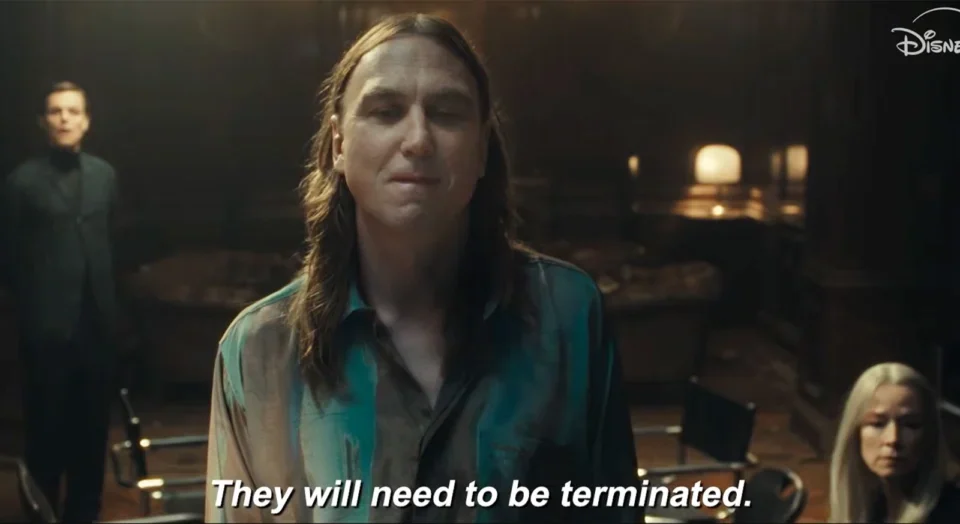
The cast features Lea Drinda and Soma Pysall as the central sisters, Bea and Phoebe, whose performances anchor the emotional core of the series. They are joined by Franz Hartwig, Jördis Triebel, David Schütter, Mouataz Alshaltouh, Jenny Schily, Dagmar Manzel, Melika Foroutan, and Jan Georg Schütte. Notably, the series features a performance by the acclaimed Lars Eidinger, whose presence suggests a character of significant weight within the political hierarchy of the show.
Behind the camera, the creative leadership is equally impressive. Philipp Kadelbach, who serves as creator and director, brings a wealth of experience from high-profile projects like Naked Among Wolves, Perfume, and We Children from Bahnhof Zoo. The executive production team is bolstered by industry heavyweight Daniel Brühl, alongside Malte Grunert, Philipp Kadelbach, and Klaus Dohle. This level of oversight signals a high-budget production that prioritizes visual fidelity and narrative depth.
Official Perspectives: Vision vs. Reality
In promotional materials, the creators have emphasized that City of Blood is intended to serve as a mirror for modern anxieties. By utilizing the vampire mythos, the showrunners are able to externalize themes of parasitic capitalism and the widening gap between the wealthy and the working class.

"The vampires aren’t just drinking blood; they are consuming the future of the city," one production note suggested. By framing the conflict as a struggle for political power rather than a mere survival horror, the series aims to elevate itself above standard genre fare. The inclusion of blood as a currency is a particularly poignant metaphor, suggesting that in a resource-scarce future, the body itself becomes a commodity.
For Disney+ and Hulu, this series represents a strategic pivot. By backing a gritty, dark, and distinctly European production, they are catering to an audience that has grown weary of traditional superhero tropes and is seeking more provocative, "prestige" genre television.
Implications for the Streaming Landscape
The release of City of Blood arrives at a pivotal time for the streaming industry. As subscriber growth slows, platforms are increasingly looking to international markets—specifically Europe—to provide unique, high-quality content that can travel globally.
1. The Rise of "Euro-Noir" Sci-Fi
The success of Dark and Barbarians proved that international audiences have a voracious appetite for high-concept German storytelling. City of Blood leans into this, combining the neon-soaked, rain-slicked tropes of classic noir with the expansive world-building of modern sci-fi. If the show succeeds, it will likely trigger a wave of investment in similar "local-global" projects.
2. The Genre-Blending Trend
We are currently witnessing a decline in "pure" genre storytelling. Audiences are increasingly drawn to shows that refuse to be categorized—City of Blood is simultaneously a political thriller, a dystopian drama, and a creature feature. This hybridization allows for a broader demographic reach, appealing to fans of The Handmaid’s Tale as much as fans of True Blood.

3. The Socio-Economic Allegory
Perhaps the most significant implication of City of Blood is its unflinching look at climate change. By making the environmental crisis the catalyst for the entire plot, the show joins a growing movement of "cli-fi" (climate fiction) that uses disaster to explore human morality. The "dome" serves as an obvious, yet powerful, symbol of gated communities and climate-resilient enclaves, forcing viewers to confront the reality that for some, the apocalypse is already here, while for others, it is a problem for tomorrow.
Final Thoughts: A High-Stakes Gamble
When the trailer first hit YouTube, the reaction was immediate and polarized. Some critics pointed to the "mish-mash" of ideas—vampires, domes, political coups, and familial drama—as a potential recipe for narrative bloat. Others, however, lauded the audacity of the concept.
Can a series truly juggle all these elements without losing its thread? The talent behind the camera suggests it is possible. With a director as seasoned as Kadelbach and a producer like Brühl, the series possesses the structural integrity required to manage such a complex narrative.
As September 16th approaches, the anticipation continues to mount. City of Blood is clearly aiming to be more than just a diversion; it aspires to be a defining moment in 2026’s television landscape. Whether it will be remembered as a masterpiece of dystopian fiction or a cluttered experiment remains to be seen. But one thing is certain: in the city of Berlin, as depicted in this series, the price of survival has never been higher, and the blood, quite literally, is on the table.