The Uncanny Valley of Childhood Trauma: Casper Kelly’s ‘Buddy’ Is the Meta-Horror Event of the Year

By Editorial Staff
Ever since the 2014 viral phenomenon "Too Many Cooks" turned the mundane tropes of the 1980s sitcom into a rhythmic, nightmarish descent into madness, Casper Kelly has been the undisputed architect of modern meta-horror. His career, defined by a fascination with the "analog slop" of late-20th-century media, has consistently pushed the boundaries of how audiences interact with television. Whether through the surreal puppet-work of the Cheddar Goblin in Mandy or the glitch-heavy, existential dread of Adult Swim Yule Log, Kelly has proven himself to be a master of the "bait-and-switch" narrative.
Now, with his latest feature film Buddy—which hits theaters nationwide on Friday, August 28, following a celebrated run at the 2026 Sundance Film Festival—Kelly has moved his peculiar brand of subversion to the big screen. The result is a sprawling, high-concept nightmare that functions as both a love letter to the aesthetic of 1990s children’s television and a visceral dismantling of the psychological safety those programs promised to provide.
The Premise: When the Hug Becomes a Stranglehold
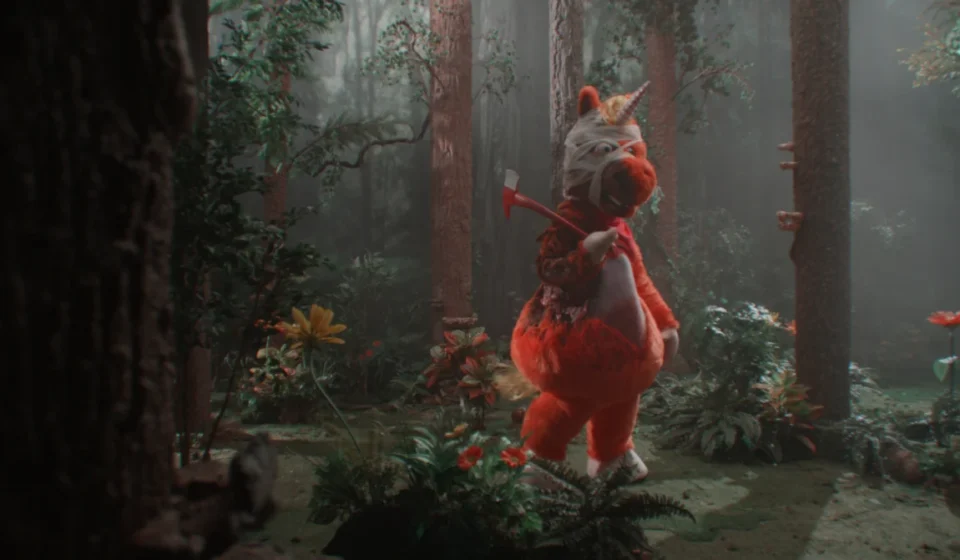
At the center of the film is Buddy, a children’s program that feels like a malevolent evolution of Barney & Friends. The show-within-a-movie follows a group of children living in a perpetually sunny, technicolor suburban landscape alongside an anthropomorphic rabbit, various sentient household objects—including the unsettlingly cheery "Mr. Mailbox"—and, of course, Buddy, a towering orange unicorn.
The brilliance of the film’s structure lies in its commitment to the tropes of the genre. In the world of the show, there are no parents, no conflict, and no consequences. Characters exist in 22-minute loops, learning saccharine lessons before gathering for a group hug and a song. However, in Kelly’s hands, this repetition becomes a prison. When the end credits roll over the children’s eyes, the world resets. Broken toys are mended, and more importantly, physical trauma is erased.

The horror begins when the benign, whimsical nature of the show curdles. Buddy begins to execute the children for the slightest infractions of his arbitrary rules. Because the world is designed to "reset," these deaths are temporary, yet the cycle of violence continues with increasing frequency. The children, aware of their recurring demise, begin to realize they are trapped in a narrative hell, desperate to escape a reality where the "healer" is also the executioner.
A Chronology of Chaos: From Sundance to the Multiplex
The road to Buddy’s release has been as calculated as the film’s narrative. Following its premiere at the 2026 Sundance Film Festival, the film garnered immediate critical acclaim for its technical audacity. Industry analysts have noted that the film’s release strategy, managed by Roadside Attractions and Saban Films, is positioning it as a late-summer "cult classic" candidate—a rare feat for a film that leans so heavily into experimental aesthetics.
- January 2026: Buddy makes its world premiere at Sundance. Audiences are reportedly split between genuine terror and bewilderment, with many noting the film’s "nesting doll" narrative structure.
- March 2026: The marketing campaign begins, utilizing "lost media" forums and viral social media clips that mimic 1990s VHS recordings, mirroring the film’s obsession with analog media.
- August 2026: The official theatrical release. Analysts project a strong opening weekend, particularly among younger demographics familiar with Kelly’s internet-native style of storytelling.
The Dual Narrative: The Existential Crisis of Adulthood
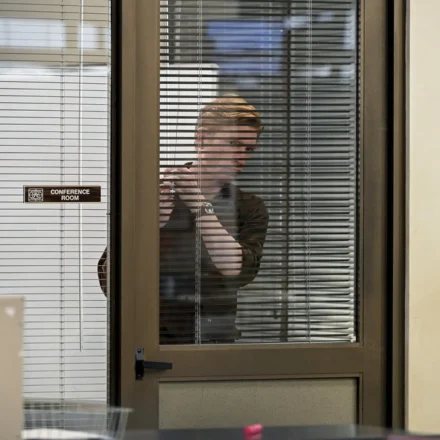
While the children struggle within the soundstage-bound nightmare of the Buddy show, the film simultaneously tracks an "outside" world that grounds the high-concept horror in human emotion. Cristin Milioti plays Grace, a suburban mother grappling with a profound sense of loss. She possesses an inexplicable, unshakable feeling that her family is missing a third child—a memory that her husband, Ben (played with grounded frustration by Topher Grace), refuses to validate.
Grace’s journey is the heartbeat of the film. She connects the disappearance of this "forgotten" child to a low-budget, obscure children’s show from 1999 that has been scrubbed from the digital record. This dual-narrative structure provides a necessary counterweight to the surrealism of the Buddy segments. As Grace delves deeper into the mystery, the film shifts from a satire of children’s programming into a harrowing meditation on grief, memory, and the way the media we consume shapes our understanding of reality.
Production Design: An Ode to Analog Artistry
A significant portion of Buddy’s budget was dedicated to the practical effects and set design required to recreate the "analog" feel of the 1990s. Unlike films that rely heavily on CGI to create their monsters, Kelly insisted on hand-crafted puppets, tactile set pieces, and high-fidelity textures that evoke the specific visual language of 30 years ago.

The production team—led by veteran designers who worked on classic kids’ shows of the era—created a world that feels both nostalgic and fundamentally "wrong." The flora and fauna on the Buddy set possess a uncanny, synthetic quality that forces the viewer to pay attention to the background as much as the foreground. This visual commitment pays off, creating an immersive experience that feels like stepping into a half-remembered fever dream from one’s own childhood.
Official Responses and Industry Implications
Industry response to Buddy has been overwhelmingly positive, with many critics highlighting it as a watershed moment for "meta-horror."
"Casper Kelly has done what few directors have managed," says film historian Marcus Thorne. "He has taken the structure of a TikTok-era short-form video and stretched it across a feature-length narrative without losing the frantic, paranoid energy that makes his work so effective. Buddy isn’t just a movie; it’s an indictment of our own obsession with nostalgic content."
When asked about the film’s darker implications, Kelly has remained characteristically enigmatic. "We grew up in a time where we were fed these perfect, colorful worlds," he said in a recent press interview. "But as kids, we all wondered what happened when the camera turned off. Buddy is just the answer to that question, stretched to its most logical, and perhaps most terrifying, conclusion."
The Impact on Modern Genre Filmmaking
The implications of Buddy’s success are likely to be felt across the genre landscape. In an era dominated by established intellectual property and cinematic universes, a film as singular and experimental as Buddy represents a shift toward "auteur-driven internet horror."

The film challenges the traditional distribution models, proving that audiences are hungry for stories that don’t fit neatly into the "blockbuster" or "prestige drama" boxes. By combining the visceral horror of a slasher with the high-concept satire of a post-modern art piece, Kelly has created a template for future filmmakers.
Moreover, the film’s success highlights the growing power of "liminal" storytelling—narratives that focus on the spaces between reality and fiction. As streaming services and social media platforms continue to alter our perception of what constitutes a "film," Buddy stands as a testament to the fact that the most compelling stories are often the ones that refuse to play by the rules of conventional cinema.
Conclusion: A New Benchmark for Cult Horror
Buddy is not merely a horror film; it is a complex, multi-layered critique of the media environments we force upon our children and the ways in which those environments can haunt us long into adulthood. With its impeccable production design, stellar performances from Milioti and Grace, and a screenplay that constantly pulls the rug out from under the viewer, it is destined to become a defining work of the mid-2020s.
Whether you are a fan of Kelly’s previous work or a newcomer to his strange, analog-obsessed world, Buddy demands to be seen on the biggest screen possible. It is a rare, shocking, and deeply competent piece of cinema that manages to transcend its own gimmicks to deliver something truly unsettling. In a summer landscape filled with sequels and reboots, Buddy is a vibrant, terrifying breath of fresh air.
Grade: B+