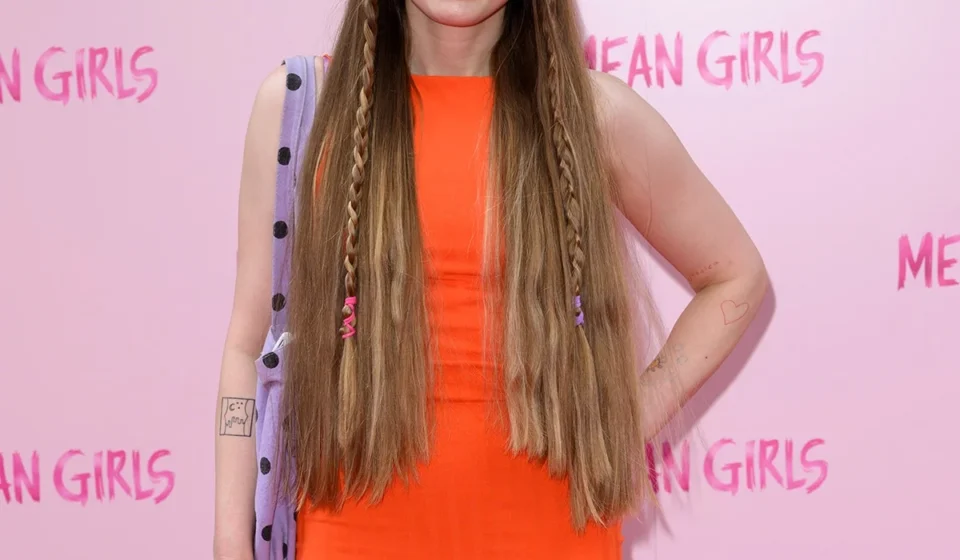

For the generation that grew up watching the Harry Potter franchise, Jessie Cave will always be remembered as Lavender Brown, the lovestruck student who brought a touch of chaos to the halls of Hogwarts. However, two decades after her cinematic debut, Cave’s reality is far removed from the wizarding world’s fantasy. In a candid revelation that has sparked widespread discourse regarding the financial pressures facing modern performers, the 39-year-old actress recently opened up about her decision to launch an OnlyFans account—a move she says has quite literally "saved her life."
The Financial Reality of the "Child Star" Myth
The public often operates under the assumption that an appearance in a globally successful film franchise equates to lifelong wealth. For Jessie Cave, this misconception has been a source of profound frustration. In a recent interview on the UK talk show This Morning, Cave addressed the rumors surrounding her Harry Potter income directly.
"People just assume I’m rich and I have loads of money, and no, I don’t," Cave explained. She pointed out that her role as Lavender Brown, while iconic, was a "small-ish part" filmed twenty years ago. The residuals from such roles rarely provide the kind of financial cushion that the public imagines, especially for an actress balancing the demands of a career in the arts with the rising costs of raising four children with her partner, Alfie Brown.
For Cave, the transition to OnlyFans was initially marked by embarrassment and hesitation. "I would have really liked to get a job [in mainstream acting]," she admitted. "But you know what it’s like, you have kids. It costs so much for childcare." As a "struggling artist"—a title she wears with pride while she continues to perform one-woman puppet shows—Cave viewed the platform as a lifeline rather than a career pivot.
A Niche Approach: The "Slutty Mormon" Aesthetic
Unlike many of her contemporaries who utilize the platform for explicit content, Cave’s approach is notably idiosyncratic. Launching her page in March 2025, she cultivated a brand she describes as having a "slutty Mormon" vibe. The content is strictly focused on her hair—an area of interest she had been cultivating on Instagram for years.
"I do a lot of videos with my hair on Instagram and I have now for a while," she explained on her podcast, Before We Break Up Again. "I just noticed that I always get comments. They’re never sexually depraved or lascivious. It’s never dirty comments, but I do get lots of interest in the hair thing, and I just thought, ‘F–k it, I’m going to do something that is very niche.’"
By leaning into this specific fetishistic interest, Cave has successfully monetized her audience without compromising her personal comfort levels. Her success highlights a broader trend: the democratization of niche content creation, where creators can find sustainable income by serving specific, non-mainstream interests.
The Financial Turnaround: Data and Impact
The financial results of Cave’s venture were immediate and, by her own admission, life-altering. In an interview with The Times published in August 2024, Cave revealed that she earned approximately £15,000 on her very first day on the platform.
"I’ve earned more, easily, than my entire acting career within one year," she stated. This staggering influx of capital allowed her to stabilize her family’s finances and continue pursuing her artistic passions, such as her theater work. "I thought I’d make five grand, be on it for a few months, and it would buy me time to work out what we’re going to do," she reflected. "But it’s now been over a year and a half, and it’s genuinely saved our lives."
Cave’s success is not an isolated incident but part of a growing wave of industry professionals turning to direct-to-consumer subscription platforms. The data surrounding these earners paints a picture of a digital economy that operates independently of traditional Hollywood gatekeepers.
Chronology of the OnlyFans Gold Rush
The rise of OnlyFans as a primary income stream for celebrities has been swift and, at times, polarizing.
- August 2020: Disney Channel alum Bella Thorne becomes the first high-profile creator to gross over $1 million in a single day, setting the gold standard for celebrity engagement on the platform.
- April 2021: Rapper Bhad Bhabie (Danielle Bregoli) joins the site, eventually going on to gross $71 million, shattering existing records for individual creators.
- 2023–2024: The platform sees an influx of reality stars and actors, including Blac Chyna and Jenelle Evans, who use the site to navigate fluctuating mainstream employment opportunities.
- 2025–2026: The market matures as groups like "Bop House" emerge, demonstrating that collective content creation can result in eight-figure monthly revenues.
The Spectrum of Success: Supporting Data
The financial disparity between top-tier creators is vast, yet even those on the lower end of the "celebrity" spectrum report earnings that dwarf traditional entertainment salaries.
The Heavy Hitters
Creators like Sophie Rain have reported astronomical figures, claiming up to $82 million over 18 months, effectively positioning herself in the same tax bracket as elite professional athletes. Similarly, Bhad Bhabie reported a net profit of $57 million after expenses—a figure that has become a benchmark for the platform’s potential.
The Career Pivoters
For individuals like Renee Gracie, a former V8 Supercar driver, the platform offered an escape from a cycle of debt. Gracie noted that she was "broke" while racing and, within six months of joining OnlyFans, was able to purchase a multimillion-dollar home. This narrative—of the struggling professional finding financial freedom—is a recurring theme among the platform’s most successful users.
The Controversies and Exits
Not every story follows a linear path of growth. Blac Chyna famously deactivated her account in 2023, citing a desire to move away from the "dead end" of adult content, despite having earned approximately $2 million during her tenure. Her departure sparked a debate about the long-term impact of OnlyFans on an entertainer’s brand, highlighting the tension between immediate financial security and long-term public image.
Implications: The Future of Monetization
Jessie Cave’s perspective on the future of the industry is remarkably forward-thinking. She posits that the traditional model of "free" social media content is increasingly obsolete.
"I see people on Instagram posting bikini shots or sexy stuff and I think, ‘You could be charging for this! You’re losing money!’" Cave told The Times. "I see that being the future. Everyone will be paying for everything."
This shift suggests a move away from the "exposure" economy, where artists trade their labor for followers and hope, toward a "direct-pay" economy where creators value their time and aesthetic output.
Cultural and Economic Shifts
The normalization of subscription-based adult and niche content has fundamentally altered the power dynamic between talent and their audience. When actors like Shannon Elizabeth (who made $1 million in nine days) or former child stars can bypass traditional studio contracts to generate income, the leverage shifts.
However, this transition is not without its risks. The stigma surrounding adult-adjacent content remains, and as seen with creators like Annie Knight—who was fired from her marketing job for her OnlyFans activity—the mainstream workforce is still grappling with how to integrate this new reality. Knight’s subsequent success, rising from $5,000 to $600,000 in monthly revenue, serves as a testament to the fact that the "OnlyFans economy" is not merely a side hustle for many, but a viable, full-time career path.
Conclusion: Shame vs. Sustainability
Ultimately, the story of Jessie Cave is one of resilience. By removing the "shame" from her financial decisions, she has managed to provide for her family while maintaining her integrity as a creator.
"I want to have less shame about it," she remarked. "I want other people who do weird art like me, I want them to know that there is some way of still making [it]."
As the digital landscape continues to evolve, the distinction between "mainstream" and "niche" becomes increasingly blurred. Whether through hair-focused content or high-production adult entertainment, the message from the current generation of creators is clear: they are no longer waiting for the industry to grant them permission or a paycheck. They are building their own economy, one subscription at a time.