The Anatomy of Devotion: Frieda Luk’s ‘Sacred Creatures’ Challenges the Boundaries of Belief

In the landscape of contemporary independent cinema, few themes are as elusive or as potent as the nature of belief. For filmmaker Frieda Luk, the act of believing is a complex tapestry—simultaneously comforting, absurd, exhilarating, and deeply resistant to articulation. Her debut feature, Sacred Creatures, which makes its world premiere in competition at the Edinburgh International Film Festival, serves as a cinematic interrogation of how personal convictions metastasize into collective phenomena.
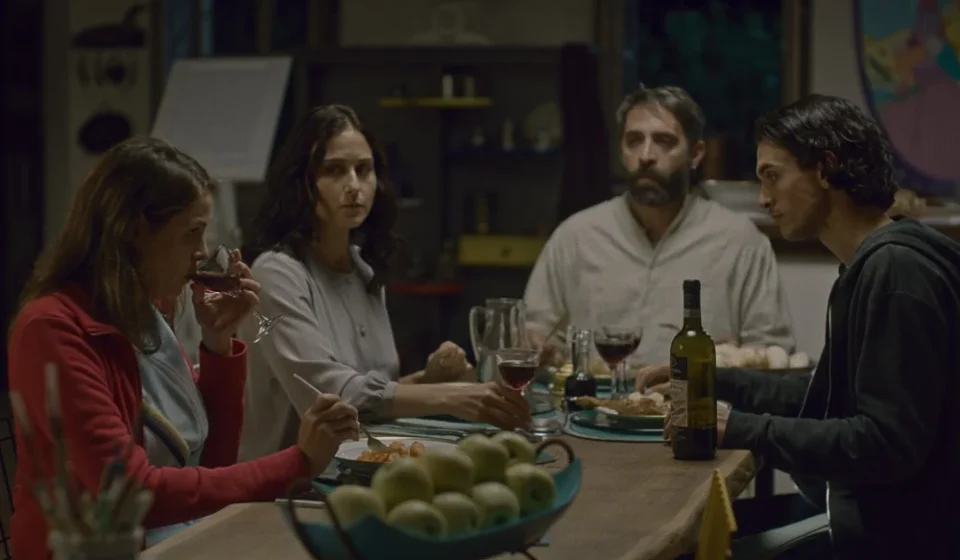
Set against the rustic, atmospheric backdrop of the Italian countryside, the film follows three estranged siblings navigating the complexities of family history and trauma. The narrative anchor is Miriam, played with mercurial depth by Olivia Luccardi, who returns to the family fold following a stint in psychiatric treatment. Where the world sees a breakdown, Miriam perceives a spiritual awakening—a distinction that forms the central tension of the film.
The Genesis of a Movement: From Personal to Phenomenon
At the heart of Luk’s directorial vision is an obsession with the mechanics of momentum. "I’m really fascinated by when people believe in something," Luk tells Variety. "One person believes in something, and then a group of people, and then it slowly becomes this massive phenomenon. It goes viral."
Sacred Creatures is not merely a drama about siblings; it is a clinical study of how a human being can be transformed into an icon. As Miriam finds herself cast as a figurehead for those seeking meaning in a fractured world, she loses control of the narrative. "Miriam has agency," Luk explains. "She knows herself and she makes choices. However, when she becomes a figure that people rally around, people are imbuing her with meaning. When she becomes abstract, she no longer controls the message."
This loss of self-sovereignty is a recurring motif in the film. By exploring how personal identity is consumed by public projection, Luk highlights the inherent danger in our modern tendency to seek divinity in the mundane.
A Tonal Tightrope: The Genre-Fluid Approach
One of the most striking aspects of Sacred Creatures is its refusal to be categorized. The film oscillates between psychological drama, biting comedy, and elements of magical realism. This "tonal slipperiness," as Luk describes it, was not a deliberate stylistic affectation but a natural byproduct of her writing process.
"I set up the situation and these characters, and as I’m writing, I’m following what they’re doing," she notes. "What I’m waiting for is how they surprise me."
Luk cites the grotesque, boundary-pushing cinema of 1970s Europe as a primary influence, specifically Marco Ferreri’s La Grande Bouffe. She admires how those films treated bizarre premises with a deadly, grounded seriousness. "The comedy is following through that premise in a serious way," Luk observes. "If you are going to eat yourself to death, you’re going to have gastrointestinal problems. It’s also very silly. It never takes itself too seriously."

By embracing this fluidity, Luk creates a space where the audience is constantly off-balance, reflecting the instability of the characters themselves. The film mirrors the 1970s European tradition of ignoring genre conventions, blending the sacred with the profane and the tragic with the ridiculous.
The Character Study: Miriam as a Catalyst
Olivia Luccardi’s performance is pivotal to the film’s success. To avoid the traps of portraying mental illness as a one-dimensional diagnosis, Luccardi and Luk worked to imbue Miriam with a sense of purpose and, perhaps, a touch of the feline.
"She is healing from the lack of belief from people and everyone thinking that something was wrong with her," Luccardi explains. "She feels meant for something greater."
The "cat" direction provided by Luk proved instrumental. "She’s very much like: ‘I’m letting you in on my terms. No, I actually don’t want you to touch me. I want to be a pet, but not like that,’" Luccardi laughs. This detachment, combined with a newfound internal calmness, defines Miriam’s arc. As she matures in her self-possession, Luccardi adjusted her physical performance—moving from a tightly wound, stressed state to a more fluid, resonant presence.
This evolution is punctuated by a striking visual centerpiece: a party scene where Miriam arrives in a voluminous, yellow-green gown. The costume, designed to be both "ridiculous and chic," serves as a declaration of independence. Luk notes the "fluffiness" of the garment signals an irreverence toward societal expectations, allowing Miriam to occupy a space that others cannot reach.
Familial Skepticism and the Anatomy of History
While Miriam seeks enlightenment, her siblings remain firmly rooted in the skepticism of the secular world. Luk, an only child raised in a bustling extended family, drew on the universal experience of familial discord—the way relatives often inhabit entirely different versions of the same shared history.
"They’re always competing," Luk says of the siblings. This competition, however, is not just for affection; it is for the right to define the truth. The siblings’ inability to reconcile their perspectives highlights the core theme: that our reality is dictated by the stories we agree to believe in.
Cultural Context: The Theatre of Faith
Though Luk grew up without religion, her childhood was punctuated by the observation of faith-based communities. She found herself captivated by the theatricality of Catholic services—the incense, the vestments, and the communal ecstasy.

"I was like: ‘This is so fun and theatrical.’ I can see how it could be really comforting," she says. "There’s a community-oriented spirit to it. Being a fan of a big sport is kind of fun. Yelling at a team is fun."
This observation led her to draw parallels between religious devotion, sports fandom, and the digital fervor of social media. The director asks a fundamental question: What is the tipping point where a gathering of friends becomes a movement? Filmed in the Piedmont region of Italy, the setting provided the perfect historical and visual landscape to explore the origins of sainthood and the human hunger for miracles.
Implications: The Ethics of Belief
As Sacred Creatures moves from its premiere into the wider world, it leaves audiences with more questions than answers. The film does not attempt to "solve" the mystery of Miriam. Instead, it invites viewers to interrogate their own psychological architecture.
"I want people to come away examining why they believe in something and how," Luk concludes. "And that there is a pleasure in believing something."
The film serves as a sobering reminder of the subjectivity of human experience. As Luccardi puts it, the line between madness and enlightenment is paper-thin. "You never know if someone’s crazy or if someone’s enlightened. Who knows? It’s a fine line."
Summary of Key Themes
- Agency vs. Projection: The danger of allowing others to define one’s spiritual or personal identity.
- The Architecture of Movements: How small, intimate beliefs scale into massive, often uncontrollable, social phenomena.
- Genre-Defiance: The use of tonal shifts to mimic the erratic nature of human emotion and belief.
- The Performance of Sanctity: How costume, environment, and physical presence contribute to the construction of a public persona.
Ultimately, Sacred Creatures is a brave, enigmatic work that refuses to provide the safety of a moral conclusion. By leaving the truth of Miriam’s experiences ambiguous, Frieda Luk forces us to confront the uncomfortable reality that we may never know if we are right or wrong—and that in the end, we might be entirely, tragically mistaken. Yet, as the film suggests, the search for meaning is perhaps the only thing that makes the journey worthwhile.