A Trailblazer Honored: Michelle Yeoh Named Asian Filmmaker of the Year at the 31st Busan International Film Festival

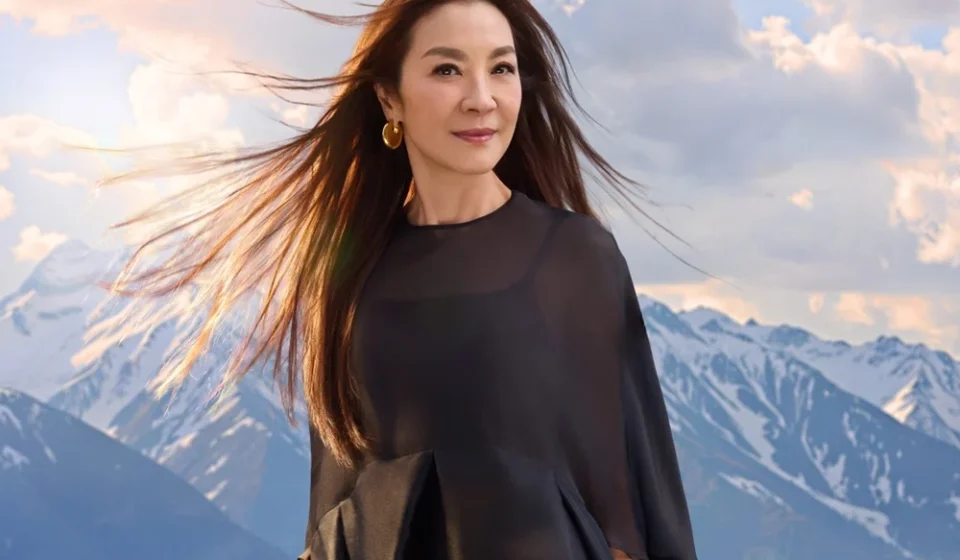
The Busan International Film Festival (BIFF), Asia’s most prestigious cinematic gathering, has announced that legendary performer Michelle Yeoh will be the recipient of this year’s "Asian Filmmaker of the Year" award. The honor, which recognizes an individual for their profound and lasting contribution to the advancement of Asian cinema, serves as a capstone to a career that has effectively dismantled barriers in both Eastern and Western film industries.
The accolade will be formally presented on October 6 at the festival’s opening ceremony, held at the iconic Busan Cinema Center. The ceremony, which will be hosted by Pachinko star Kim Minha, marks the commencement of the 31st edition of the festival, which runs through October 15.
A Legacy of Defiance and Grace: The Chronology of a Global Icon
To understand the magnitude of Yeoh’s recognition, one must trace her journey from the vibrant, high-octane studios of 1980s Hong Kong to the glittering stage of the Academy Awards. Born in Malaysia in 1962, Yeoh did not merely enter the film industry; she transformed it.
The Martial Arts Pioneer (1985–1996)
Yeoh’s screen debut in the 1985 Hong Kong action feature Yes, Madam! served as a declaration of intent. At a time when action cinema was dominated by male archetypes, Yeoh brought a sophisticated, athletic, and fearless intensity that redefined the "action heroine." She cemented this reputation with roles in Police Story 3: Supercop (1992) and the cult classic Wing Chun (1994). These films did not just showcase her physical prowess; they demonstrated an innate ability to balance intense choreography with nuanced character work.
International Breakthrough (1997–2000)
By the late 1990s, Yeoh’s reach had extended far beyond Asia. Her turn as Wai Lin in the James Bond installment Tomorrow Never Dies (1997) introduced her to a massive Western audience. However, it was Ang Lee’s Crouching Tiger, Hidden Dragon (2000) that truly shifted the paradigm. The film became a cultural phenomenon, proving that a non-English language title could achieve both immense box-office success and profound critical acclaim, ultimately garnering multiple Academy Awards.
The Modern Masterpiece and Industry Recognition (2018–2024)
Following a diverse career trajectory that included international dramas and high-budget features, Yeoh experienced a historic resurgence in the 2020s. Her performance in Crazy Rich Asians (2018) and Shang-Chi and the Legend of the Ten Rings (2021) signaled a new chapter of influence.
The zenith of this period was undoubtedly Everything Everywhere All at Once (2022). The film earned Yeoh the Academy Award for Best Actress—making her the first Asian woman to claim the honor. This win was part of a historic awards sweep, including victories at the Screen Actors Guild (SAG) Awards and the Golden Globes. Earlier this year, her influence was further solidified when she became the first Asian woman to receive the Honorary Golden Bear at the Berlin International Film Festival.
A Long-Standing Bond with Busan
Yeoh’s relationship with the Busan International Film Festival is not a recent development; it is a decades-long partnership. Her history with the festival dates back to 2002, when she participated in the Pusan Promotion Plan—the vital precursor to what is now known as the Asian Project Market.
Over the last 22 years, Yeoh has remained a consistent presence in Busan, both as a guest and as a subject of the festival’s programming. She has returned multiple times to present projects including Far North (2007), Reign of Assassins (2010), and The Lady (2011). In 2018, her film Master Z: The Ip Man Legacy served as the closing title for the 23rd edition of the festival. This year’s appearance is particularly significant, as it marks her first return to the BIFF red carpet since her 2011 visit.
Curating a Legacy: The Special Program in Focus
In honor of the award, BIFF has curated a "Special Program in Focus," featuring a retrospective of Yeoh’s work. Reflecting her personal artistic values, Yeoh hand-selected three titles to be screened for festival audiences: the wuxia masterpiece Reign of Assassins, the genre-bending Everything Everywhere All at Once, and her 2026 title Sandiwara.
Additionally, the festival will host the screening of her latest feature, It’s My Time (2026). This selection provides a comprehensive overview of her evolution as an actor, from the kinetic grace of her early wuxia roles to the complex, emotionally resonant performances of her contemporary career.
Institutional Context: The Weight of the Honor
The "Asian Filmmaker of the Year" award is a testament to the festival’s commitment to honoring those who have expanded the definition of Asian cinema. First established during the 8th edition of the festival in 2003, the award has become a barometer for excellence in the regional industry.
The prestige of the award is highlighted by the caliber of its recent recipients. Yeoh joins a lineage of cinematic giants, including:
- Jafar Panahi (2025)
- Kurosawa Kiyoshi (2024)
- Chow Yun Fat (2023)
- Tony Chiu-Wai Leung (2022)
By choosing Yeoh, the Busan committee acknowledges not only her individual talent but her role as a bridge-builder between Eastern production houses and the global cinematic market.
The Broader Implications for Global Cinema
The selection of Michelle Yeoh for this honor arrives at a pivotal moment for Asian cinema. For decades, the industry was often compartmentalized as "regional," but the current global climate—driven by streaming platforms and an increased appetite for diverse, multilingual storytelling—has placed Asian narratives at the center of the zeitgeist.
Yeoh’s career is the roadmap for this transition. By navigating Hong Kong action cinema, European arthouse productions, and major Hollywood franchises, she has demonstrated that the boundaries between these industries are increasingly porous. Her recent credits, such as A Haunting in Venice (2023), the adaptation of Wicked (2024), and the expansive Star Trek: Section 31 (2025), showcase an actor who refuses to be pigeonholed.
For the organizers of BIFF, honoring Yeoh is an affirmation of the festival’s mission to foster an environment where Asian filmmakers are not just recognized, but are seen as the primary architects of modern film culture. As the 31st edition of the festival prepares to open its doors, the inclusion of Yeoh serves as a reminder that the impact of a single, dedicated artist can span continents, generations, and genres.
The festival will also host the 21st Asian Contents & Film Market from October 10–13, further highlighting the economic and collaborative spirit that Yeoh has championed throughout her career. As the red carpet is rolled out in Busan this October, it will celebrate a woman who has spent nearly forty years showing the world that, in cinema as in life, anything is possible.