A Global Sonic Epic: Hans Zimmer and A.R. Rahman Unveil the ‘Ramayana’ Trailer Theme

By Film Music Reporter Editorial Desk
August 4, 2026
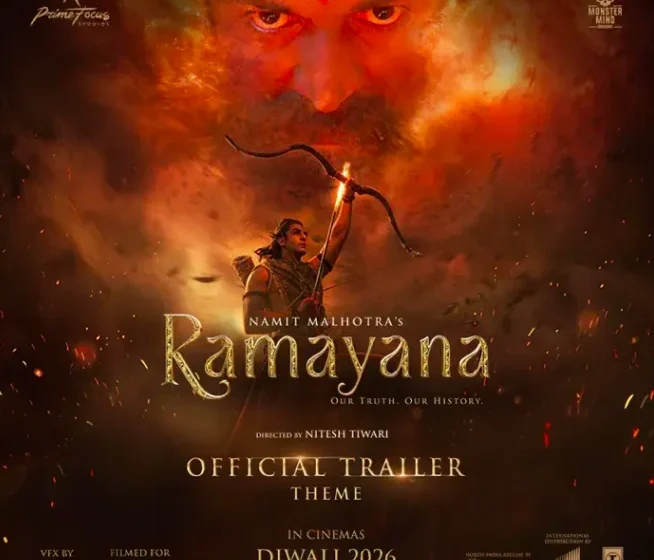
In an unprecedented convergence of Western cinematic grandeur and Indian musical soul, the highly anticipated epic Ramayana has taken another massive step toward its theatrical debut. Super Cassettes Industries, the label currently spearheading the film’s musical distribution, has officially released the Ramayana Trailer Theme—a collaborative masterwork composed by the legendary Hans Zimmer and the incomparable A.R. Rahman.
As the world prepares for the November premiere of director Nitesh Tiwari’s magnum opus, this latest musical offering serves as both a tease for the visual spectacle to come and a testament to the ambitious cross-cultural fusion at the heart of this production.
The Main Facts: A Convergence of Titans
The Ramayana Trailer Theme is now available across all major digital streaming platforms, marking the third official musical reveal from the project. The track represents the latest output from the creative partnership between Hans Zimmer, the German-born titan of Hollywood scoring, and A.R. Rahman, the Indian icon whose melodies have defined a generation of world cinema.
The collaboration is not merely a celebrity pairing; it is a meticulously crafted soundscape designed to capture the mythological gravity of one of history’s greatest epics. The trailer theme builds upon the narrative groundwork laid by the film’s first two teasers, utilizing a blend of Zimmer’s signature percussive intensity and orchestral wall-of-sound, woven seamlessly with the intricate, soulful melodic structures that have become the hallmark of A.R. Rahman’s illustrious career.
The film, directed by Nitesh Tiwari, boasts an ensemble cast featuring Ranbir Kapoor, Yash, Sai Pallavi, Ravie Dubey, and Sunny Deol. As it heads toward a wide release during the Diwali holiday this November, the score has become as much a point of interest as the star-studded cast itself.
A Chronology of Sound: The Path to the Trailer
The journey toward this current release has been a multi-staged rollout, reflecting the scale of the production itself. The musical identity of Ramayana began to coalesce in the summer of 2025.
1. The Genesis: The Introduction Theme (July 2025)
The world first heard the Ramayana Introduction Theme in July 2025, a track that set the sonic tone for the project. Initially released under Sony Music, this composition introduced audiences to the blending of Western cinematic tension and Indian classical undertones. It acted as a prologue, suggesting that the film would not merely be a traditional adaptation, but a modern, globalized interpretation of the ancient text.
2. The Character Study: The ‘Rama Theme’ (April 2026)
Following the success of the introduction, the production team released the Rama Theme in April 2026. This track leaned heavily into the heroic archetypes central to the narrative. It served to humanize the divinity associated with the protagonist, using instrumentation that felt both ancient and futuristic.
3. The Current Milestone: The Trailer Theme (August 2026)
The release of the Ramayana Trailer Theme marks the final transition from character-specific motifs to the overarching narrative momentum of the first installment. Notably, fans may have observed the disappearance of the previous two themes from digital platforms earlier this year. This was due to a strategic shift in rights management, with Super Cassettes Industries consolidating the soundtrack rights to ensure a unified release strategy for the full album leading up to the film’s November launch.
Supporting Data: Behind the Collaboration
The collaboration between Hans Zimmer and A.R. Rahman is one of the most expensive and high-profile musical endeavors in recent Indian cinema history.
The Creative Philosophy
Hans Zimmer’s approach to Ramayana has been described by insiders as an "exercise in scale." Having defined the sound of modern blockbusters like Dune and The Dark Knight, Zimmer brings a level of sonic world-building that is rarely seen in mythological dramas. Conversely, A.R. Rahman, an Academy Award and Grammy winner, ensures that the film retains its cultural authenticity.
Data from the production indicates that the score was recorded across multiple continents, utilizing a 120-piece orchestra alongside traditional Indian instruments like the Veena, Mridangam, and various folk percussion elements. The synthesis of these sounds in the Trailer Theme is designed to appeal to both the domestic Indian audience and the global market, positioning Ramayana as a potential breakout hit on the world stage.
Distribution and Reach
The decision to release the trailer theme separately is part of a "slow-burn" marketing strategy. By releasing individual motifs before the full soundtrack, the production is building an "ear-worm" campaign. The digital availability on services like Apple Music and Spotify ensures that the music reaches a global demographic, effectively marketing the film to international audiences who may be unfamiliar with the source material but are fans of the composers’ previous works.
Official Responses and Industry Context
Director Nitesh Tiwari has been vocal about the importance of the music in grounding the film’s massive scale. In recent press statements, Tiwari noted that "the music is not an accompaniment to the visuals; it is the narrator of the story."
The industry at large has responded with significant enthusiasm. Analysts suggest that the involvement of Zimmer and Rahman is a calculated move to secure global distribution deals and establish Ramayana as an "event" film—a rare classification in an era where streaming often overshadows the theatrical experience.
"When you combine the most successful composer in Hollywood with the most successful composer in India, you aren’t just making a film," says film trade analyst Rajesh Kumar. "You are building a brand. The music is the first pillar of that brand identity."
Implications: A New Era for Indian Cinema
The implications of this collaboration extend far beyond the release of a single trailer theme.
1. Globalizing the Epic
For decades, Indian cinema has looked to Hollywood for technical inspiration. Ramayana represents a pivot where the two industries are collaborating on equal footing. By utilizing international giants like Zimmer, the production is signaling to global distributors that Indian epics can, and should, be viewed as global blockbusters.
2. The Shift in Music Rights
The consolidation of rights under Super Cassettes Industries reflects a broader trend in the film industry: the professionalization of soundtrack management. By pulling older tracks and re-releasing them as part of a curated, cohesive collection, the studio is maximizing the revenue potential of the film’s intellectual property.
3. Setting a High Bar for Future Productions
The success of this musical rollout will likely set a new benchmark for Indian filmmakers. Future mythological projects will now be expected to deliver not only high-end CGI and casting but also a world-class auditory experience. This "Zimmer-Rahman effect" forces the industry to consider the long-term value of a film’s score as a standalone product.
4. The Diwali Countdown
As November approaches, the pressure is on. The Ramayana Trailer Theme has already garnered millions of views within its first hours of release, indicating that the audience is highly receptive to the tone being set. The film’s success will be a litmus test for whether a large-scale, two-part epic can maintain its momentum in a fragmented media landscape.
Conclusion: The Sound of Divinity
The Ramayana Trailer Theme is a bridge. It bridges the gap between ancient tradition and modern spectacle, between East and West, and between the viewer and the myth. Whether it is the thundering drums that signal conflict or the ethereal strings that represent the divine, the music is a promise of the scale of the experience awaiting audiences in November.
With the music now firmly in the public domain and the trailer fueling the excitement, the stage is set. If the film can match the ambition and the technical mastery of its soundtrack, Ramayana may well become the definitive cinematic event of 2026. For now, the world listens, waits, and prepares for the first of two parts that promise to redefine the landscape of Indian storytelling on the global stage.