The Prismatic Awakening: Jane Schoenbrun’s ‘Teenage Sex and Death at Camp Miasma’ Redefines Queer Horror

Editor’s Note: This review was originally published during the 2026 Cannes Film Festival. Mubi releases “Teenage Sex and Death at Camp Miasma” theatrically starting Friday, August 7.
The Metaphysical Evolution of Jane Schoenbrun
Visionary filmmaker Jane Schoenbrun has never been one to offer the audience an easy entry point. Their body of work, characterized by a haunting, genre-literate aesthetic, has consistently interrogated the borders between digital malaise and the physical reality of the self. Their feature debut, We’re All Going to the World’s Fair, was widely hailed not merely as a love letter to the isolation of internet creepypasta, but as a profound, fractured coming-out missive.
With the production of that debut, Schoenbrun underwent a public and personal revelation regarding their own nonbinary trans identity. If World’s Fair was the search, their sophomore feature—the wounding, masterful I Saw the TV Glow—was the anatomy of that search. Using the hazy, static-filled nostalgia of the millennial television experience, TV Glow served as a visceral self-portrayal of gender dysphoria. Now, with their slippery, sapphic latest, Teenage Sex and Death at Camp Miasma, Schoenbrun moves past the “annihilation” of dysphoria to explore the disorienting, erotic aftermath of inhabiting a body one has finally claimed.
Chronology of a Creative Pivot
The film follows Kris (Hannah Einbinder), a 29-year-old filmmaker whose career is at a precarious crossroads. Bookish, brilliant, and deeply internal, Kris has been optioned to direct a “woke,” 21st-century reboot of a transphobic 1980s slasher franchise titled Camp Miasma.
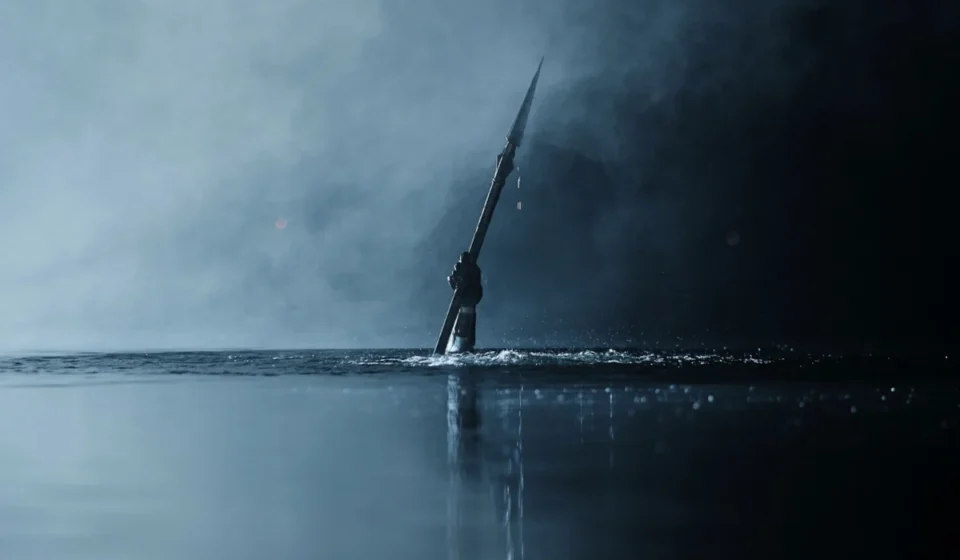
In the fictional logic of the franchise, the central antagonist is not a masked serial killer, but a bloodthirsty entity known as “Little Death”—a clever, winking nod to the la petite mort euphemism for orgasm. The creature, a nightmare of industrial design featuring an HVAC suit and a helmet resembling an early cinematograph camera, is the vengeful spirit of a drowned camper who was bullied for their trans identity.

The plot kicks into high gear when Kris travels to a remote, snow-dusted location to recruit the original “final girl” of the Camp Miasma series, Billy (Gillian Anderson), to star in the reboot. Billy has lived a hermetic life on the original film’s location, treating her own legacy not as a ghost to be exorcised, but as a space she continues to inhabit. What follows is a slow-burn collision of creative ambition and sexual awakening, as Kris discovers that her desire to direct Billy is inextricably tied to a desperate, carnal urge to be seen—and to be possessed—by her.
Supporting Data: Crafting the Aesthetic of Unease
Technically, Teenage Sex and Death at Camp Miasma is a singular achievement. Cinematographer Eric Yue, returning from I Saw the TV Glow, paints the film in the saturated, neon-drenched hues of a sleepover nightmare. The film is anchored by a haunting, acoustic-forward score by Alex G, whose melancholic sensibilities ground the more surrealist elements of the narrative.
The film’s design language is equally intentional. The use of matte paintings as backdrops for both the film-within-the-film and the primary narrative creates a sense of profound artifice. As the story progresses, these layers begin to peel away. The opening credits sequence—a masterclass in world-building—utilizes fake VHS spines and weathered news clippings to establish a franchise history that feels entirely lived-in, if not entirely cursed.
The supporting cast provides essential friction. Jasmin Savoy Brown, as Kris’s partner Mari, embodies the polyamorous tension that leaves Kris feeling emotionally adrift. Meanwhile, Sarah Sherman delivers a riotous, high-octane performance as Kris’s industry-obsessed agent, providing the film with its most biting satire. One particular sequence—an Inland Empire-esque breakdown during an executive Zoom call—serves as a trenchant critique of the modern film industry’s tendency to commodify radical, queer voices.
Official Industry Context and Interpretations
While the film operates as a slasher, it is less interested in the mechanics of the kill than in the mechanics of pleasure. Schoenbrun’s screenplay suggests that for many who have spent their lives “watching” their own lives through the lens of pop culture, the body can become a foreign object. Kris, like many of Schoenbrun’s protagonists, has spent years as a voyeur of her own existence.

Industry insiders at Cannes have noted the “prismatic, woozy” quality of the film, with many critics debating its accessibility. It is not, by any standard definition, an “easy” movie. It demands that the viewer surrender to its internal logic, which oscillates between academic inquiry into horror iconography and a deeply personal, almost raw, exploration of queer intimacy.
In the words of the director, the film is an attempt to move beyond the “intellectualization” of gender and into the realm of the visceral. The title, while sensational, points to the film’s ultimate thesis: that life, much like a sour gummy candy, is meant to be consumed, tasted, and felt—not merely analyzed.
Implications: The Future of Queer Cinema
Teenage Sex and Death at Camp Miasma signals a maturation in Schoenbrun’s filmmaking. They are no longer just documenting the pain of transition; they are exploring the chaotic, unscripted pleasure of living in the present tense.
The film’s implications for the genre are significant. By taking a transphobic 1980s slasher premise and turning it into a sapphic, cerebral love story, Schoenbrun is actively reclaiming the horror space. They are demonstrating that the tools of the patriarchy—the slasher, the final girl, the franchise reboot—can be dismantled and reconstructed to tell stories that are fundamentally, beautifully, and dangerously queer.
This film will likely require multiple viewings to fully parse, but it is already cemented as a future cult classic. It serves as a defiant, shimmering statement that pleasure is not a concept to be studied, but a reality to be embraced.

Grade: B+
Release Details:
Teenage Sex and Death at Camp Miasma premiered at the 2026 Cannes Film Festival to widespread critical fascination. MUBI will release the film theatrically nationwide starting Friday, August 7.
Want to stay up to date on IndieWire’s film reviews and critical thoughts? Subscribe here to our newsletter, "In Review" by David Ehrlich, where our Chief Film Critic and Head Reviews Editor rounds up the best new releases and streaming picks, along with exclusive musings available only to subscribers.