The Streaming Revolution: Xbox Tests Ad-Supported Cloud Gaming as Physical Media Fades

The video game industry is currently undergoing its most significant structural shift since the transition from cartridges to optical discs. As consumers increasingly favor digital convenience over tangible ownership, the traditional model of "buying a box on a shelf" is rapidly losing its dominance. Following the controversial move toward digital-only releases for major titles like Grand Theft Auto VI, industry analysts suggest that the physical console itself may eventually become a relic of the past.
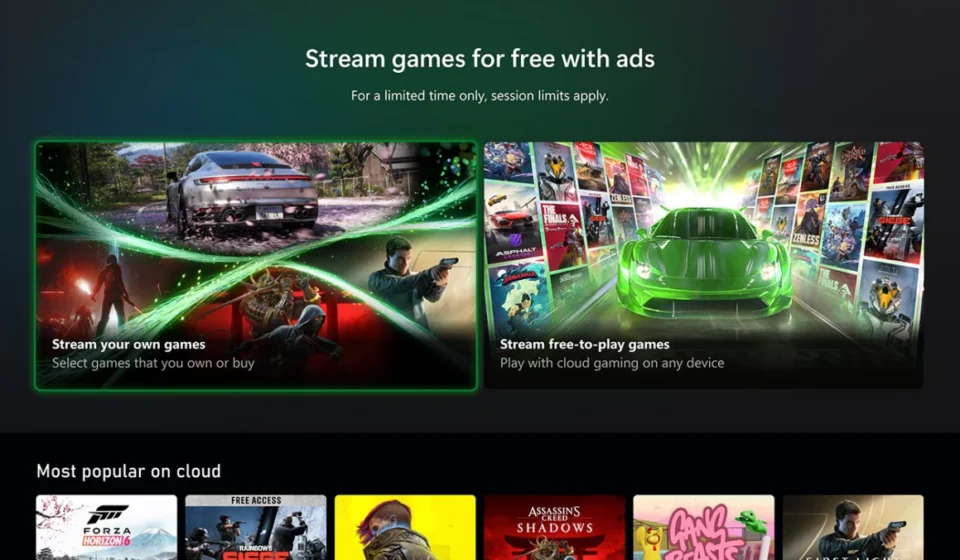
In this evolving landscape, Microsoft’s Xbox division has taken a bold step that could redefine the economics of gaming. On Thursday, the company announced the commencement of a limited test for an ad-supported cloud gaming model, allowing users to stream games from their personal libraries without the need for a premium Game Pass subscription. This pilot program, currently restricted to Xbox Insiders, signals a potential pivot toward a more accessible, albeit ad-subsidized, future for interactive entertainment.
The Chronology of Digital Transformation
The march toward a digital-only ecosystem has been incremental but relentless. Over the last decade, the gaming industry has steadily dismantled the barriers to digital distribution.
- The Early 2010s: The rise of Steam, Xbox Live, and the PlayStation Network established digital storefronts as a viable alternative to retail.
- The Subscription Era: With the launch of services like Xbox Game Pass, the industry shifted from an "ownership" model to an "access" model. Players became accustomed to rotating catalogs rather than static collections.
- The Hardware Pivot: As hardware manufacturers like Sony and Microsoft began offering "Digital Edition" consoles without disc drives, the writing was on the wall for physical media.
- The Present Day: The current Xbox cloud gaming test represents the next logical phase: decoupling the service of gaming from the hardware of a console, while utilizing advertising to subsidize the infrastructure costs.
This trajectory suggests that the industry is moving away from the high-friction, high-cost model of purchasing individual units and toward a low-friction, continuous engagement model supported by cloud technology.
Mechanics of the New Ad-Supported Test
The current Xbox Insider pilot is designed to assess how gamers respond to a trade-off: time for access. According to sources familiar with the initiative, the test allows Xbox account holders to stream titles they already own through the cloud without a Game Pass Ultimate membership.
How the Program Operates
For players participating in the test, the process is streamlined to prioritize ease of access. When a user selects a game to stream, they are presented with a brief advertising sequence.
- Ad Duration: Users will encounter "up to" two minutes of advertisements prior to the start of their gameplay session.
- Session Limits: Each play session is capped at one hour.
- Extended Play: If a player wishes to continue beyond the initial hour, they are required to watch another set of ads (up to two minutes) to unlock the next hourly block.
This model mirrors the ad-supported tiers recently adopted by streaming giants like Netflix, Disney+, and Hulu. By introducing this "ad-break" structure, Microsoft is testing whether the gaming community is willing to tolerate minor interruptions in exchange for the ability to play high-fidelity games on devices they already own—including tablets, smart TVs, PCs, and older Xbox hardware.
The Technological Infrastructure
The success of this initiative hinges on the maturity of cloud gaming. Unlike traditional console gaming, where the processing power is local, cloud gaming relies on data centers to render frames and stream them back to the user’s screen.
The compatibility list for this test is extensive, reflecting Microsoft’s goal to make Xbox an "ecosystem" rather than a piece of hardware. Supported devices include:
- Xbox Consoles: All iterations from the Xbox One onwards.
- Smart TVs: Newer models from manufacturers like Samsung and LG.
- Computing Devices: Windows PCs, tablets, and mobile devices.
- Immersive Hardware: VR headsets that support cloud streaming interfaces.
The primary advantage here is mobility. Remote-accessing a home console has historically been tethered to the console’s physical location and local network constraints. Cloud gaming, by contrast, creates a truly portable experience, allowing a user to pick up a Forza or Halo session on a laptop in a coffee shop, provided the internet connection is stable.
Official Responses and Strategic Rationale
Microsoft’s justification for this move is rooted in the concept of "affordability." In an era where the cost of living—and the cost of high-end gaming hardware—is rising, Microsoft is attempting to lower the barrier to entry.
In an official announcement, the company stated: "Advertising has existed in gaming for decades, from in-game placements to free-to-play models. But it hasn’t always been built with the player in mind. When done well, advertising can help lower the cost of access."
The Five Pillars of Advertising
Microsoft has outlined five core principles for its advertising program to ensure that the user experience is not compromised:
- Value-Add: Advertising should contribute to the experience, not detract from it.
- Player-Centricity: Advertisements must be relevant and unobtrusive.
- Transparency: Users must be informed about what they are watching and why.
- Security and Privacy: Data handling must adhere to strict consumer protection standards.
- Quality Control: Brands must provide value that aligns with the premium nature of the gaming ecosystem.
By framing ads as a way to "expand audiences," Microsoft is signaling to shareholders that it intends to capture a demographic that is currently priced out of the Game Pass subscription tiers, which currently range from $9.99 to $22.99 per month.
Implications for the Future of Gaming
The shift toward ad-supported cloud gaming has profound implications for the industry at large.
1. The Decline of Physical Ownership
If cloud streaming becomes the primary method of delivery, the concept of "owning" a game becomes increasingly abstract. Players are essentially renting access to a digital instance of a game. This transition risks the eventual disappearance of physical media, as companies may choose to phase out manufacturing costs entirely if digital adoption reaches near-saturation.
2. Market Democratization
For millions of players in regions where console hardware is prohibitively expensive, an ad-supported cloud model could be a game-changer. By removing the need for a $500 console or a recurring subscription fee, Microsoft is effectively democratizing access to high-fidelity experiences, potentially growing their total addressable market by millions of users.
3. The New "Ad-Tech" Gaming Economy
This experiment positions Microsoft at the forefront of a new ad-tech sector within gaming. If successful, this could create a significant new revenue stream for the company, potentially offsetting the costs of development and the maintenance of massive server farms required for cloud infrastructure. Developers and publishers might also find new ways to monetize their games long after the initial point of sale.
How to Join the Test
The Xbox Insider Program serves as the laboratory for these technological shifts. For those interested in testing this new model, participation is relatively straightforward:
- Registration: Download the Xbox Insider Hub app on a console or Windows PC.
- Enrollment: Navigate to the "Previews" tab and select "Xbox Update Preview."
- Eligibility: Participants must be 18 years or older and adhere to the standard Microsoft code of conduct.
While the program is currently limited, the data gathered will be pivotal in determining whether this model scales to the general public.
As we look toward 2028 and beyond, the definition of a "gamer" is changing. We are transitioning from a world of physical libraries and local processing to one of fluid, cloud-based access. Whether this shift will be embraced by a community long accustomed to the pride of physical ownership remains to be seen. However, if affordability and accessibility are indeed the ultimate drivers of market success, Microsoft’s bet on ad-supported streaming may prove to be the most significant development in the console generation.