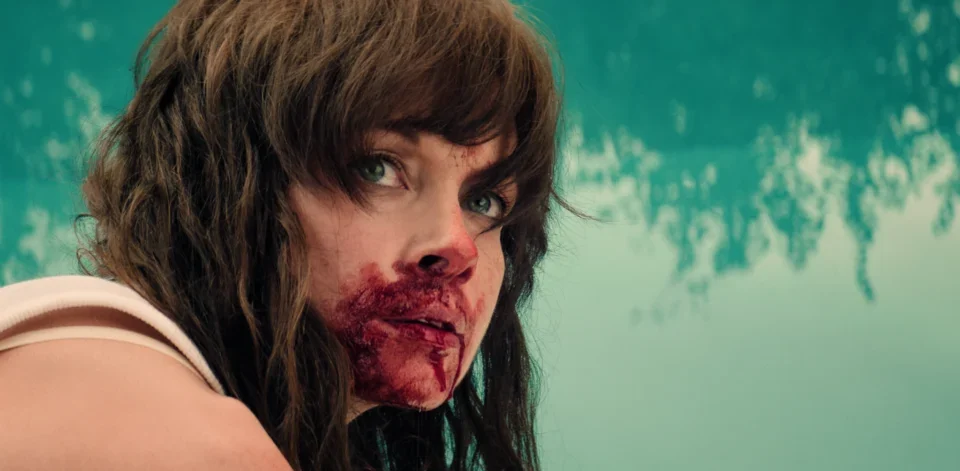
The Feral Mother: Andrea Corsini’s ‘Ferine’ and the Evolution of Modern Maternal Horror

The landscape of contemporary cinema is currently witnessing a visceral resurgence of "maternal horror," a subgenre that explores the anxieties, traumas, and primal terrors associated with pregnancy and parenthood. Decades after Roman Polanski’s Rosemary’s Baby (1968) first shattered the domestic peace of the American middle class, a new generation of filmmakers is revisiting these themes through a more aggressive, stylized lens.
At the forefront of this movement is Italian director Andrea Corsini, whose debut feature, Ferine, recently made its international premiere at the Fantasia International Film Festival. Expanding upon his acclaimed 2019 short film of the same name, Corsini delivers an upscale genre piece that attempts to bridge the gap between high-brow "Elevated Horror" and the pulpy, creature-driven traditions of the past.
Main Facts: A Convergence of High Art and Primal Instinct
Ferine is a psychological horror-thriller that centers on Irina (also known as Irene), an enigmatic, wealthy foreigner living in Italy. Played by Irish actor Carolyn Bracken—fresh off her dual-role success in Damian McCarthy’s Oddity—Irina is a character defined by a history of loss and an obsessive, almost predatory desire for motherhood.
The film distinguishes itself through its aesthetic pedigree. It features a lush orchestral score by the legendary Pino Donaggio (famed for his work with Brian De Palma on Carrie and Dressed to Kill) and striking widescreen cinematography by Fabrizio La Palombara. The production design, anchored by a Brutalist concrete mansion that serves as Irina’s sanctuary and cage, signals from the opening frame that this is a film with "Art" on its mind. Indeed, the movie opens with a quotation from the philosopher Arthur Schopenhauer, setting a somber, intellectual tone for a story that eventually descends into blood-soaked savagery.
At its core, Ferine is a "transformation" narrative, drawing heavy inspiration from the "feline-human" metamorphosis tropes established in Jacques Tourneur’s 1942 classic Cat People and Paul Schrader’s 1982 erotic-horror remake. However, Corsini updates this conceit by tethering the animalistic change not to sexuality, but to the desperate, distorted instincts of a mother who has lost her way.
Chronology: The Descent from Grief to Savagery
The narrative architecture of Ferine follows a steady, darkening path from social alienation to biological monstrosity.
The Return and the Theft
The story begins with Irina returning to the Italian countryside following the death of her estranged mother. Despite being an artist and a figure of high-end social standing—associated with gallerists like Alfredo (Marco Gambino) and collaborators like Till (Ilario Calvo)—Irina is emotionally hollowed out by a series of devastating miscarriages.
In her desperation, she turns to surrogacy, hiring a local woman, Anita (Uliana Kuzmina), to carry her child. However, when Anita experiences a post-birth change of heart, Irina’s veneer of civility cracks. Exploiting Anita’s poverty and lack of legal recourse, Irina steals the newborn from a private hospital in the dead of night, fleeing into the dense Italian woods.
The Accident and the Awakening
The film’s inciting incident occurs during this escape. A prologue has already informed the audience that a rare, South American jaguar being illegally trafficked has escaped its transport. In a moment of cinematic synchronicity, Irina’s car collides with the beast. While Irina and the infant survive the initial crash, the animal takes a victim from the vehicle.
In the aftermath, Irina undergoes a psychological and physiological shift. She becomes increasingly feral, developing a carnivorous craving for raw meat and exhibiting predatory behaviors. The film suggests a spiritual or metaphysical "invasion," where the spirit of the exotic cat—perhaps seeking its own lost offspring—has merged with Irina’s traumatized psyche.
The Replacement Child
As Irina’s condition worsens, her friend Rosa (Paola Lavini) attempts to intervene. Rosa suggests a "replacement" adoption: taking in Giulia (Elisabetta Caccamo), a young girl living with a neglectful, drug-addicted mother (Elodie Gay). This act of "mercy" quickly turns dark. When Giulia’s father (Fabrizio Odetto) attempts to reclaim his daughter, Irina’s protective instincts turn murderous. Anyone who threatens her makeshift family—or looks like a potential meal—becomes a target for offscreen violence.
The Final Confrontation
The final act introduces a formidable antagonist in Dama (Caroline Goodall), the "frostily authoritative" woman responsible for the illegal animal trade that brought the jaguar to Italy. Dama is a mirror image of Irina: wealthy, ruthless, and willing to eliminate anyone in her path. As Dama hunts for her lost "merchandise," she discovers Irina—a rare curiosity of a woman acting like a quadruped. The film’s climax plays out as a "captivity gone wrong" psychodrama, pitting two different kinds of predators against one another.
Supporting Data: The Industrial and Cultural Context
The production of Ferine reflects a broader trend in European genre cinema toward "prestige horror." By employing veterans like Pino Donaggio and filming in architecturally significant locations, the production team aims to distance the film from the "Eurotrash" or "Giallo" labels of the 1970s, even as it indulges in some of their tropes.
The Short-to-Feature Pipeline
Andrea Corsini’s path follows a successful industry blueprint:
- 2019: The short film Ferine premieres at the Venice International Film Critics’ Week.
- 2020-2023: Development of the feature-length script, expanding the 15-minute concept into a 100-minute narrative.
- 2024: International premiere at Fantasia, a key festival for launching genre films into the North American market.
The "Maternal Horror" Boom
Ferine enters a crowded but lucrative market. Recent years have seen a surge in films exploring the "dark side" of motherhood:
- The Babadook (2014): Maternal depression as a monster.
- Prevenge (2016): An unborn baby commanding its mother to kill.
- Hereditary (2018): Ancestral trauma and the failure of the maternal bond.
- Smile (2022) and Oddity (2024): High-concept horrors that use family grief as a catalyst for terror.
Data from film festivals suggests that "Elevated Horror"—films that prioritize atmosphere and psychological depth over jump scares—consistently performs better with critics and "prestige" streaming platforms like MUBI or Shudder, providing a viable commercial path for debut directors like Corsini.
Official Responses: Critical Reception and Analysis
The critical response to Ferine has been a mixture of admiration for its technical craft and skepticism toward its narrative clarity.
Technical Praise
Critics have almost universally lauded the film’s "elegant veneer." Fabrizio La Palombara’s cinematography is noted for its ability to make the Italian woods feel both beautiful and claustrophobic. Furthermore, the use of the Brutalist mansion has been hailed as a masterstroke. In horror, the "haunted house" is a staple, but by using a cold, concrete, modern manse, Corsini creates a "haunted cage" that reflects Irina’s internal state.
Narrative Critique
However, some reviews, including the one from Variety, point toward a "muddled" script. Critics argue that the film is "needlessly cryptic," leaving Irina as an abstraction rather than a fully realized human being. There is a sense that the director’s "pretensions towards Art" sometimes get in the way of the storytelling.
Specific criticism has been leveled at the film’s depiction of "transgressive art." One scene involves a bloody, carcass-eviscerating gallery performance that some viewers found to be an "unintentional Eurotrash parody" of 1970s performance art, rather than a shocking modern statement.
Performance Highlights
Carolyn Bracken’s performance is a consensus highlight. Moving from the refined world of art collecting to the dirt-caked reality of a predator, Bracken is described as "admirably committed." Similarly, newcomer Elisabetta Caccamo is praised for bringing a "winsome" innocence that provides a necessary contrast to the film’s grimmer elements.
Implications: What ‘Ferine’ Says About Modern Genre Cinema
The release of Ferine underscores several significant shifts in the horror genre.
1. The Rejection of the "Good Mother" Myth
For decades, horror cinema treated the mother as the ultimate protector. Ferine joins a growing list of films that treat motherhood as a site of potential psychosis and violence. It suggests that the "instinct" to protect can easily warp into an instinct to possess and consume.
2. The Rise of the "Architectural" Horror
In Ferine, the setting is not just a backdrop; it is a thematic anchor. The rise of "Architectural Horror"—where the geometry and material of the home (often modern, cold, and glass-heavy) dictate the mood—reflects a modern anxiety about wealth and isolation. Irina’s house, like her life, is "posh" but ultimately "feral."
3. The Tension Between Substance and Style
The film serves as a case study for the "Elevated Horror" debate. Can a film be too stylish? Corsini’s debut suggests that while high production values can elevate a pulpy premise, they also invite higher scrutiny. When a film quotes Schopenhauer, it sets an intellectual bar that the plot must then clear. Ferine manages to "work up enough of a perverse froth" to satisfy fans, but it also highlights the danger of a director believing they are crafting a "singular masterpiece" before the foundation of the story is fully solidified.
In conclusion, Ferine is a bold, if imperfect, addition to the Italian horror canon. It proves that Andrea Corsini is a director with a formidable visual eye, even if his narrative voice is still finding its balance. As the "mini-explosion" of maternal horror continues, Ferine stands as a reminder that the most terrifying monsters are often those born from our most basic human desires.