Rediscovering a Forgotten Melody: BSX Records Unearths Lee Holdridge’s Score for ‘Replacing Dad’

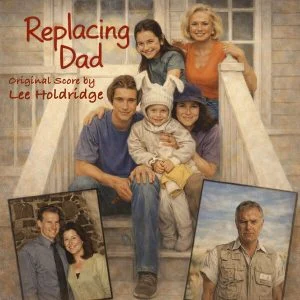
For decades, the sprawling catalog of 1990s television movies has served as a treasure trove of forgotten artistry. While the films themselves—often melodramatic, earnest, and deeply rooted in the domestic anxieties of the era—have transitioned from prime-time staples to cult curiosities, the music composed for them has frequently been relegated to the archives. Now, BSX Records has taken a significant step in rectifying this by releasing the first-ever official soundtrack album for the 1999 CBS drama Replacing Dad.
The release brings to the forefront the work of Emmy Award-winning composer Lee Holdridge, whose prolific career has defined the emotional landscape of numerous iconic films, including Splash, The Beastmaster, and Mr. Mom. By dusting off the master tapes of this intimate family drama, BSX Records is not merely offering a nostalgic product; they are preserving a piece of television history that showcases the nuanced craftsmanship of one of Hollywood’s most versatile composers.
The Production Context: A Look Back at ‘Replacing Dad’
Directed by Joyce Chopra and penned by David J. Hill, Replacing Dad premiered on CBS in early 1999 during the twilight of the "Movie of the Week" golden age. The film boasted a formidable ensemble cast, featuring Academy Award nominee Mary McDonnell, alongside William Russ, Jack Coleman, a young Erik von Detten, Camilla Belle, and the legendary Tippi Hedren.
The narrative centers on the sudden, destabilizing departure of a father figure, exploring the ripple effects on a family forced to navigate the complexities of grief, financial strain, and personal growth. In an era where domestic dramas were the bread and butter of network television, Replacing Dad stood out for its grounded approach to family dynamics. However, as the digital era dawned, the film—like many of its contemporaries—faded into relative obscurity, currently finding a second life via streaming platforms like Shout! TV.
The Composer’s Touch: Lee Holdridge’s Sonic Architecture
At the heart of this release is the score by Lee Holdridge. Holdridge is a name synonymous with versatility; his body of work ranges from the sweeping, orchestral majesty of The Mists of Avalon to the whimsical, synth-inflected charm of Splash. His involvement in Replacing Dad highlights a different side of his musical persona: the ability to compose delicate, character-driven cues that anchor a story without overwhelming it.
In Replacing Dad, Holdridge utilizes a restrained palette, favoring piano-led motifs and string arrangements that mirror the film’s domestic setting. The score is not meant to be a bombastic spectacle; rather, it is a subtle underscore designed to breathe alongside the actors. His ability to capture the specific cadence of a "leaky roof" or the awkwardness of a "first kiss" through sound demonstrates the hallmark of a veteran composer who understands the subtle alchemy between image and audio.
Chronology of the Release
The path to this release was not immediate. For twenty-five years, the score lived only within the mono and stereo mixes of the original broadcast. The effort to secure, restore, and master these cues for a commercial release is a testament to the niche, yet passionate, market for archival film music.
- 1999: Replacing Dad premieres on CBS, featuring Holdridge’s original score.
- Early 2024: BSX Records initiates the process of cataloging and restoring the original session tapes.
- May 2026: The album is officially released via the BSX Records website, marking the first time the music has been available in a standalone format.
- Late 2026: The soundtrack receives a wider distribution push, becoming available across all major digital streaming platforms, including Amazon, ensuring that modern listeners can access the music alongside the film’s streaming availability on Shout! TV.
Track-by-Track Breakdown: A Narrative Journey
The tracklist for the Replacing Dad soundtrack functions as a roadmap of the film’s emotional arc. By listening to the sequence, one can almost trace the narrative beats of the screenplay.
- Opening Titles: Sets the tone with Holdridge’s signature warmth, establishing the family unit before the inciting incident.
- Caught Red-Handed / Linda’s Breakdown: A pivotal shift in the score, transitioning from domestic stability to the chaotic reality of the father’s exit.
- George Walks Out / He’s Not Coming Back: A melancholic sequence that highlights the isolation of the characters.
- Willy’s Bunny Costume / The Leaky Roof: These tracks exemplify the "everyday" struggle of the film, proving that Holdridge can imbue even the most mundane household tasks with musical weight.
- Begging George to Come Home / Regret Trusting Him: A tense, dramatic high point that showcases the composer’s use of dissonance to underscore emotional conflict.
- Home Repair Montage: A lighter, more rhythmic piece, reflecting the family’s attempt to rebuild.
- George Drops Off Presents / Attack Aftermath: The complexity of the father-child relationship is distilled into these short, poignant bursts of sound.
- Wedding Ring Removal / Linda’s New Job: Musical markers of the protagonist’s transition into a new, independent life.
- Drew’s First Kiss / Dessert with the Doctor: A rare moment of levity and growth, captured with a brighter harmonic structure.
- George Is Despondent / Kids Hug George: The resolution, characterized by a return to the piano-heavy themes established in the opening.
- Finding Willy / Stargazing Finale / End Credits: The emotional crescendo, wrapping up the narrative threads with a sense of closure.
- Source Music (America, Jingle Bells, Restaurant, House Party): These tracks are crucial for historians and film buffs, as they represent the "background noise" of the film’s world—the diegetic music that grounds the story in reality.
The Significance of Archival Releases
The release of Replacing Dad is part of a larger trend in the music industry: the "archival reclamation" of television scores. In the past, television music was often treated as disposable. Master tapes were frequently lost, erased, or buried in corporate vaults, never intended for commercial consumption.
Labels like BSX Records play a critical role in preserving these cultural artifacts. By licensing these scores, they provide fans with a more holistic understanding of a composer’s career. For a composer like Lee Holdridge, whose work spans decades and formats, the availability of a score like Replacing Dad allows researchers and fans to analyze his transition from feature film work to the specific constraints of the television movie format.
Furthermore, this release serves as an educational tool for aspiring composers. It highlights the importance of "source music"—the diegetic cues (tracks 12–15) that often go uncredited but are vital to building an immersive environment. The inclusion of these tracks provides a comprehensive look at the entire sound design process of a late-90s production.
Official Responses and Industry Reception
While BSX Records has not issued a formal press conference, their decision to highlight this specific score in their 2026 catalog suggests a strategic pivot toward "lost gems." Composer Lee Holdridge has long been an advocate for the preservation of his own work, and industry insiders have lauded the release as a long-overdue tribute to the unsung heroes of television production.
Film music critics have noted that the release captures a specific "sonic texture" of the late 90s—a period defined by the transition from analog orchestration to the early adoption of digital synthesis. Holdridge’s work on this project occupies that unique middle ground, providing a warm, organic feel that has become increasingly rare in contemporary, sample-heavy television scoring.
Implications for the Future of Soundtrack Collecting
The successful distribution of Replacing Dad via major digital music services points to the viability of the "long tail" market. Digital platforms have removed the barrier of physical inventory, allowing small, dedicated labels to keep the music of the past alive indefinitely.
For the listener, this means that even the most niche television movie from 1999 can now find an audience in 2026 and beyond. This has profound implications for how we view television history. When the score is available independently, it allows the audience to engage with the film on a purely emotional, musical level, divorced from the visual medium. It allows the music to exist as a piece of standalone art.
As we look toward the future, one must wonder what other treasures are buried in the archives of CBS, NBC, or ABC. Thousands of hours of television have been produced, and with them, thousands of hours of original scores by some of the industry’s most talented composers. The Replacing Dad release is a beacon, signaling that even the most "forgotten" stories have melodies that deserve to be heard again.
Conclusion
The release of the Replacing Dad soundtrack is more than just a nod to a 1999 television movie; it is an act of preservation. By bringing Lee Holdridge’s score to light, BSX Records has provided a missing piece to the puzzle of 90s television history. It serves as a reminder that every film, regardless of its budget or its medium, carries a musical soul.
Whether you are a devotee of Lee Holdridge’s work, a fan of the original cast, or simply a collector of cinematic scores, this album offers a poignant, well-crafted journey into the heart of a family drama. As the music hits streaming platforms, it invites a new generation to rediscover the emotional resonance of a story that, while originally broadcast in the final year of the 20th century, still resonates with the universal themes of loss, repair, and the enduring nature of the human spirit.