

By Chris Evangelista
Published: September 24, 2026
Janus Metz Pedersen’s latest Netflix feature, Unabomber, arrives with the weight of historical tragedy and the glossy, high-contrast aesthetic that has become a hallmark of the platform’s premium original content. It is a film of stark contrasts: at its best, it is a chilling, intimate character study of one of America’s most notorious domestic terrorists; at its worst, it is a pedestrian police procedural that feels as though it were pulled from a generic primetime network slot. While the film manages to rise above the typical "direct-to-streaming" malaise through sheer force of performance, it remains a frustratingly bifurcated experience that begs the question: why dilute a masterclass in psychological tension with a secondary timeline that adds nothing to the narrative?
The Anatomy of an Origin: The Harvard Years
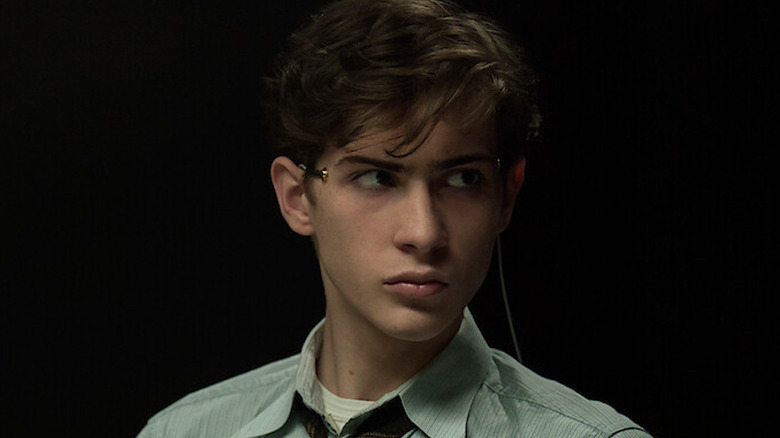
The film’s primary—and far more successful—narrative thread transports us to the late 1950s at Harvard University. Here, we encounter a young, socially alienated Ted Kaczynski, portrayed with unnerving precision by Jacob Tremblay. Tremblay, having long shed his child-actor persona, delivers an intense, internalized performance that grounds the film’s more sensationalist elements.
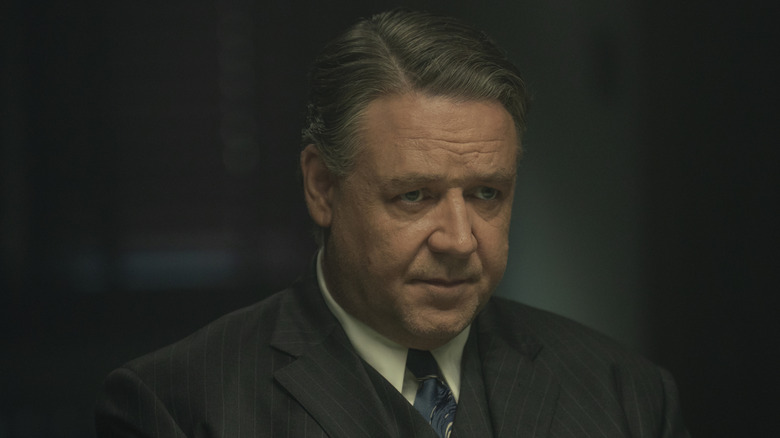
In these sequences, Unabomber excels as a period piece. The "dark academia" aesthetic is rendered in rich, shadow-drenched textures. We watch as the teenage genius, incapable of navigating the social intricacies of his peers, finds himself under the intellectual microscope of Professor Henry Murray, played with a captivating, sinister magnetism by Russell Crowe. Crowe’s performance is a standout, marking a shift into a "later-day Orson Welles" phase of his career, where he weaponizes his physical presence to portray a man of cold, academic cruelty.
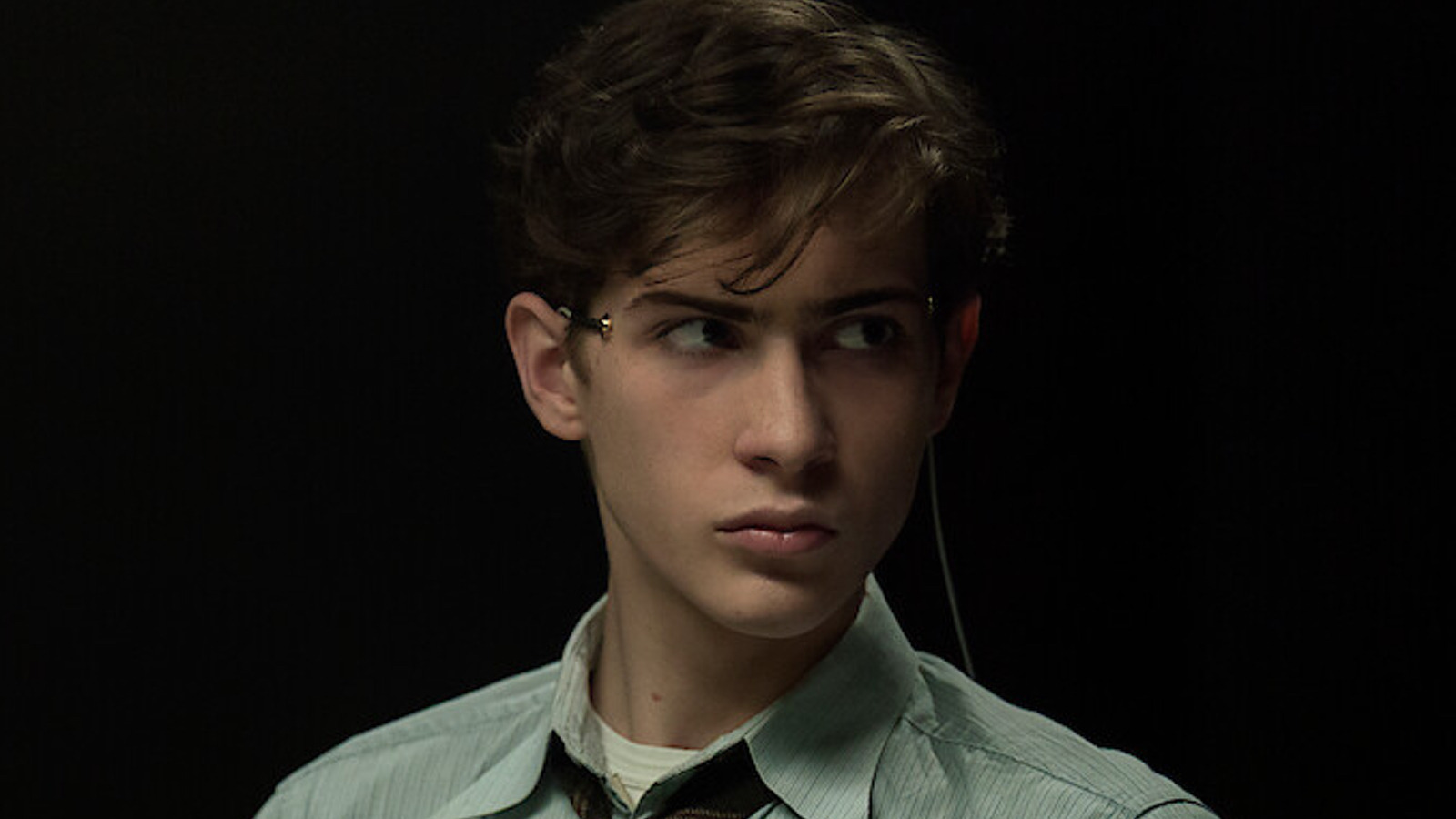
Alongside Annabelle Wallis, who plays his research partner Christiana Morgan, Crowe’s Murray orchestrates a series of "Manchurian Candidate"-style psychological experiments. The film leans heavily into the historical reality that Kaczynski was, in fact, a subject of the real-life, ethically dubious experiments conducted at Harvard during that era. While the real-life Kaczynski historically rejected a direct link between these tests and his subsequent descent into violence, the film uses this historical intersection as a crucible. It posits the theory that these experiments—meant to break the psyche—were the catalyst for the "pod person" detachment that would eventually define the Unabomber.
The Bifurcation Problem: A Tale of Two Timelines
The fatal flaw of Unabomber lies in its insistence on parallel storytelling. The film frequently cuts away from the claustrophobic, psychologically rich halls of 1950s Harvard to the sterile, blue-tinted offices of the 1990s FBI. This second timeline follows Joanne Miller (Shailene Woodley), a tenacious, lone-wolf agent tasked with tracking down the bomber before he can claim another victim.
The narrative collision is jarring. While the Harvard sequences feel like a slow-burn descent into madness, the 1990s segments play out like a tired, derivative procedural. We are treated to the familiar tropes of the "only one who sees the truth" investigator: Miller is the lone genius in a room of blundering bureaucrats, constantly facing skepticism from her superiors and finding her theories dismissed until the plot dictates she must be proven right.
Woodley does her best with the material provided, but her character lacks the depth required to stand beside the haunting portrayal of young Kaczynski. Every time the film cuts to the FBI manhunt, the momentum stalls. The narrative stakes feel lowered, shifting from the profound exploration of how a human soul is unmade, to the mundane "cat-and-mouse" tropes we have seen in countless thrillers. Had the filmmakers possessed the courage to stick exclusively to the Harvard timeline—or perhaps extended the narrative into a limited series—the impact of Kaczynski’s transformation would have been far more devastating.
Historical Context and Ethical Implications
The portrayal of the Harvard experiments in Unabomber touches on a significant, if often overlooked, chapter of mid-20th-century American history. The real-life MKUltra-adjacent projects and the unethical psychological studies conducted on students remain subjects of intense historical scrutiny. By placing Kaczynski at the center of this, the film asks uncomfortable questions about the responsibility of institutions in shaping the monsters they claim to abhor.
However, the film’s script, penned by Sam Chalsen and Nelson Greaves, occasionally prioritizes stylistic flourishes over thematic depth. We gain a visceral sense of Kaczynski’s anger, but we learn very little about the specific philosophical or intellectual machinations that led him to his specific brand of anti-technology radicalism. The film is content to show us the how—the isolation, the manipulation, the rage—without fully interrogating the why of his manifesto.
Furthermore, the inclusion of the FBI procedural elements often undermines the weight of the crimes. By framing the search for the Unabomber as a hero-versus-villain narrative, the film inadvertently sanitizes the tragedy of his victims. The victims are treated as mere plot points to drive Miller’s investigation, rather than individuals whose lives were irreparably altered by a man who had completely severed his connection to the human collective.
Final Assessment: Sturdy, If Uneven
Despite these grievances, Unabomber is far from a failure. It is a testament to the power of a strong cast to elevate a script that occasionally threatens to collapse under its own ambition. Tremblay’s performance as the "alien" in human skin is nothing short of hypnotic, and the final act, which includes a genuinely clever narrative twist regarding the apprehension of the suspect, manages to provide a sense of closure that feels earned, even if the road to get there was paved with procedural clichés.
For viewers interested in the psychological underpinnings of historical figures, the first half of the film is essential viewing. It captures the terrifying transformation of a brilliant mind into a weapon. However, for those who have grown weary of the "rogue agent vs. system" trope, the 1990s sequences will likely prove to be an endurance test.
Unabomber is a film that aspires to be a prestige psychological thriller but settles for being a sturdy, watchable piece of streaming content. It hits the marks, it looks the part, and it benefits from an exceptional central performance, but it lacks the narrative focus to be truly great. It is a cautionary tale, both for its protagonist and for the filmmakers: sometimes, the most effective way to tell a story is to simply commit to the path you’ve chosen, rather than trying to satisfy two different genres at once.
Rating: 6 out of 10
Unabomber is currently available for streaming on Netflix as of September 25, 2026.