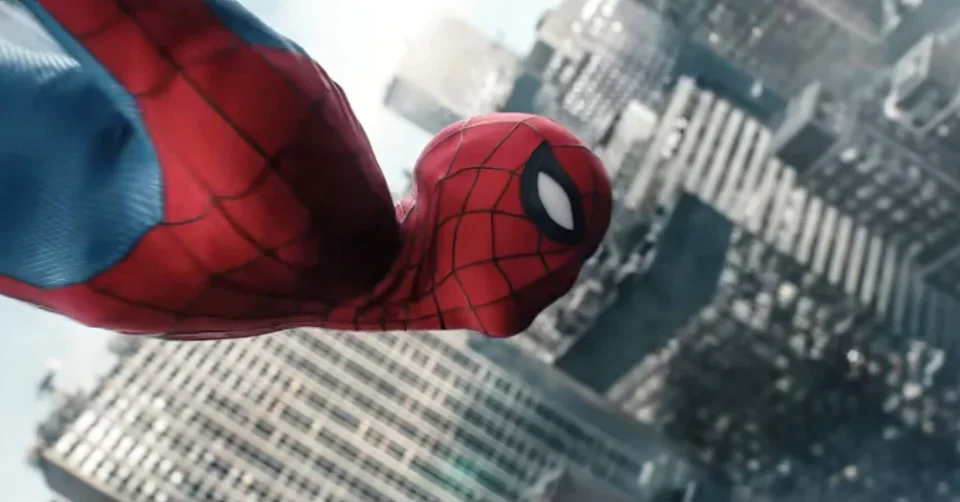
A Web-Slinging Phenomenon: ‘Spider-Man: Brand New Day’ Shatters All-Time Preview Records

The cinematic landscape is currently undergoing a seismic shift as Sony and Marvel’s latest collaboration, Spider-Man: Brand New Day, officially enters the theatrical fray. In a display of box office dominance that has caught even the most seasoned industry analysts off guard, the film has pulverized existing records, signaling that the appetite for wall-crawling spectacles remains at an all-time high.
Main Facts: The $72 Million Opening Salvo
The headline figure that has sent shockwaves through Hollywood is a staggering $72 million generated from early access and Thursday night preview screenings. This figure is not merely a strong start; it is a historic benchmark. By securing $72 million, Brand New Day has officially dethroned the previous record-holder, Avengers: Endgame, which commanded $60 million in its Thursday previews back in 2019.
To put this achievement into perspective, Avengers: Endgame went on to secure the largest opening weekend in cinematic history, pulling in a domestic total of $357 million and an eye-watering $1.2 billion globally. Brand New Day is now operating on that same elite trajectory. While Sony has maintained a cautious official forecast of $190 million to $195 million for the domestic opening, industry insiders and independent trackers suggest the film is trending toward a far more aggressive range of $260 million to $300 million. Should it breach the $300 million mark, it would cement its status as only the second film in history—the first being Endgame—to achieve such a gargantuan debut.
A Chronology of Success: From ‘No Way Home’ to ‘Brand New Day’
To understand the current fervor surrounding Brand New Day, one must look at the recent evolution of the Spider-Man franchise. Following the massive success of Spider-Man: No Way Home, which masterfully utilized the multiverse to bring together Tom Holland, Tobey Maguire, and Andrew Garfield, the stakes for the franchise were raised to an almost impossible height.
- The Post-Multiverse Era: No Way Home proved that Peter Parker’s journey resonated deeply with global audiences, earning $327 million internationally and a $587 million global launch.
- The Four-Year Gap: Brand New Day picks up four years after the events of its predecessor. The narrative conceit—a world that has entirely forgotten the identity of Peter Parker—has created a "soft reboot" feeling that feels both intimate and grand.
- The Promotional Cycle: The anticipation reached a fever pitch following the release of The Odyssey earlier this month. The off-screen chemistry and real-life marriage of Tom Holland and Zendaya served as a massive marketing engine, keeping the duo in the public consciousness and ensuring that their return to the screen was viewed as a "must-see" cultural event.
Supporting Data: The $200 Million Club
The exclusivity of the "Over $200 Million Opening Weekend" club remains a testament to the rarity of a true blockbuster. Only nine films in history have managed to clear this threshold. Brand New Day is widely expected to be the tenth member to join this elite fraternity.
The current members of this exclusive list represent the absolute pinnacle of franchise filmmaking:
- Avengers: Endgame ($357M)
- Spider-Man: No Way Home ($260M)
- Avengers: Infinity War ($257M)
- Star Wars: The Force Awakens ($247M)
- Star Wars: The Last Jedi ($220M)
- Deadpool & Wolverine ($211M)
- Jurassic World ($208M)
- The Avengers ($207M)
- Black Panther ($202M)
Analysts are looking at the pre-sales data for Brand New Day and noting that the velocity of ticket purchases exceeds that of No Way Home in key demographics. The film is performing exceptionally well in both premium large format (PLF) theaters and IMAX, which suggests that audiences are not just going to see the movie—they are seeking out the most immersive experience possible.
Official Responses and Strategic Positioning
Behind the scenes, the internal strategy at Sony Pictures has been one of disciplined optimism. While the public-facing numbers provided by the studio are conservative, those close to the production indicate a sense of quiet confidence.
"The numbers we are seeing on the ground are unprecedented for a solo-superhero outing," said a representative close to the distribution team. "We are monitoring the global rollout with a focus on sustainability. The goal is not just to have a massive Friday, but to maintain the momentum throughout the summer season."
The film’s marketing campaign has leaned heavily into the emotional stakes of the story. By highlighting the isolation of Peter Parker—who is now without his former support systems, including MJ and Ned—the studio has successfully positioned the film as a grounded, character-driven epic rather than just another VFX-heavy spectacle. The inclusion of a breakout performance from Sadie Sink as a mysterious new antagonist has also added a layer of intrigue that has been heavily scrutinized by the fanbase, further driving online engagement.
Global Implications: The International Outlook
While the domestic numbers are stealing headlines, the international performance of Brand New Day is equally vital to its overall success. Initial projections estimate that the film will add between $275 million and $300 million from international markets alone.
However, given the strength of the Spider-Man brand in markets like China, the United Kingdom, and Latin America, analysts believe these figures are likely to be exceeded. The franchise’s ability to transcend cultural boundaries has long been its greatest asset. By positioning the film as a universal story about identity, loss, and the responsibility of the individual, Sony and Marvel have ensured that the film appeals to a global demographic that goes well beyond the typical "comic book movie" audience.
The Cultural Impact: Why Now?
The success of Brand New Day serves as a clear indicator of the current state of the film industry. After a period of volatility and shifting viewer habits, audiences are showing a clear preference for established, high-quality intellectual property.
The personal narrative of Tom Holland—who has effectively grown up in the role—also plays a massive part in this success. Having recently married Zendaya, the public’s fascination with the pair’s real-life partnership has translated into a unique form of "star power" that is rare in the modern age. When the two appear on screen, it feels like a continuation of a story that the audience has been invested in for a decade.
Moreover, the narrative choice to strip Peter Parker of his support system, his gadgets, and his recognition has provided a fresh entry point for new viewers. By effectively resetting the status quo, the film avoids the "sequel fatigue" that often plagues long-running franchises.
Conclusion: A New Benchmark for Blockbusters
As the opening weekend progresses, all eyes remain glued to the tracking charts. Spider-Man: Brand New Day is not just breaking records; it is redefining what is possible for a blockbuster in the current economic climate. Whether it ultimately claims the title of the highest-grossing opening weekend of all time or settles into the top three, the film has already achieved the primary goal of any major motion picture: it has become a necessary, unavoidable, and thrilling part of the cultural conversation.
The success of this project will undoubtedly have long-term implications for the future of the Marvel and Sony collaboration. If Brand New Day continues to perform at this rate, it will serve as the blueprint for how studios manage major franchises in the coming decade—prioritizing character-driven storytelling, leveraging global star power, and strategically utilizing the "event" nature of the theatrical experience.
For now, the web-slinging hero remains the king of the box office, and the world is watching to see just how high this record can go.