The New Age of Exhibition: How Artists and Studios Are Reimagining the Cinema Experience

For decades, the business of movie exhibition was viewed as a stagnant, low-margin endeavor. In 1948, the landmark Paramount Decrees forced major Hollywood studios to divest their theater chains, effectively ending the era of total vertical integration. For seventy years, the industry operated under a clear separation: studios made the product, and theater chains managed the logistics of showing it.
Today, that wall has not only crumbled—it has been replaced by a chaotic, creative, and high-stakes experiment. Following the existential threat of the COVID-19 pandemic and the rapid ascent of streaming, the exhibition landscape has undergone a radical metamorphosis. From high-profile artist-led acquisitions to tech-forward studio investments, the cinema is no longer just a place to watch a movie; it has become a "third space" where the lines between content creation, community, and commerce are increasingly blurred.
A Brief Chronology: From Monopoly to Survival
The history of the modern theater is one of survival against the grain. Following the 1948 divestiture, studios were largely content to let theater chains handle the "unglamorous" work of exhibition. However, the 21st century brought a series of shocks that rendered the old model obsolete.

The rise of streaming, which reached its zenith during the 2020 lockdowns, led many to predict the "end of cinema." With major chains like Arclight shuttering and companies like Alamo Drafthouse entering bankruptcy, the industry reached its lowest point. As Tim League, co-founder of Alamo Drafthouse, noted, "COVID allowed people to acknowledge their inner recluse. There was no right move—we laid most of our people off and tried to pivot to streaming, which didn’t entirely work. It was rough."
The turning point came in August 2020, when the Department of Justice officially terminated the Paramount Decrees, citing the seismic shift in the market. Suddenly, the barriers to entry were gone. By 2024, the industry had begun a slow, difficult, but undeniable rebirth—not by trying to compete with the ease of streaming, but by leaning into the one thing streaming cannot replicate: the communal, curated experience.
The Rise of the Artist-Exhibitor
Perhaps the most striking trend in the post-pandemic era is the emergence of the "Artist-Exhibitor." These are not merely passive investors; they are filmmakers and creators who view the physical theater as a necessary bastion for their craft.

Quentin Tarantino, a pioneer of this movement, acquired the New Beverly Cinema in Los Angeles in 2014, turning it into a temple for 35mm celluloid projection. His success proved that there was an audience hungry for an analog experience in a digital world.
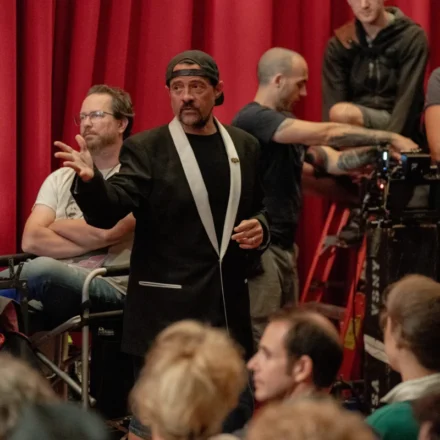
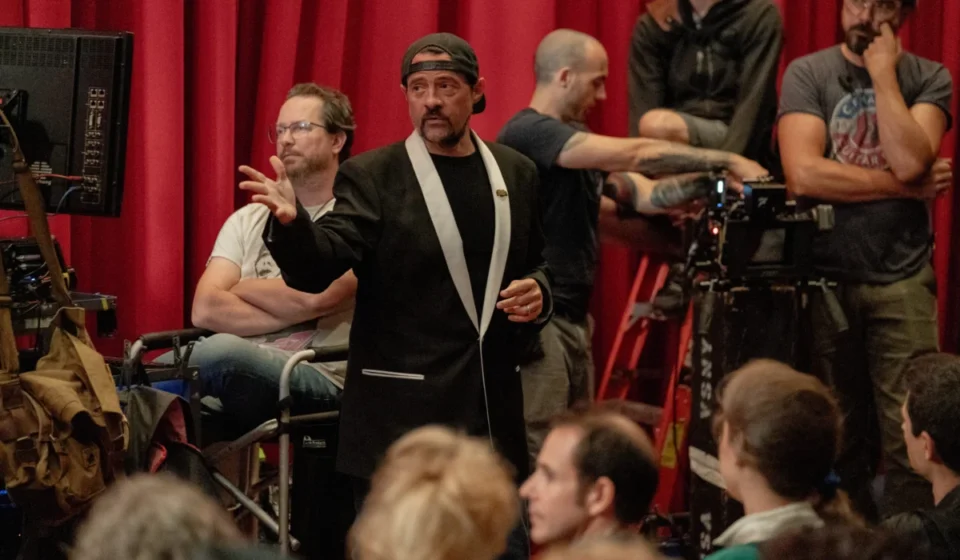
In 2024, that mission-driven approach gained momentum. Kevin Smith, the director behind Clerks, famously saved his hometown Atlantic Twin Cinema in New Jersey from being demolished for condominiums. Renaming it Smodcastle Cinemas, Smith poured $450,000 into the project. However, Smith is quick to dispel the glamour. "We all got together and saved the theater, man. But it was the worst financial decision I ever made," Smith admitted. "Owning a movie theater in the 21st-century post-COVID world is a dicey proposition at best. We became a nonprofit because the theater is never going into profit."
Similarly, a collective of 35 filmmakers—including Christopher Nolan, Steven Spielberg, and Greta Gerwig—raised $12 million to acquire the historic Village Theater in Westwood, Los Angeles, in 2024. This trend signals a shift toward a patronage model, where successful artists treat theaters as cultural assets rather than cash cows.

Studios Return to the Fray
While artists are buying theaters to preserve film culture, major studios are buying them to solve logistical problems. With the repeal of the Paramount Decrees, streaming giants like Netflix and traditional studios like Sony have entered the exhibition game with strategic intent.
Netflix’s acquisition of the Paris Theater and the Egyptian Theatre was a calculated move to secure screens in the competitive New York and Los Angeles markets, effectively bypassing the exhibition windows that previously limited their awards-season reach. As James Huntsman, co-founder of Blue Fox Entertainment, explains: "If you’re Netflix and you have six movies coming out, you need qualifying runs in these markets. Suddenly, you see why they’re interested in screens."
Sony Pictures Entertainment made the most significant splash by acquiring the Alamo Drafthouse chain in 2024. While the day-to-day operations remain independent, the backing of a major studio has allowed Alamo to pursue its "white whale": the acquisition of the historic Cinerama Dome in Hollywood in 2026. This move highlights a new strategy—studios aren’t just distributing films; they are becoming the curators of the theatrical experience.

Supporting Data: The Economics of the Screen
The financial reality of exhibition remains, as Smith noted, a "dicey proposition." The revenue model for theaters has been forced to diversify. Traditional box office splits—where theaters keep a portion of ticket sales—are often dictated by studios, with Disney-style blockbusters leaving theaters with smaller margins than repertory or indie titles.
Advertising revenue, once a bedrock of the industry, has yet to recover to pre-pandemic levels. "Ad agencies had a budget for in-theater ads," says Greg Laemmle of Laemmle Theatres. "When theaters closed, those dollars moved elsewhere, and they never came back."
To compensate, theaters are turning to:

- Alternative Revenue Streams: Restaurants, private event rentals, and karaoke suites have become essential.
- Premium Formats: 4DX, ScreenX, and IMAX 70mm allow for higher ticket surcharges, catering to audiences looking for a "premium" spectacle.
- Nonprofit Status: As seen with Vidiots and Smodcastle, the nonprofit model allows theaters to accept grants and donations, decoupling their survival from the volatile box office.
The "Elevated" Experience and Its Discontents
The push for premium experiences has led to friction. Alamo Drafthouse’s 2026 rollout of QR-code mobile ordering, which replaced their signature pen-and-paper service, was met with significant backlash from their core community. Critics argued it contradicted the brand’s "No Phones" ethos.
Conversely, Tim League’s new venture, Metro Private Cinema, targets a different tier of the market: the luxury consumer. By offering 4-to-20 seat theaters with high-end, 13-course dining menus, the model acknowledges that in a world of abundant content, the scarcity is in intimacy and exclusivity. "Since the dawn of cinema, it’s been being packed into a room with strangers," says League. "What if we flip that around and you’re surrounded by friends?"
Implications for the Future
The current landscape suggests that the "death" of the theater was an exaggeration—but the "standard" theater experience is in flux. The year 2026 is on track to be the best for global box office performance since 2019, with $35.7 billion in projected sales. This recovery is not driven by a return to the old ways, but by a diversification of the theater’s purpose.

The implications are twofold:
- Hyper-Localism: The most successful theaters are those that know their demographic. Whether it is the older, arthouse-leaning crowd at Laemmle, or the superfans at Smodcastle, success is now defined by community engagement rather than mass-market volume.
- The "Third Space" Necessity: As work-from-home culture continues to reshape cities, the demand for physical community spaces between work and home is growing. Theaters are positioning themselves to fill this void, evolving into multi-purpose entertainment hubs.
As Kevin Smith aptly summarized, owning a theater is "good for the heart, good for the soul, good for the optics, and good for the brand." While the economics may remain precarious, the cultural value of the movie theater—not as a factory for ticket sales, but as a sanctuary for shared human experience—has never been more vital. The industry is no longer waiting for the storm to pass; it is building a new structure, one screen at a time.