The Harsh Majesty of the North: Hans Petter Moland’s "Growth of the Soil" and the Resurrection of the Nordic Epic

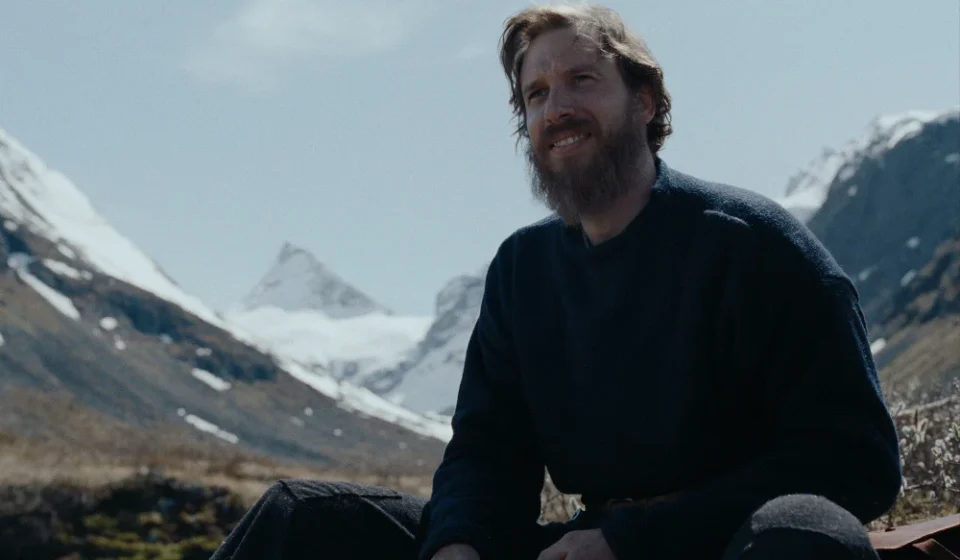
In the vast, unforgiving landscapes of early 20th-century Norway, the wind is more than a meteorological phenomenon; it is a primary antagonist, a restless spirit, and a constant companion. In Hans Petter Moland’s latest cinematic achievement, Growth of the Soil, the elements are afforded top billing. From the very first frame of this muscular period epic, the audience is submerged in a soundscape where the atmosphere rattles, wheezes, and moans. It is a visceral reminder that before humanity can claim the land, it must first survive it.
Adapted from Nobel laureate Knut Hamsun’s seminal 1917 novel, Growth of the Soil represents a significant milestone in contemporary Norwegian cinema. Selected as the nation’s official submission for the International Feature Film category at the Academy Awards, the film marks a return to the "stately epic" style—a genre that captures the intersection of human endurance and the relentless march of progress.
Main Facts: A Cinematic Reclamation of National Identity
Growth of the Soil is a sprawling, 155-minute exploration of the foundational myths of modern Norway. Directed by Hans Petter Moland, a filmmaker traditionally known for his gritty, often darkly comedic collaborations with Stellan Skarsgård (such as In Order of Disappearance and its American remake Cold Pursuit), the film sees him pivoting toward a more earnest, literary sensibility.
The film stars Herbert Nordrum and Asta Kamma August as Isak and Inger, two outcasts who find each other in the wilderness and attempt to build a life from nothing. Nordrum, who gained international acclaim for his breakout role in the Oscar-nominated The Worst Person in the World, delivers a performance of stoic, physical intensity. Beside him, August—daughter of the legendary Pelle the Conqueror director Bille August—solidifies her status as one of Scandinavia’s most compelling young talents.
The production is characterized by a "rugged austerity." Eschewing the overly polished, pictorial beauty often found in historical dramas, cinematographer Oskar Dahlsbakken opts for a raw, tactile aesthetic. The film’s sound design is equally intentional, prioritizing the scratching of frozen earth and the howling of mountain gales over a traditional melodic score.
Chronology: From Wilderness to Wasteland of Progress
The narrative arc of Growth of the Soil is a chronological study of "growth" in both its agricultural and societal forms. The film’s structure can be divided into three distinct phases of development and subsequent decay.
The Era of Survival
The story begins with Isak, a man of few words and immense physical strength, wandering the "no-man’s land" of Northern Norway. He is a pioneer in the most literal sense, seeking a place where he can exist outside the constraints of a society that has little use for him. He eventually meets Inger, a woman wandering the same peaks. Inger lives with the social stigma of a cleft palate, an affliction that has rendered her an outsider in her home village. In the isolation of the mountains, their mutual marginalization becomes the bedrock of their union. They bond not over romantic ideals, but over the shared necessity of warmth and sustenance.
The Era of Prosperity
As the seasons cycle, the film charts the physical transformation of their homestead. What begins as a temporary dugout becomes a stone hut, and eventually, a thriving farm. The arrival of their two sons signals the birth of a dynasty. During this middle act, Moland captures the "pleasingly old-fashioned" rhythm of agrarian life. There is a profound sense of satisfaction in the tilling of the soil and the raising of livestock. However, this prosperity attracts the very thing Isak sought to escape: the outside world.
The Era of Intrusion and Tragedy
The final act of the film deals with the inevitable encroachment of "civilization." As a peripheral community grows around their farm, the lawless terrain is suddenly carved up by boundaries, contracts, and taxes. Isak and Inger, both illiterate and uneducated, find themselves ill-equipped to navigate the complexities of modern bureaucracy.
The domestic sanctuary is further shattered by a central tragedy. When Inger gives birth to a third child, a desperate act born of her own past traumas and the isolation of their lifestyle leads to a devastating consequence. This act of "unthinkable desperation" breaks the hermetic seal of their lives, inviting the intrusion of the legal system and the judgmental gaze of a burgeoning society.
Supporting Data: Literary Roots and Technical Craft
The film’s depth is rooted in its source material. Knut Hamsun’s Growth of the Soil won the Nobel Prize in Literature in 1920 and was hailed as a masterpiece of "New Realism." The novel was written at a time when Europe was being torn apart by World War I, and its "back to the land" philosophy resonated deeply with a world weary of industrial slaughter.
The Moland-Eidsvold Collaboration
The screenplay, co-written by Moland and Gard B. Eidsvold, honors the two-volume structure of Hamsun’s work. By maintaining a 155-minute runtime, the creators allow the "slow-burning interior transformations" of the characters to breathe. This is a departure from Moland’s previous work, such as Out Stealing Horses, which, while also literary, possessed a more overt romantic heft. Growth of the Soil is more sober, focusing on the grit under the fingernails rather than the poetry in the heart.
The Power of the Leads
The casting of Nordrum and August is a strategic masterstroke. The duo previously displayed an "agitated comic chemistry" in the 2023 black comedy The Hypnosis. In Growth of the Soil, that familiarity is repurposed into a "visceral, urgent" connection. Nordrum’s portrayal of Isak avoids the "noble savage" trope, instead presenting a man whose silence is a tool for survival. August’s performance is equally nuanced, conveying Inger’s journey from a shamed outcast to a matriarch, and finally to a woman broken by the weight of her own choices.
Official Responses: Festival Buzz and the Road to the Oscars
The film’s premiere at the Toronto International Film Festival (TIFF) was met with significant critical interest. While some critics noted the absence of a global superstar like Stellan Skarsgård, the consensus was that the rising profiles of Nordrum and August provided more than enough "star power" to carry the production.
The Oscar Submission
Norway’s decision to submit Growth of the Soil as its official Oscar entry is a testament to the film’s perceived cultural importance. The Norwegian Oscar Committee highlighted the film’s "universal themes of human endurance and the conflict between tradition and modernity." By selecting a Hamsun adaptation, Norway is also engaging with its own complex literary history, reclaiming a story that remains one of the most translated and read Norwegian works globally.
Critical Reception
Early reviews have praised the film for its "stately and pleasingly old-fashioned" feel. Critics have noted that Moland’s "unflashy journeyman" style is perfectly suited to the material. Rather than using CGI to enhance the landscapes, the production’s reliance on practical effects and on-location shooting in the Norwegian highlands has been lauded for providing a "transportive" experience.
Implications: The Evolution of the Nordic Epic
The release of Growth of the Soil suggests a shifting tide in Scandinavian cinema. For the past two decades, the region has been defined internationally by "Nordic Noir"—dark, urban crime procedurals. However, Moland’s film signals a return to the "rustic arthouse epic," a genre popularized in the 1980s and 90s by directors like Bille August.
A Commentary on Modernity
The film serves as a poignant commentary on the cost of progress. As Isak and Inger’s world is "harnessed by progress and gentrification," the film asks what is lost when the individual is subsumed by the state. The transition from "living on the land" to "living off the land" via the mediation of contracts and taxes is portrayed not as an ascent, but as a loss of agency.
Career Trajectories
For Herbert Nordrum, Growth of the Soil acts as a bridge between his Norwegian roots and his burgeoning English-language career (with upcoming roles in Sense and Sensibility and Everybody Wants to Fuck Me). It proves his range extends far beyond the "neurotic millennial" archetype he perfected in The Worst Person in the World.
Legacy of the Soil
Ultimately, Growth of the Soil is a film about the persistence of the human spirit in the face of an indifferent universe. It suggests that while progress may change the way we live, the fundamental struggle—to carve out a space of one’s own and to protect those within it—remains unchanged. As the howling wind of the finale suggests, nature and the passage of time will eventually reclaim everything humans build, but the "growth" achieved in the interim is where the true story of humanity lies.