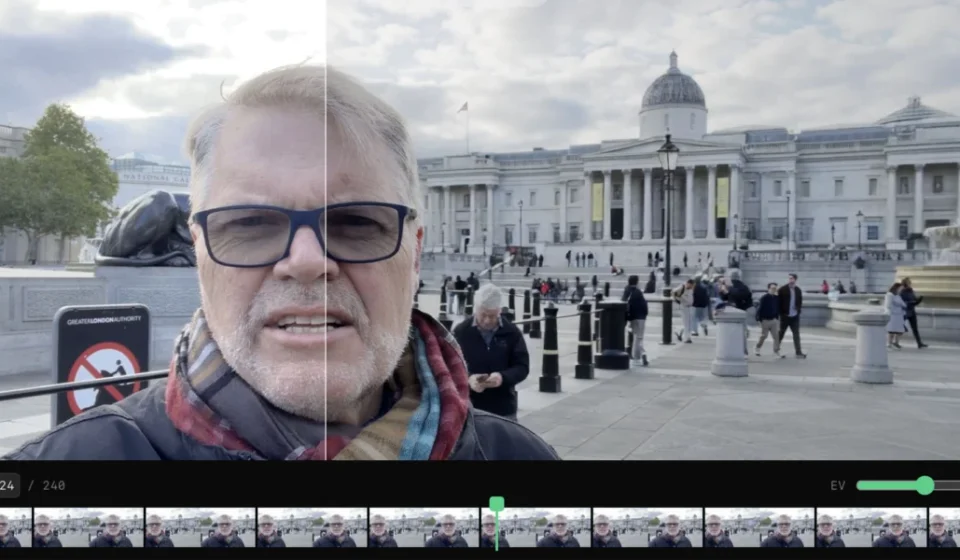
Bridging the Dynamic Range Gap: Beeble’s SwitchHDR Redefines AI-Powered Restoration

In the modern landscape of high-end cinematography, the demand for High Dynamic Range (HDR) content has outpaced the availability of source material. While streaming platforms and cinema displays now prioritize HDR mastering, a staggering volume of archival footage, stock material, and legacy plates remains trapped in the limited confines of Standard Dynamic Range (SDR). For decades, the industry has relied on crude expansion algorithms—tools that merely "stretch" existing data—resulting in artifacts like posterization, noisy shadows, and clipped highlights.
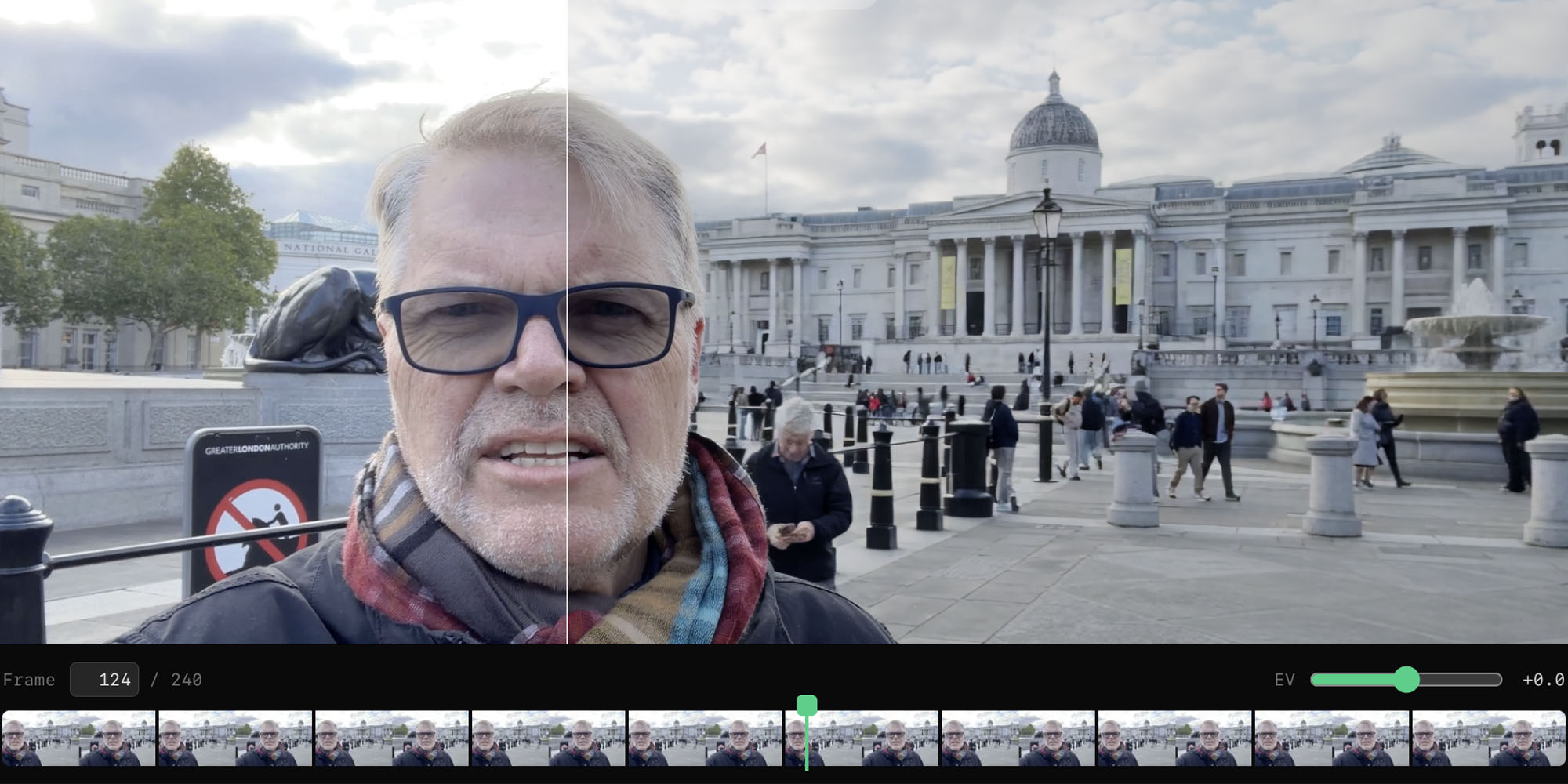
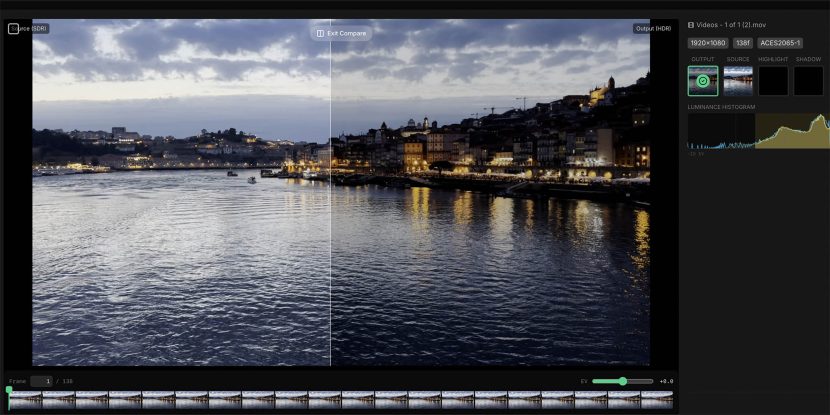
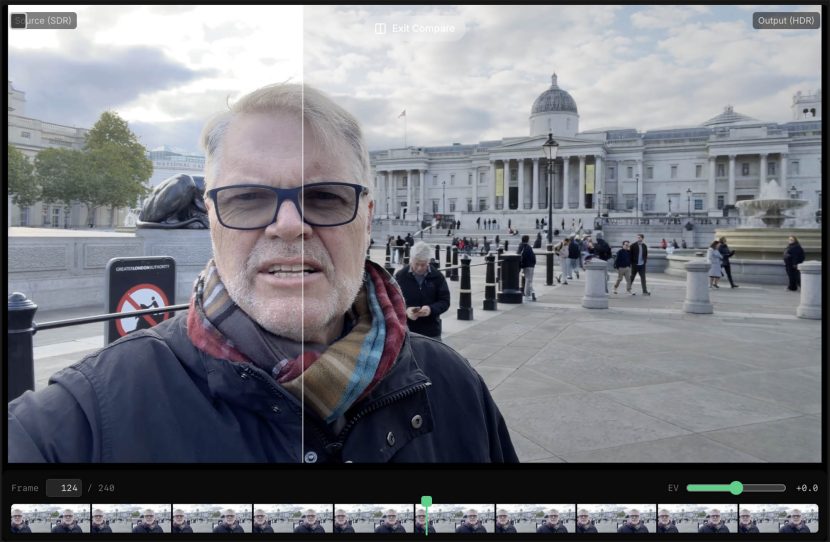
Enter Beeble, a Seoul-based AI developer, which has introduced SwitchHDR: a sophisticated machine-learning model designed to reconstruct HDR imagery from SDR sources. By outputting scene-linear 16-bit EXR sequences, SwitchHDR moves beyond the "black-box" conversion tools of the past, offering professional filmmakers, colorists, and VFX artists a surgical, production-ready solution to bring legacy assets into modern HDR pipelines.
The Technical Imperative: Why Traditional Conversion Fails
To understand the significance of SwitchHDR, one must first understand the fundamental limitation of SDR video. When a scene is captured and compressed into an SDR container, the luminance values are permanently mapped. Highlights that exceed the sensor’s capacity are "clipped," and shadow details are often compressed into the noise floor.
Traditional SDR-to-HDR tools function by remapping these existing pixels. While this increases the brightness of the display, it cannot "recover" data that was never encoded. The result is often an image that looks "plasticky"—shadows become muddy, and highlights lack the roll-off of natural light.
Beeble’s approach differs by treating the process as an informed reconstruction. Having been trained on extensive sets of authentic HDR footage rather than the internet-standard SDR "sea," the model does not attempt to find lost mathematical data; instead, it uses learned patterns to infer how a scene should appear in a high-dynamic-range environment. The result is a plausible, aesthetically pleasing representation that retains the structural integrity required for professional grading and compositing.
Chronology: From Relighting to Full-Scale Pipeline Integration
The journey of Beeble from a niche research outfit to an essential node in the VFX pipeline is a testament to the rapid evolution of machine learning in creative workflows.
- June 2023: fxguide first profiled Beeble, highlighting their pioneering work on "SwitchLight"—an AI-driven relighting model that allowed artists to dynamically change the lighting environment of a scene after it had been shot.
- 2024–2025: As Beeble’s research expanded, the company shifted focus toward building a modular ecosystem. They transitioned from single-purpose tools to an integrated suite, developing "SwitchLight 3.0" (focused on video-to-PBR) and "SwitchX" (for mask-guided video processing).
- July 2026: Beeble formally unveils SwitchHDR, marking their entry into the high-end finishing market. During this time, they also showcased "Canvas," a node-based interface designed to synthesize their proprietary models with third-party industry standards.
- Present Day: SwitchHDR is being deployed by studios globally to breathe new life into archival libraries, allowing older documentary and film footage to be seamlessly intercut with modern, natively captured HDR content.
The Philosophy of Control: Moving Beyond the "Black Box"
A common criticism of AI in the film industry is the lack of artist control. Many AI tools operate as a "one-button" solution that either works or fails, leaving the artist with no recourse. Hoon Kim, Founder and CEO of Beeble, emphasizes that SwitchHDR was built with the opposite philosophy.
"From day one, we built SwitchHDR around what post-production actually requires, not what makes a good demo," Kim explains. "That means 16-bit EXR in ACES2065-1, temporal consistency across full sequences, and giving artists explicit control."
This control is manifested through several key features:
- Luminance Masking: Users can define specific areas of an image—such as a blown-out window or deep shadow—to be prioritized by the model.
- Prompt-Guided Reconstruction: Artists can influence the AI’s reconstruction logic using text prompts, ensuring the output aligns with the director’s creative vision.
- Selective Application: Unlike global filters, SwitchHDR allows for partial reconstruction, ensuring that parts of an image that are already "correct" remain untouched, preserving the original cinematographer’s intent.
By providing these levers, Beeble has successfully transformed an AI model into a specialized creative tool, effectively moving it from the realm of "automotive processing" into the domain of professional visual effects.
Supporting Data: Why EXR Matters for VFX
The decision to output in 16-bit EXR (ACES2065-1) is perhaps the most important technical choice made by the Beeble team. In a professional pipeline, the file format is not just a container; it is a data carrier.
By delivering data in an ACES (Academy Color Encoding System) linear format, SwitchHDR ensures that the reconstructed footage can be color-managed alongside raw camera footage from ARRI, RED, or Sony cameras. For a VFX artist, this means the reconstructed footage can be fed into a compositor (like Nuke or Fusion), where it will react to light, depth-of-field, and motion blur as if it were a high-end native plate. This removes the "AI look" that often plagues lower-quality upscaling or conversion tools, as the material integrates into the mathematical color space of the rest of the project.
Implications for the Future of Production
The existence of SwitchHDR has profound implications for the economics and creative potential of modern filmmaking.
1. Archival Preservation and Restoration
Studios possess massive libraries of classic content that are effectively "locked" in SDR. The cost of traditional high-end restoration (which involves manual re-scanning and frame-by-frame grading) is often prohibitive. SwitchHDR provides a middle ground: an automated process that delivers professional results, allowing studios to remaster their back catalogs for 4K/HDR distribution without requiring a multi-million dollar intervention.
2. Mixed-Format Workflows
Modern documentaries and commercials often rely on a mix of high-end cinema cameras and "found footage" or phone-captured content. Matching these disparate sources is a notorious headache for colorists. SwitchHDR acts as a "leveler," bringing lower-dynamic-range footage closer to the latitude of high-end sensors, allowing for a cohesive visual look across an entire production.
3. The Shift toward Node-Based AI
With the introduction of "Canvas," Beeble is signaling a broader shift in the industry: the transition from "AI as a plugin" to "AI as a pipeline." By integrating their models into a node-based environment, they are allowing artists to construct custom workflows. A pipeline could theoretically start with SwitchHDR to reconstruct dynamic range, move to SwitchLight for relighting, and end with a third-party rotoscoping tool, all managed within a single, coherent node graph.
Official Perspective: An Interview with Hoon Kim
We spoke with Hoon Kim regarding the current limitations of the technology and the road ahead. When asked about the challenges of temporal consistency—a common failure point for video AI—Kim was candid.
"Temporal stability is the Everest of video AI," Kim noted. "While we have made massive strides, complex, non-repetitive textures can still be tricky. However, the feedback from early testers in the color grading community has been overwhelmingly positive. They aren’t looking for a ‘perfect’ recreation of the real world—they are looking for a ‘useful’ recreation that allows them to tell their story. If the footage allows them to grade the image without the shadows falling apart, we have done our job."
Looking toward the future, Kim sees the role of AI in film as an augmentative force rather than a replacement. "The pace of this technology is surprising even to us," he said. "But the direction remains the same: we build models that give filmmakers control, and we ship them in formats that real pipelines can actually use. We are building the tools we wish we had ten years ago."
Conclusion: A New Standard?
SwitchHDR is not a panacea for poor cinematography, nor is it intended to replace the nuanced work of a master colorist. However, it represents a significant maturation of AI in the post-production space. By focusing on professional-grade output (EXR), providing granular control (masks and prompts), and acknowledging the realities of the VFX pipeline, Beeble has moved the goalposts for what is possible in the SDR-to-HDR space.
As the industry continues its transition toward full HDR mastering, the ability to salvage and elevate legacy content will become an essential skill set. With tools like SwitchHDR, that transition is becoming not only more efficient but, for the first time, creatively viable at scale. Whether for feature films, high-end episodic television, or the preservation of cinematic history, Beeble has provided the industry with a necessary bridge to the future.