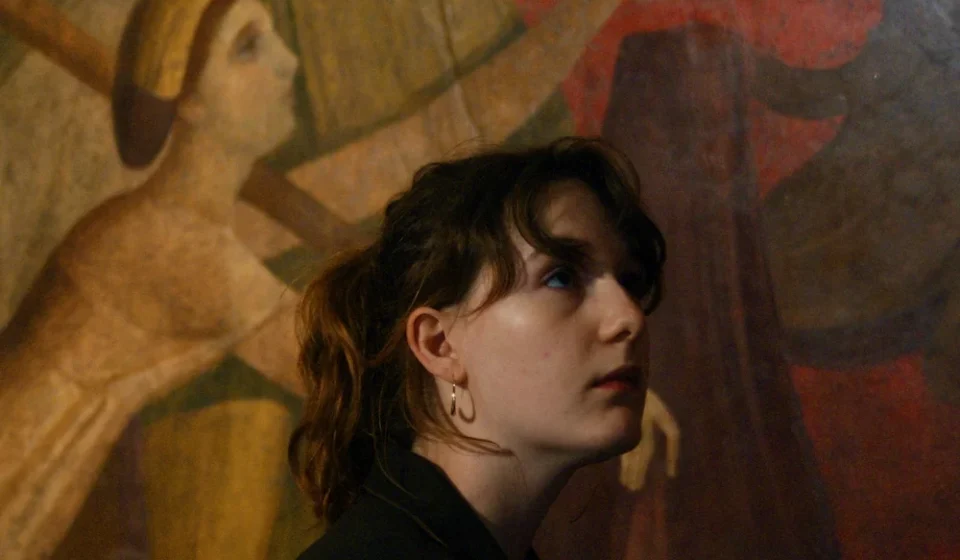

Introduction: A Landmark Debut in French Cinema
At a runtime of two hours and twenty-five minutes, Marine Atlan’s debut feature, La Gradiva, presents a challenge to the modern attention span. However, for those who step into its world, the experience is less a test of endurance and more an immersive, restorative journey. Described by critics as a "deep, ragged but restorative breath of seasalty, basalty air," the film captures a pivotal moment in human development: the final gasp of childhood and the first, terrifying sniff of adulthood.
Set against the ancient, ash-preserved backdrop of Pompeii, La Gradiva follows a group of French high school students on their final-year trip. Led by a teacher desperate to impart a final vestige of cultural appreciation, the students navigate the ruins of a dead civilization while dealing with the very much alive, often volatile, "pyroclastic flow" of their own adolescence. Atlan, a cinematographer by trade, delivers what is arguably one of the most piercingly accurate portrayals of teenage life ever committed to film—a moment where one is simultaneously at their most social and their most profoundly lonely.
Main Facts: The Production and Core Premise
La Gradiva is the directorial debut of Marine Atlan, who also served as co-cinematographer alongside Pierre Mazoyer. The film’s screenplay, co-written by Atlan and Anne Brouillet, is a meticulous study of social dynamics, class divisions, and the fluid nature of identity.
Core Details:
- Director: Marine Atlan
- Runtime: 145 minutes
- Setting: Pompeii and the Bay of Naples, Italy
- Lead Cast: Suzanne Gerin (Suzanne), Colas Quignard (Toni), Mitia Capellier-Audat (James), Antonia Buresi (Mme Mercier)
- Themes: Liminality, Gen-Z social norms, classism, and the "partial view" of human experience.
The film distinguishes itself from traditional teen dramas by eschewing melodramatic tropes in favor of a "nimble dramaturgy" that feels organic and unconstructed. It portrays the teenager as a "shapeshifter," a being to whom no single label—be it "the loner," "the joker," or "the smart kid"—can stick for long.
Chronology: From the Train to the Slopes of Vesuvius
The narrative structure of La Gradiva mirrors the rhythm of a school trip, beginning with the transition from France to Italy and culminating in the heavy atmosphere of the archaeological sites.
The Journey Inward
The film opens in the cramped, rattling passageways of an Italian train. This setting serves as a microcosm for the social hierarchy of the class. We are introduced to Suzanne (Suzanne Gerin), an artistic and sulky type, as she brushes past Toni (Colas Quignard). Toni is observing his best friend James (Mitia Capellier-Audat) engaged in a fumbling sexual encounter with a classmate in a narrow compartment.
This initial sequence establishes the "forced socialization" of the group. Toni, loud and boastful of his Neapolitan roots, draws the ire of Mme Mercier (Antonia Buresi), the exhausted but passionate Latin teacher. The dialogue here is sharp and authentic; Toni offers automatic, insincere excuses for overdue homework, while James slides into his seat with the cool detachment of the privileged.
The Stay in Pompeii
As the group arrives at the Bay of Naples, the film expands its scope. The students move through hotel rooms, restaurants, and the ruins of Pompeii. The chronology is not driven by a singular plot point but by a series of "recombining clusters." Students fall in and out of friendships and romantic interests with dizzying speed.
One day involves scrolling through Grindr on a cliffside wall; another involves intense dinnertime political debates that reveal deep-seated class divisions inherited from their parents. These moments are punctuated by the mundane—impromptu soccer games and the agonizing parsing of text messages—creating a sense that we are witnessing just one of a hundred films unspooling simultaneously within this group.
The Climactic Realization
The final act moves toward the slopes of Vesuvius. The mountain, which has loomed in the background as a literal and metaphorical threat, becomes the site of a tragic realization. The film builds to the understanding that "the view is only ever partial." The tragedy that eventually strikes the group is not the result of a singular villainous act, but the collective consequence of small, careless, and solipsistic choices made by nearly-grown-ups who lack the full picture of each other’s lives.
Supporting Data: The Ensemble and Technical Mastery
The success of La Gradiva rests on two pillars: its remarkably naturalistic performances and its sophisticated technical execution.
The Young Ensemble
The film features an "astoundingly natural" young ensemble.
- Suzanne (Suzanne Gerin): Represents the defensive cynicism of youth. Her confession that some women "have to be unfuckable for others to be fuckable" is a standout moment of raw, heartbreaking honesty.
- Toni (Colas Quignard): His sexuality is handled with "Gen-Z disinterest," a refreshing departure from films where coming out is the central axis of drama. His obsession with his Neapolitan roots is portrayed as a fragile attempt to find glamour in a mediocre background.
- James (Mitia Capellier-Audat): The "cool" antagonist of sorts, James possesses "high, cruel cheekbones" and a casual disregard for the emotions of those he conquers, such as the ghosted Angela (Hadya Fofana).
The Cinematographic Language
Marine Atlan’s background as a cinematographer is evident in every frame. Working with Pierre Mazoyer, she creates a visual palette where the Italian coast is "sunny and breezy," yet the characters feel "illuminated from all sides at once." The camera work is deft, managing complicated group scenes with a mastery that makes the constructed world feel vast. The use of a summer-Europop soundtrack provides a rhythmic counterpoint to the heavy, historical atmosphere of the frescoes and plaster-body-casts of Pompeii.
Official Responses: Critical Reception and Artistic Intent
While La Gradiva is a debut, it has been hailed by critics as a work of "rare directorial mastery." Early reviews from Variety and other major outlets emphasize the film’s "piercing accuracy."
Directorial Intent
Atlan’s intent appears to be the rejection of the "crescent moon" view of humanity. As the film suggests, "The moon is never a crescent; it is always a sphere." Through her lens, she begs the audience to pay attention to the totality of a person rather than the "little sliver we can see." The film acts as a "gently forceful admonishment" to look beyond the surface level of social interactions.
Critical Acclaim
Critics have praised the film for being "immaculate" in its execution. The "nimble dramaturgy" is cited as its greatest strength, allowing the film to balance "horseplay and heartbreak" without ever feeling manipulative. The final voiceover—a "dreamy echo back from the future"—is noted for its revelatory power, setting the characters free from the bleakness of their immediate circumstances.
Implications: A New Standard for Coming-of-Age Cinema
The release of La Gradiva has significant implications for the "coming-of-age" genre and the trajectory of French independent cinema.
Redefining the Genre
La Gradiva moves away from the "John Hughes" model of high school archetypes. It suggests that the modern teenager is far more complex and socially aware of class and identity than previous cinematic portrayals allowed. By treating Toni’s sexuality and Suzanne’s cynicism with the same level of gravity and levity, Atlan sets a new standard for naturalism.
The Role of Metaphor in Realism
The film demonstrates how a massive, literal metaphor—Vesuvius—can be used without overwhelming the "life and vigor" of the characters. This balance of the monumental and the mundane provides a blueprint for future filmmakers on how to weave historical or environmental themes into intimate human dramas.
Impact on Marine Atlan’s Career
As a debut, La Gradiva establishes Marine Atlan as a major voice in contemporary cinema. Her ability to handle a large ensemble, complex themes of social stratification, and a significant runtime with such "uplifting, devastating effect" marks her as a director capable of monumental storytelling.
Conclusion: The Immaculate Portrait
In its final moments, La Gradiva leaves its audience with the reminder that "everything is not dirty." Despite the tragedy and the inherent selfishness of the adolescent experience, the film is an "immaculate" tribute to the human spirit. It is a film that demands compassion, urging us to "cast the net of our compassion just a little bit wider."
At 145 minutes, it is a long journey, but it is one that mirrors the complexity of life itself—deep, ragged, and ultimately, restorative. Marine Atlan has not just made a movie about a school trip; she has captured the very essence of what it means to be human in the fleeting moment before the world demands we grow up.