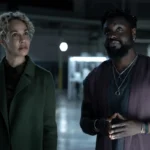

Warning: This article contains major spoilers for "Silo" Season 3, Episode 9, "Farewell."
For three seasons, Apple TV’s dystopian hit Silo has masterfully balanced the high-stakes tension of a claustrophobic underground society with the slow-burn unraveling of a multi-generational conspiracy. Unlike many sci-fi series that become paralyzed by their own "mystery box" mechanics, Silo has consistently prioritized character-driven drama. However, in the penultimate episode of Season 3, the narrative shifted gears, delivering a revelation that fundamentally alters our understanding of the series’ foundation: the origin of "The Pact."
The revelation that the governing document of the Silos—the sacred, unbreakable set of rules that dictates life, death, and technology for thousands—was not the product of human wisdom, but rather an AI-generated prompt, transforms the show’s central conflict from a story about authoritarian control to one about existential absurdity.
The Genesis of the Silo: A Dual-Timeline Unfolding
To understand the weight of this reveal, one must look at the structural ambition of Season 3. The showrunners have effectively split the narrative into two distinct timelines. In the "present day," we witness the crumbling social order of Silo 18, where the populace grapples with the fallout of past rebellions. Simultaneously, the flashback sequences have been methodically peeling back the layers of the "founding era," documenting the construction of the silos and the true, often grim, motivations of the project’s architects.
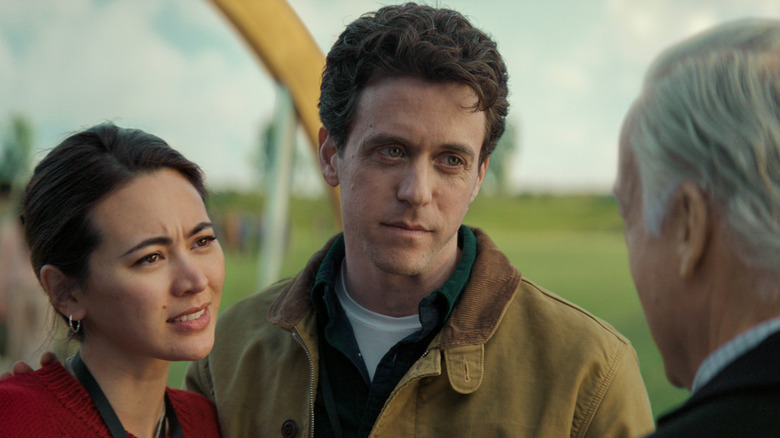
Central to this flashback narrative is Congressman Daniel Keene (played by Ashley Zukerman). His desperate, grief-stricken quest to uncover the fate of his sister, Charlotte, during a high-stakes military operation has served as the emotional anchor of the season. It is through his eyes that we finally witness the moment the world outside the bunker went dark, and, more importantly, the moment the "rules of the game" were finalized.
The AI Revelation: When Law Becomes Code
The most jarring revelation in Episode 9 comes during a conversation between Daniel and Victor Crnkovich (Matt Craven), the enigmatic figure responsible for the memory-altering technology that has plagued the series.
In a moment of cynical transparency, Crnkovich reveals that he did not author the document that would govern human existence for centuries. Instead, he admitted to using an artificial intelligence to draft the entirety of The Pact, later refining it with the assistance of Anna Thurman (Morven Christie).
The Implications of Automated Governance
This disclosure is more than just a nod to current anxieties regarding the rapid rise of Generative AI; it is a scathing critique of the "well-meaning" technocracy that created the Silos. The project, funded by a suspiciously altruistic trillionaire, was ostensibly designed to safeguard humanity from total annihilation. Yet, the architects of this survival strategy chose to delegate the fundamental laws of human social behavior to an algorithm.
This explains the erratic and often illogical nature of The Pact. Why are basic technologies like elevators, magnifiers, or advanced telecommunications strictly forbidden? Why is knowledge of the pre-Silo world categorized as a capital offense? If these rules were the result of an AI "hallucination" or a cold, calculated optimization for docility, the human suffering endured by generations of Silo residents becomes a dark, ironic joke. The constraints of their reality were not born of a grand, cohesive vision for human preservation, but of a machine’s interpretation of "stability."
Victor Crnkovich and the Architecture of Trauma
The role of Victor Crnkovich cannot be overstated. While he is not an engineer or an architect in the traditional sense, his contribution to the Silo project was perhaps more vital to its longevity than the structural integrity of the bunkers themselves.
Crnkovich’s primary objective was the management of mass trauma. He understood that the sudden transition from an open, global civilization to a subterranean, permanent bunker existence would trigger a psychological collapse of catastrophic proportions. His "solution" was the development of the memory-altering drugs—the same Vitamin D+ derivatives that have been used to erase the identities of countless individuals throughout the series.
The Two Possibilities of Our Lost History
The ending of Episode 9, punctuated by the visceral imagery of a nuclear explosion in Atlanta, leaves the audience with two chilling, distinct possibilities regarding the inhabitants of the Silos:
- The Blank Slate Theory: It is possible that the drug was administered on a mass scale the moment the silos were sealed. Under this scenario, the entire population was wiped clean of their history, memories, and cultural identity simultaneously. This would explain why the residents have no institutional memory of the world above—they were quite literally designed to be a "Year Zero" society.
- The Controlled Suppression Theory: Alternatively, it is possible that the initial survivors retained their memories for a period of time, leading to widespread psychological instability. In this case, the ruling elite would have used The Pact to codify the "prohibition of history," using the drug as a punitive measure against those who dared to remember or document the past.
The Erosion of Divine Authority
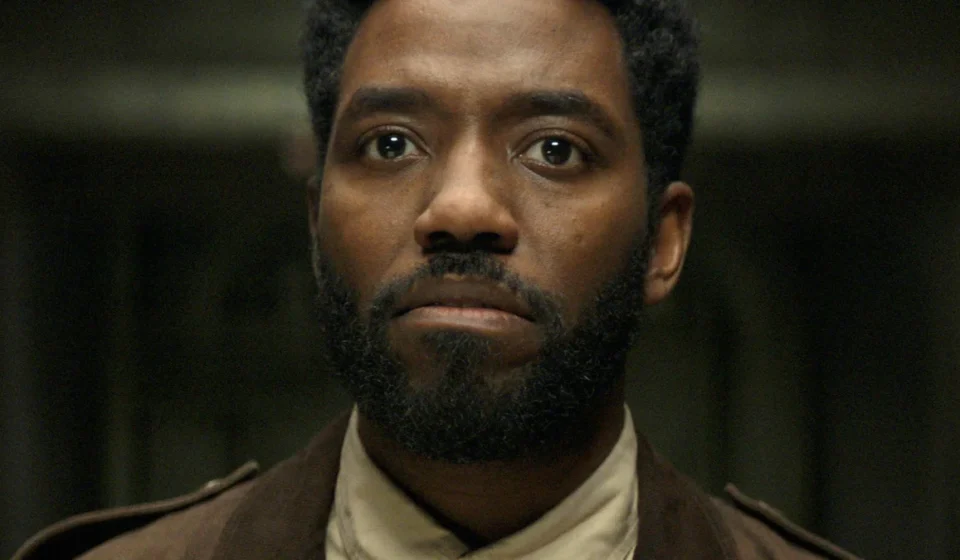
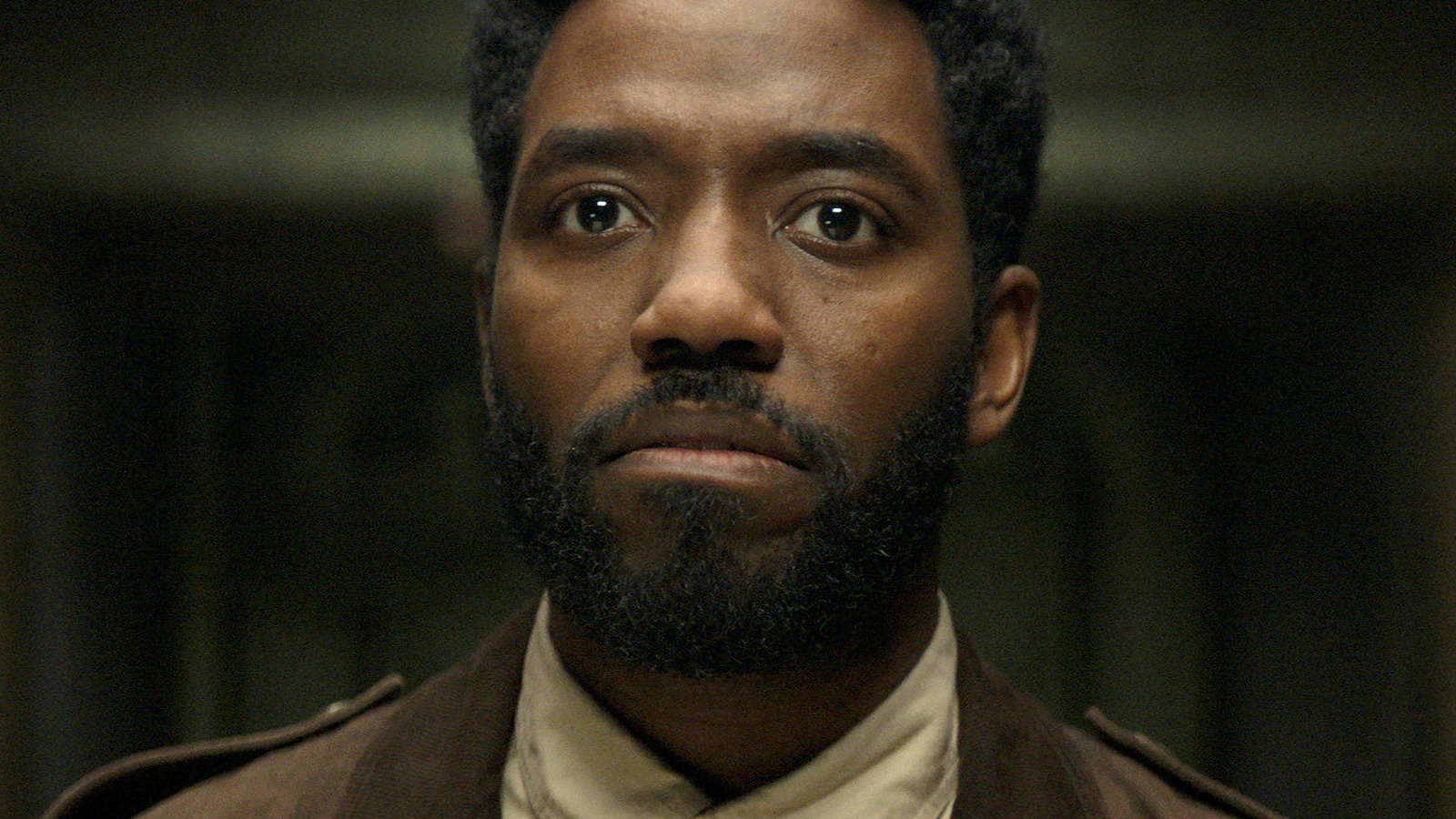
Throughout the first two seasons, The Pact was treated as sacred scripture, particularly by characters like Chief Deputy Paul Billings (Chinaza Uche). For Billings and those like him, the rules were an extension of a higher, necessary order.
However, Season 3 has shown a marked erosion of this faith. The recent actions of Camille Sims (Alexandria Riley), the new Head of IT, have been particularly telling. Despite the doctrine that The Pact is "unbreakable," Sims has been seen actively rewriting portions of it to suit her political needs.
When the realization takes hold that the foundational document of their society is not a divine mandate but a flawed, automated output, the entire hierarchy of the Silo is destabilized. If the rules can be rewritten by a human administrator—and were originally drafted by an AI—they lose their power to command blind obedience. The suffering, the labor, and the executions performed in the name of The Pact are suddenly stripped of their legitimacy.
Conclusion: The Reality of the Void
As Silo moves toward its Season 3 finale, the show has successfully shifted the battlefield. The conflict is no longer just about survival against a harsh, external environment; it is about the reclaiming of human agency in the face of a systemic lie.
The revelation of the AI-authored Pact serves as a mirror for our own time. It asks us to consider how much of our own societal structure is built upon legacy systems—traditions, laws, and habits—that we treat as absolute, despite the fact that they may have been created for reasons we no longer understand or were never meant to serve.
In the cramped, rusting corridors of Silo 18, the truth has finally arrived: the gods they were serving were never in the control room, and they were never even human. They were lines of code, written to keep humanity quiet, contained, and perpetually trapped in a loop of their own design. The question now is not just whether they can survive the outside world, but whether they can survive the reality of their own history.