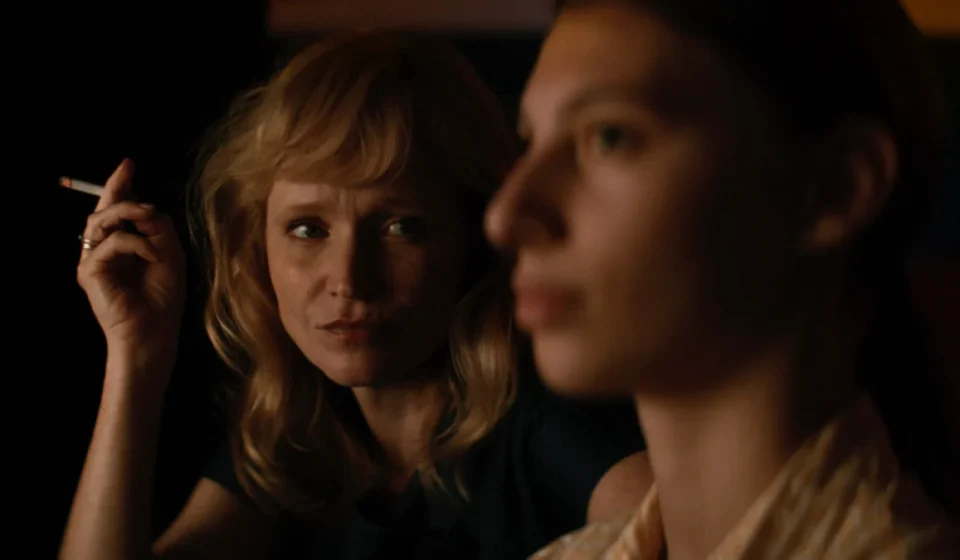
The Aestheticization of Atrocity: Analyzing Ivan Ostrochovský’s ‘Only Beautiful Things to Look At’ and the Legacy of Roma Sterilization

The cinematic landscape of Central Europe has often grappled with the ghosts of its communist past, but few subjects remain as raw or as systematically obscured as the state-sponsored sterilization of Roma women. In his latest feature, "Only Beautiful Things to Look At," Slovakian filmmaker Ivan Ostrochovský attempts to navigate this harrowing history through the lens of 1980s Czechoslovakia. However, as the film makes its rounds in the international festival circuit and art-house cinemas, it has sparked a profound debate regarding the ethics of representation, the "white savior" narrative, and the dangers of burying contemporary human rights abuses under the guise of period-piece nostalgia.
Main Facts: A Story of Forced Silence and "The Bow"
"Only Beautiful Things to Look At" centers on the life of Ingrid (portrayed by Anna Geislerová), a high-ranking physician working within the state healthcare system of the Czechoslovak Socialist Republic. The film is set during the 1980s, a period characterized by a clandestine yet rigorous government program aimed at controlling the Roma population. This program incentivized and, in many cases, coerced Roma women into undergoing tubal ligations—a procedure the state disingenuously framed as a tool for "family planning" and "social elevation."
The film’s title serves as a biting irony. While the cinematography by Juraj Chlpík is undeniably lush, utilizing soft focus and a warm, amber-hued palette, the reality it depicts is one of clinical cruelty. The central metaphor for this trauma is "the bow," a colloquialism for the small, permanent scar left beneath the navel after the sterilization procedure.
While the film purports to shed light on this dark chapter, critics have noted a jarring disconnect between its aesthetic beauty and its visceral subject matter. By focusing the narrative on Ingrid—a white doctor who eventually undergoes a moral awakening—rather than the Roma women who were the victims of these policies, the film risks marginalizing the very voices it claims to champion.
Chronology: The Evolution of a Eugenics Policy
To understand the weight of Ostrochovský’s film, one must look at the timeline of the events it portrays and the unsettling reality that the policy did not end with the fall of the Berlin Wall.
The 1970s: The Policy Takes Root
The systematic sterilization of Roma women in Czechoslovakia began in earnest following a 1972 decree. The state offered financial "social grants" to Roma women who agreed to the procedure, often without explaining that the effects were irreversible. In many cases, social workers visited Roma settlements, threatening to withhold child benefits or remove children from their homes unless the mothers "consented" to sterilization.
The 1980s: The Height of the Program
The era in which "Only Beautiful Things to Look At" is set represents the peak of this administrative racism. Hospitals were often given "quotas" to meet. The film depicts this through the character of Ingrid, who assesses patients and performs the surgeries as a matter of routine, viewing them as a bureaucratic necessity rather than a human rights violation.
Post-1989: The Persistence of Abuse
Perhaps the most significant criticism of the film’s "period drama" approach is that it implies these atrocities ended with the Velvet Revolution. In reality, documented cases of coerced sterilization continued in the Czech and Slovak Republics well into the 21st century. The last known case in the region was reported as recently as 2007, and many women are still fighting for legal recognition and compensation today.
Supporting Data: The Human and Statistical Toll
The scale of the sterilization program is difficult to quantify precisely, largely because many medical records were destroyed or falsified. However, human rights organizations have provided sobering estimates:
- Estimated Victims: While official state records are incomplete, advocacy groups like the European Roma Rights Centre (ERRC) suggest that thousands of women were sterilized across Czechoslovakia between 1972 and 1990.
- Language Barriers: A significant portion of the victims were native Romani speakers who were presented with consent forms in Czech or Slovak—languages they often could not read or fully comprehend under the stress of labor.
- Post-Revolution Cases: Between 1990 and 2005, dozens of cases were formally documented in Slovakia alone, proving that the systemic bias against Roma women persisted long after the transition to democracy.
In the film, this data is personalized through the character of Agata (Simona Boledovičová), a Roma orderly who hides her identity to survive within the hospital hierarchy. Agata’s sister, Jula (Eva Mores), represents the other side of the statistic—living in a cramped, crumbling apartment, pregnant with a third child, and vulnerable to the very system her sister serves.
Official Responses and the Long Road to Justice
For decades, both the Czech and Slovak governments denied that the sterilizations were part of a state-sanctioned eugenics program, instead categorizing them as "individual medical failures."
The Czech Republic’s Path to Reparation
In 2009, the Czech government issued its first official apology for the "illegal sterilizations." However, it took another twelve years of relentless activism for the state to provide financial compensation. In 2021, the Czech Republic passed a landmark law allowing women sterilized between 1966 and 2012 to claim a one-time payment of approximately $14,000 (300,000 CZK).
Slovakia’s Delayed Acknowledgment
Slovakia followed a slower trajectory. It wasn’t until 2021 that the Slovak government issued a formal apology for the decades of "unjustified" sterilizations. While the apology was welcomed by the Council of Europe, activists have criticized the Slovak government for failing to implement a compensation mechanism similar to the one in the Czech Republic, leaving many aging victims without any form of material restitution.
International Condemnation
The United Nations Committee on the Elimination of Discrimination against Women (CEDAW) has repeatedly called on both nations to ensure that all victims have access to justice. The European Court of Human Rights has also ruled against the Slovak government in several high-profile cases, such as V.C. v. Slovakia (2011), where the court found that the lack of informed consent constituted a violation of the victim’s right to be free from inhuman or degrading treatment.
Implications: The Danger of "Only Beautiful Things"
The primary critique of Ivan Ostrochovský’s film lies in its title and its execution. By creating a movie that is "beautiful to look at," the director risks turning a historical atrocity into an aesthetic object.
The "White Savior" Narrative
The film’s decision to centralize Ingrid’s "moral awakening" is a point of contention. By making a white doctor the protagonist, the narrative suggests that the most important aspect of Roma suffering is how it affects the conscience of the oppressor. Critics argue that this framing robs the Roma characters of their agency, turning them into catalysts for a white woman’s character development rather than the heroes of their own stories.
The Museum Glass Effect
By setting the film in a meticulously recreated 1980s—complete with vintage furnishings and period-appropriate fashions—Ostrochovský creates what some have called "museum glass" cinema. It allows the audience to view the events as part of a "long-gone" era. This is a dangerous implication given that the systemic racism and marginalization of Roma communities remain a pressing, daily reality in modern-day Slovakia and the Czech Republic.
The Role of Cinema in Social Justice
"Only Beautiful Things to Look At" raises a vital question: What is the responsibility of a filmmaker when dealing with the trauma of a marginalized group? While the film is undoubtedly well-intentioned and brings much-needed attention to a neglected history, its "soft-focus" approach may ultimately soften the blow of a truth that should be sharp, urgent, and deeply uncomfortable.
As the credits roll on Ingrid’s fairytale-like house in the woods and her "glib miracle" of a resolution, the real victims of the sterilization policy remain in the shadows. The film serves as a reminder that while art can be a powerful tool for remembrance, it can also become a veil that obscures the "ugly things" that most deserve our focused, unflinching attention. In the case of the Roma sterilization program, the "bow" is not just a scar on a woman’s body; it is a scar on the conscience of a region that has yet to fully reconcile with its past—or its present.