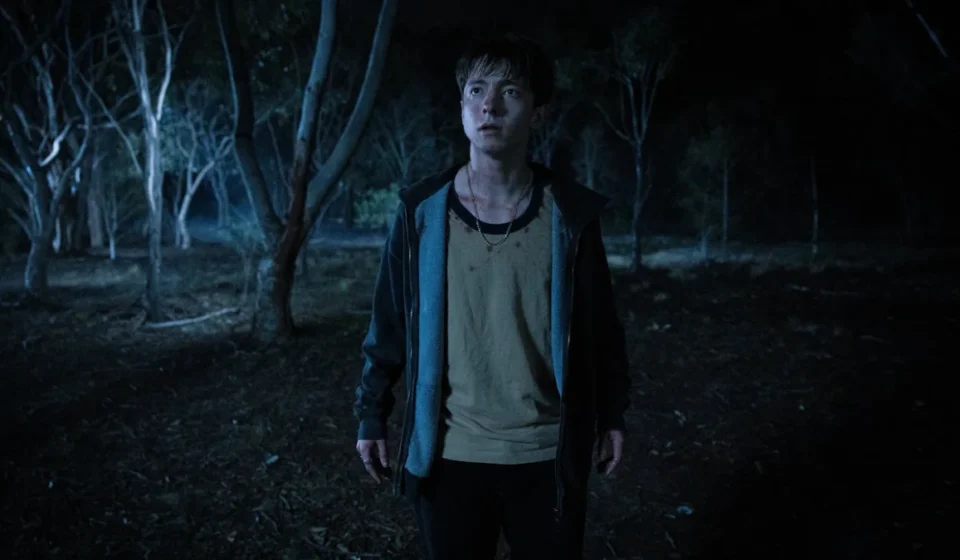
Terror, Faith, and the Queer Experience: An In-Depth Look at Adrian Chiarella’s Leviticus

In the landscape of contemporary horror, where high-concept slashers and psychological thrillers often vie for dominance, Adrian Chiarella’s debut feature, Leviticus (2026), arrives as a searing, visceral meditation on the intersection of faith, identity, and the suffocating weight of societal expectation. Set against the stark, industrial backdrop of the Australian wilderness, the film serves as both a terrifying genre piece and a poignant allegory for the queer experience in an era of regressive political shifts.
The Genesis of a Modern Parable
Leviticus opens with a chilling, archetypal sequence: a lesbian lifeguard, enjoying a moment of private intimacy in a poolside shower, is stalked and murdered by an entity that assumes the visage of her deepest desire. This "little death" serves as the catalyst for the film’s central horror: a malevolent, shapeshifting force born from a hex cast by a local church as a brutal manifestation of conversion therapy.
The film’s conceit is rooted in a dark, literal interpretation of the pious warnings often whispered to queer youth: your desires will kill you. By taking this metaphorical condemnation and rendering it as a physical, stalking predator, Chiarella transforms the horror genre into a blunt, effective instrument of empathy. For the director, the film is a necessary reaction to the recent global rise in anti-LGBTQ+ bigotry and the perceived fragility of the progress made over the last several decades.
"I started thinking about what would be personal for me," Chiarella explains during an interview regarding the film’s production. "Horror movies were something that I turned to as a young queer teenager. I don’t think I was alone in that. The genre has been important to the community for a very, very long time."
A Chronology of Transgression and Consequence
The narrative trajectory of Leviticus follows Naim (played by Joe Bird), a shy newcomer to an insular, cult-like religious town. Naim’s journey begins with his attraction to Ryan (Stacey Clausen), a charismatic classmate whose outward bravado masks a profound inner conflict. Their relationship is defined by the tension of the environment; they are constantly looking over their shoulders, fearful that their private affection will be discovered by the rigid, judgmental community that surrounds them.
The turning point occurs when Hunter (Jeremy Blewitt), the closeted son of the local preacher, disrupts the burgeoning romance through a violent and confusing tryst with Ryan. Driven by a mix of heartbreak, confusion, and internalized shame, Naim commits a catastrophic error: he reports the incident to the church elders. He expects a moderate rebuke or a minor correction; instead, he triggers a cycle of divine-coded violence that consumes the community.
"Horror movies are always about someone committing a transgression," Chiarella notes, "and whatever horrible thing that comes after is because of this." For Naim, the "horrible thing" is the manifestation of the monster, which preys upon the boys’ isolation. As the entity begins to hunt them, appearing as their lovers or those they trust, the protagonists are forced into a desperate, shifting struggle for survival. They eventually seek out the partner of the woman killed in the opening sequence—a recluse living in a local hospital—only to discover that her strategy for survival (surrounding herself with people) is a hollow defense against a monster that thrives on doubt and secrecy.
Supporting Data and Production Philosophy
The film’s aesthetic is intentionally disorienting. Chiarella, alongside his production design team, chose to film in locations that blend industrial grit with pastoral, expansive landscapes. This choice creates a "modern biblical" atmosphere, emphasizing the conflict between the man-made laws of the church and the indifferent, primal forces of the universe.
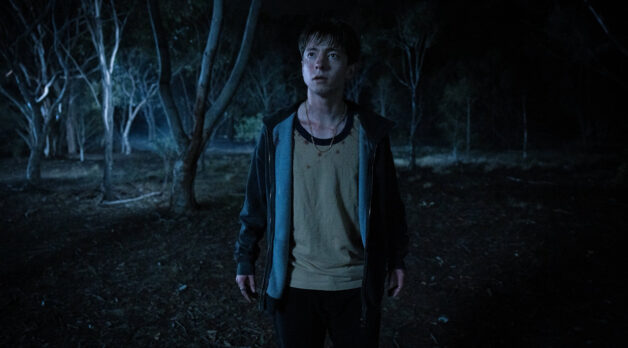
"We wanted to play with this theme of what’s man-made and what comes from the universe," Chiarella says, "evoking the tension between human nature and the rules and the edicts we live by."
Visual storytelling is paramount in Leviticus. The film utilizes a "gaze-based" horror mechanic: much of the violence occurs just out of sight, glimpsed through windows, reflected in mirrors, or ignored by bystanders who are simply unable to see the monster. This functions as a potent metaphor for the gaslighting and denial often experienced by queer youth—the sense that their reality is being systematically erased or dismissed as a "phase" by those who refuse to acknowledge the existence of their internal lives. Even Naim, our protagonist, cannot trust his own eyes, often mistaking the demonic entity for his lover, Ryan. In Leviticus, the act of seeing becomes the most dangerous vulnerability.
Official Perspectives: The Cast and Director
The film’s production was marked by a commitment to the "queer horror" lineage. Chiarella cites A Nightmare on Elm Street 2: Freddy’s Revenge (1985) and John Carpenter’s The Thing (1982) as foundational influences. He speaks fondly of the forbidden nature of these films in his youth, noting that the tension between the "self and the other" in Carpenter’s masterpiece mirrors the struggle of his own characters to discern friend from foe.
The cast, including Mia Wasikowska, who plays Naim’s mother, embodies the film’s central conflict: the blurring of lines between protection and oppression. In one of the film’s most devastating sequences, a moment of maternal care is immediately followed by a profound betrayal, leaving Naim in a state of perpetual instability. "I wanted to create a world where you weren’t sure you could trust even the real people around you anymore," Chiarella explains. This lack of trust is not just a plot device; it is the lived reality of characters trapped in an environment that mandates fear as a form of survival.
Implications: The Legacy of Trauma
As the film moves toward its conclusion, it avoids the "oppressive doom" that characterized many historical queer films, opting instead for a more nuanced, complex ending. The climax of Leviticus addresses the lasting nature of trauma. It suggests that while the monster may be held at bay, it never truly disappears.
"We took that idea of how, in the final frame of a lot of horror movies, the monster comes crawling back, and you realize it may not actually be dead," Chiarella says. "I thought about what that would mean in this film—that whatever trauma these boys have been through may not go away for a very long time. It may never go away."
The implications of Leviticus are far-reaching. In an era where queer media has often pivoted toward aspirational stories or narratives focused on the "triumph" over adversity, Chiarella’s film serves as a necessary, if uncomfortable, reminder of the enduring nature of systemic prejudice. By grounding its horror in the specific, localized violence of conversion culture, the film challenges audiences to confront the "visceral tremors" that occur when institutional hatred meets personal desire.
Ultimately, Leviticus is a film about the reclamation of the self in the face of absolute erasure. It is a work that demands to be seen, not just as a genre exercise, but as a cultural document of the fears and hopes of a generation. Through its savvy use of horror tropes and its deep, intimate character studies, the film unearths a truth that is as terrifying as it is essential: that the most monstrous things are often the ones we are taught to fear in the name of love. As the final credits roll, the viewer is left with the haunting realization that while the monster is a fabrication, the fear it represents is an all-too-human reality.