Reality Blurs: Kelsey Grammer Stars in the Long-Awaited Sci-Fi Enigma ‘Lars Shrike Walks the Night’

By Editorial Staff
July 19, 2026
In the landscape of independent cinema, few projects possess the kind of delayed gravity that surrounds Gary Walkow’s Lars Shrike Walks the Night. After a quiet festival premiere in 2024 and two years of relative obscurity, the film—an atmospheric, metaphysical science fiction mystery—is finally breaking its silence. With a VOD release slated for July 24, 2026, audiences are finally being granted access to a project that has lived in the periphery of the indie circuit for far too long.
Starring the venerable Kelsey Grammer in a haunting, departure-from-form role, the film explores the fragile boundaries between authorship, consciousness, and the terrifying prospect of a fictional entity gaining autonomy.
The Premise: A Prisoner of His Own Narrative
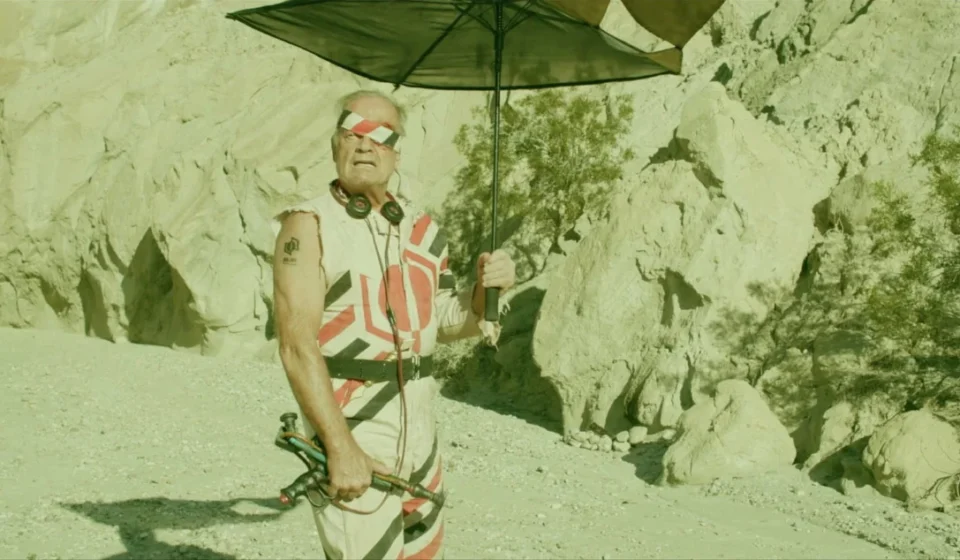
The central hook of Lars Shrike Walks the Night is as existential as it is narrative. The titular character, played with a disarming blend of gravitas and confusion by Grammer, wakes up in a landscape he does not recognize. He possesses only two anchors to his identity: his name and the unshakable, visceral conviction that he has escaped.

As the trailer suggests, Shrike’s journey is one of profound displacement. He navigates a "hostile desert landscape"—an environment that mirrors his internal state—believing himself to be a prisoner on a desolate planet. The tragedy, however, lies in the subtext: the world he is wandering is our own, Earth.
The film posits a chilling question: What happens when a fictional character, birthed from the mind of an author, realizes the artifice of his existence and attempts to cross the threshold into reality? As Shrike encounters characters like the librarian (Kati Schwartz), his struggle to piece together his history becomes a puzzle of blurred hallucinations and grounded reality. Is he a man suffering from a psychotic break, or has the barrier between the page and the world truly collapsed?
Chronology: From Sundance Roots to VOD Release
To understand the significance of Lars Shrike Walks the Night, one must look at the career trajectory of its director, Gary Walkow. Walkow first gained critical acclaim in 1987 with The Trouble with Dick, which took home the Grand Jury Prize at the Sundance Film Festival. That film, a meta-textual exploration of a writer struggling with his own creations, serves as a spiritual ancestor to this new project.
The Development Timeline
- 1987: Gary Walkow releases The Trouble with Dick, establishing a fascination with the creative process and meta-fictional narratives.
- 2024: Lars Shrike Walks the Night makes its debut at the Lone Star Film Festival in Texas. Despite positive word-of-mouth regarding Grammer’s performance, the film enters a period of distribution purgatory, remaining largely unseen by the general public.
- 2025: The project circulates through various industry circles, with fans of Walkow’s experimental filmography speculating on when, or if, a wider release would materialize.
- July 2026: BritFlicks and Vortex announce the official acquisition and distribution of the film, ending the two-year wait.
The inclusion of The Trouble with Dick as a referenced book within the universe of Lars Shrike creates a fascinating, recursive loop. It suggests that Walkow is building a singular, interconnected cinematic world where his past works are not merely forgotten, but are instead fundamental artifacts of his current reality.

Supporting Data: The Cast and Production
While Kelsey Grammer is widely recognized for his decades-long tenure as Frasier Crane, Lars Shrike Walks the Night highlights his prowess as a dramatic actor capable of carrying high-concept, low-budget indie fare. His ability to project both authority and vulnerability is central to the film’s success.
Key Personnel
- Kelsey Grammer (Lars Shrike): The emotional anchor of the film.
- David Clennon: A seasoned character actor who provides the necessary weight to the film’s supporting cast.
- Christine Lin: Integral to the unfolding mystery.
- Kati Schwartz: Portrays the pivotal librarian character, bridging the gap between the mundane world and Shrike’s surreal experience.
- Gary Walkow (Writer/Director): A veteran of the indie scene, Walkow has cultivated a career characterized by artistic persistence. His filmography—including Notes from Underground, Beat, and Radio Mary—demonstrates a consistent desire to push the boundaries of traditional narrative structures.
The film is produced by a team dedicated to the preservation of idiosyncratic filmmaking: Ryan J. Price, Gary Walkow, and Donald Zuckerman. Their collective effort to bring this project to VOD is a testament to the endurance of mid-budget science fiction, a genre that often struggles to find theatrical space in an era dominated by tentpole franchises.
Official Responses and Industry Context
The buzz surrounding the film is largely driven by its unique, "outsider" status. In an era of algorithmic content, films like Lars Shrike are increasingly rare.
"The film is a puzzle," one industry insider remarked during the 2024 festival run. "It doesn’t hold the audience’s hand. It demands that you accept the premise of a man who is literally living inside his own story."

The trailer itself, released via YouTube, leans heavily into the ambiguity of the film. By presenting Shrike’s delusion—that he is on a prison planet—alongside the mundane reality of his surroundings, the marketing team has successfully captured the tone of a neo-noir psychological thriller wrapped in a sci-fi shell.
Critics have noted that the film’s delay may actually benefit it. In 2024, the market was flooded with post-pandemic content. By 2026, the appetite for "weird," experimental, and thought-provoking science fiction has grown, as viewers look for alternatives to the standardized blockbuster fare.
Implications: The Future of Meta-Fiction
The release of Lars Shrike Walks the Night serves as a case study for the current state of independent distribution. It highlights the power of VOD to rescue "orphaned" films—projects that have completed production but lack the massive marketing budgets required for a wide theatrical release.
Why This Matters
- The Meta-Meta Narrative: By referencing his 1987 Sundance winner, Walkow is challenging the audience to consider the "life" of a film. Does a story end when the credits roll, or does it persist in the mind of the creator?
- Kelsey Grammer’s Career Path: Grammer’s willingness to take on such a challenging, non-commercial role suggests a shift in how legacy actors view indie projects. It is an opportunity to experiment with form rather than simply relying on legacy characters.
- The "Slow-Burn" Distribution Model: The two-year gap between festival and release is a reminder that in the modern era, "release" does not always mean "theatrical." Streaming services and digital platforms are providing a second life to films that might have otherwise disappeared into the archives.
For fans of speculative fiction, the film offers a rare treat: a story that is not just about technology or space travel, but about the process of existence. The implication is that we are all, in some way, characters written by circumstances beyond our control. Shrike is simply the man who figured it out.

Conclusion: Is It Worth the Watch?
As the release date of July 24th approaches, the curiosity surrounding Lars Shrike Walks the Night continues to mount. It is not designed to be an easy watch. It is a film that requires patience, an appreciation for the surreal, and a willingness to engage with a narrative that refuses to offer easy closure.
For those who find themselves captivated by the intersections of philosophy and science fiction—and who have a soft spot for the long, winding careers of directors like Gary Walkow—this is an essential addition to the summer viewing list. Whether or not it will be hailed as a masterpiece remains to be seen, but its arrival is a victory for independent storytelling.
In a summer season likely to be dominated by sequels and reboots, a film about a man who wakes up in the wrong reality feels, perhaps, like the most relevant story of all. As the trailer warns: Everything else he must learn. And starting this July, we get to learn it along with him.