Echoes of the Occupation: May el-Toukhy’s ‘Woman Unknown’ and the Anatomy of Post-War Shame

The Venice Film Festival has long served as a prestigious stage for directors to dissect the darker corners of the human psyche, and the 2024 main competition was no exception. Among the most anticipated entries was Woman Unknown, the latest offering from Danish-Egyptian filmmaker May el-Toukhy. Known for her unflinching exploration of taboo and power dynamics in the 2019 hit Queen of Hearts, el-Toukhy returns with a historical psychodrama that is as aesthetically austere as it is emotionally volatile.
Woman Unknown transports audiences to post-Second World War Copenhagen, a city trapped between the relief of liberation and the lingering rot of occupation. Through the eyes of Marie (Mathilde Arcel), a woman desperate to outrun a "soiled" past, el-Toukhy examines the brutal intersection of nationalism, patriarchy, and the policing of female sexuality.
Main Facts: A Return to the Cinematic Spotlight
May el-Toukhy’s presence in Venice marks a significant moment for Danish cinema. As the only female director in the main competition, her work carries the weight of high expectations, particularly following the international success of Queen of Hearts, which was famously remade by Catherine Breillat as Last Summer. In Woman Unknown, el-Toukhy reunites with screenwriter Maren Louise Kaehne to pivot from contemporary domestic scandal to the historical trauma of "horizontal collaboration."
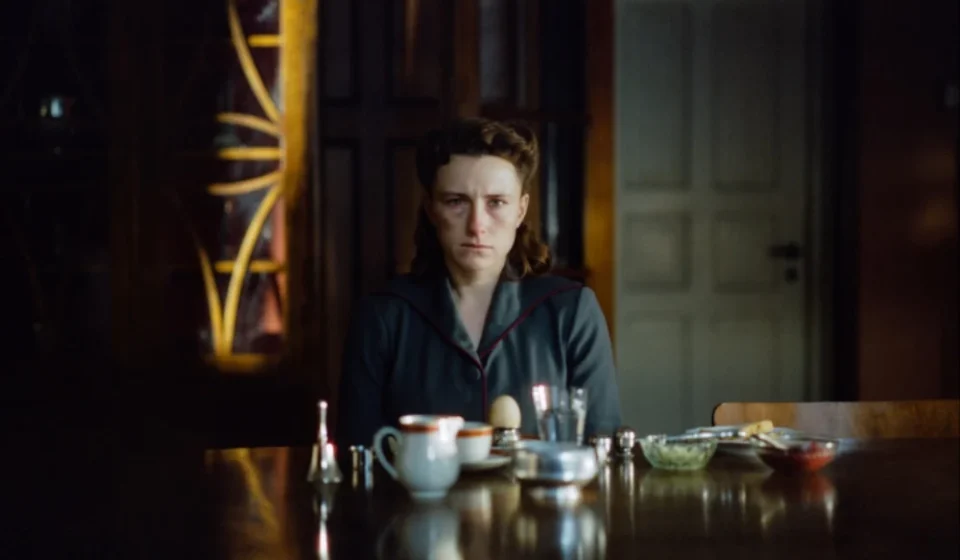
The film centers on Marie, a young woman working as a maid and nanny for Christian (Carsten Bjørnlund), a wealthy widower and glove factory owner. The narrative is set against a backdrop of "rubble gray" and "stiff mahogany," a color palette designed to emphasize the occasional, jarring bursts of crimson. This visual symbolism—ranging from a red wedding dress to the scarlet swastika painted on a front door—serves as a constant reminder of the "scarlet letter" Marie carries.
The film’s core conflict stems from the real-world historical phenomenon of women in Nazi-occupied countries who were punished for having sexual relationships with German soldiers. Through Marie’s struggle, el-Toukhy asks a haunting question: Should our private lives be subject to public judgment and devastating legal or social consequences?
Chronology: The Unraveling of a Secret Life
The film’s narrative structure is a slow-burn descent into paranoia, meticulously mapping Marie’s attempt to transition from the margins of society to the center of the haut-bourgeoisie.
The Precarious Ascent
The film begins with Marie in a state of controlled tension. She is the quintessential "perfect" servant in Christian’s household, a home governed by the centimeter-precise measurements of the head maid, Esther (Marina Bouras). Marie’s life is a performance of invisibility and obedience, yet she harbors an ambition that transcends her class. When Christian begins to show romantic interest—signaled by a discreet caress of the cheek—Marie sees a path toward security and status. She is no longer just a maid; she is a woman on the verge of becoming the lady of the house.
The Ghost of the Past
The fragile peace is shattered by the appearance of Karl (Thorbjørn Hedegaard), a former classmate from Marie’s hometown. Karl represents the return of the repressed; he knows why Marie fled her past life. Through their jittery, high-stakes encounters, the audience learns the truth: Marie had a child with a German soldier. To escape the "tyskertøser" (German girl) purges, she abandoned her child and her identity. Karl’s presence transforms the film from a domestic drama into a Hitchcockian thriller, as he begins to blackmail and harass her, threatening to expose her secret to her employer and the vengeful post-war public.
The Spiral into Panic
As Karl’s demands escalate, Marie’s mental state begins to fracture. The film captures her "panicked spiral" through a series of increasingly claustrophobic scenes. She consumes liquid opium to dull the physical and emotional pain of her sexual encounters with Christian, whom she must please to maintain her social standing. The tension reaches a breaking point when a swastika is smeared on the door of the house—a sign that the "shame" she tried to leave behind has finally caught up with her. The final act of the film is a "crash-out," a desperate and violent attempt by Marie to reclaim control over her narrative, leading to a climax stained with literal and metaphorical blood.
Supporting Data: Visual Language and Performance
The effectiveness of Woman Unknown relies heavily on its technical execution and the central performance of Mathilde Arcel.
Cinematography and Symbolism
Cinematographer Jasper Spanning utilizes static, shadowy frames to create a sense of entrapment. The use of shallow-lensed close-ups forces the audience into Marie’s internal space, making her anxiety palpable. The color red is used sparingly but with maximum impact. It represents both the promise of a new life (the red wedding dress) and the mark of the pariah (the swastika and the blood). This visual "Hitchcockian power" elevates the film beyond a standard period piece, turning the setting into a psychological landscape.
The "Un-owned" Body
A recurring motif in the film is the lack of bodily autonomy. El-Toukhy includes several "frigid" scenes that emphasize how Marie’s body is treated as an object:
- The Glove Model: Christian uses Marie’s hands to display his latest glove designs, treating her as a mere mannequin for his commerce.
- The Tailor: A snooty tailor takes her measurements with a clinical coldness that mirrors the way the state measures a woman’s "virtue."
- The Spit Scene: In a harrowing moment of degradation, Marie consents to Karl spitting into her mouth—a visceral representation of how she has been forced to "swallow" her pride and her past to survive.
The Lead Performance
Mathilde Arcel’s portrayal of Marie is described as "nervy" and "commendably steely." She carries herself as if "permanently bound in a corset," conveying the physical toll of holding one’s breath for years. Arcel manages to balance Marie’s victimhood with a prickly, sometimes unsympathetic drive for self-preservation, making her a complex protagonist rather than a simple martyr.
Official Responses: Critical Reception at Venice
The premiere of Woman Unknown sparked immediate debate among critics and festival-goers. While the film’s technical mastery was universally praised, its "prickly feminism" invited scrutiny.
Comparisons to "Shame" Cinema
Critics have drawn parallels between Woman Unknown and classics of the genre, such as Alain Resnais’s Hiroshima, Mon Amour and Liliana Cavani’s The Night Porter. Like those films, el-Toukhy’s work explores the "soiled sheets" of history. However, some reviewers noted that while the script by el-Toukhy and Kaehne avoids "explanatory dialogue," the symbolism can occasionally feel heavy-handed, with the "dots" of the plot being "awfully close" together.
The Director’s Vision
In interviews and press materials, May el-Toukhy has defended the film’s starkness. She posits that the film is not a simple empowerment narrative. Instead, it is a study of how women are forced to betray one another and themselves within a patriarchal system that uses "morality" as a weapon of control. The film’s lack of easy answers is, according to the director, a deliberate choice intended to provoke discomfort.
Implications: The Policing of the Private Life
Woman Unknown is more than a historical retelling; it is a meditation on the enduring nature of public shaming and the fragility of female agency.
The "Horizontal Collaboration" Legacy
The film sheds light on a dark chapter of Danish history. After the liberation in 1945, an estimated 40,000 Danish women were accused of "horizontal collaboration." Many were rounded up by "liberation committees," had their hair shorn in public squares, and were subjected to physical abuse. By centering the story on a woman who manages to hide, el-Toukhy highlights the pervasive fear that governed the lives of these women for decades. It suggests that the "war" did not end in 1945 for everyone; for some, it merely moved indoors.
Modern Parallels
The film’s implications "creep out beyond the historical context." In an era of digital "cancel culture" and the public unravelling of private lives, Marie’s story feels unsettlingly relevant. The film asks whether society has truly moved past the desire to brand "wayward" women with "scarlet letters." It explores the "feminine betrayal" that occurs when women, like the head maid Esther, become the enforcers of the very systems that oppress them.
Conclusion: A Body Under Siege
Ultimately, Woman Unknown serves as a grim reminder that for women in Marie’s position, the body is a battlefield. Whether she is being used as a model for a glove, a vessel for a soldier’s child, or a target for a mob’s branding iron, Marie is never truly the owner of herself. El-Toukhy’s film is a cold, calculated, and ultimately harrowing look at the cost of survival in a world that demands a purity no one can truly maintain. As the red blood finally pools on Marie’s hands in the film’s closing moments, it becomes clear that the only way to escape the "rubble gray" of her existence was through a destruction as absolute as the war itself.