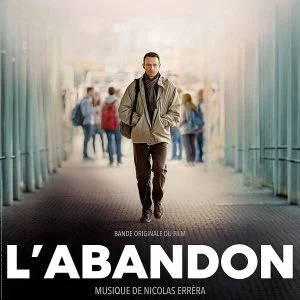

The intersection of cinema and historical trauma is often navigated through the delicate lens of a musical score. With the release of the soundtrack for the French biographical drama Forsaken (originally titled L’Abandon), composer Nicolas Errèra has once again proven his ability to underscore profound human stakes. Released by ENKA, the album captures the somber, contemplative, and ultimately harrowing journey of a narrative rooted in one of the most significant social ruptures in recent French history.
The Musical Architecture of Grief
Nicolas Errèra, a composer known for his eclectic range—from the high-octane rhythms of Raging Fire and Shaolin to the introspective textures of My Mother, God, and Sylvie Vartan—has taken a decidedly restrained approach with Forsaken. The soundtrack serves as an auditory bridge between the mundane reality of an educator’s life and the encroaching shadow of national controversy.
The score utilizes a mix of orchestral strings and atmospheric synth, creating a soundscape that feels both intimate and expansive. By avoiding the common trap of over-dramatizing a tragedy that is already heavy with significance, Errèra allows the audience to sit with the silence and the mounting tension. The title track, available via digital platforms, acts as the thematic anchor for the film, utilizing a minimalist melodic structure that reflects the isolation of the protagonist during his final days.
Chronology: The Last Eleven Days
The film Forsaken, directed and co-written by Vincent Garenq, is a cinematic adaptation of Stéphane Simon’s investigative book, The Last Days of Samuel Paty. To understand the weight of the score, one must understand the chronology of the events it depicts.
The narrative focuses on the final eleven days of Samuel Paty, a middle-school history teacher in Conflans-Sainte-Honorine. In October 2020, Paty conducted a classroom discussion on freedom of expression, using Charlie Hebdo caricatures of the Prophet Muhammad as educational material. The subsequent social media campaign against him, the misinformation spread regarding his lesson, and the rapid deterioration of his safety form the structural backbone of the film.
The film meticulously tracks this countdown:
- Days 1-3: The classroom instruction and the initial, localized controversy.
- Days 4-7: The escalation of the campaign on social media, exacerbated by outside agitators and the distortion of the facts.
- Days 8-10: The administrative struggle and the realization that the teacher has been marked as a target.
- Day 11: The catastrophic conclusion that shocked the nation and ignited a global debate on the limits of speech, secularism (laïcité), and the safety of the teaching profession.
Garenq’s direction treats these eleven days not as an action thriller, but as a slow-burn procedural, emphasizing the bureaucratic and social failures that allowed a local grievance to metastasize into a national tragedy.
Supporting Data: Production and Performance
Forsaken features a powerhouse cast tasked with conveying the psychological strain of these events. Antoine Reinartz delivers a measured performance as the teacher, capturing the quiet dignity and professional rigor of a man who believed, until the very end, that dialogue could resolve ideological conflict. He is supported by Emmanuelle Bercot, whose presence adds a layer of gravitas to the film’s exploration of institutional response.
The film’s production cycle moved with a sense of urgency, given the sensitivity of the subject matter. It premiered at the Cannes Film Festival, a platform that underscored the importance of the film’s thematic inquiry into the state of democracy in France. It subsequently opened in French theaters this past May, garnering significant critical attention for its journalistic approach to storytelling.
As for the soundtrack, ENKA has ensured that the music is accessible globally. Fans of Errèra’s work—which spans diverse international projects like Hidden Man, Survive, and The Extraordinary Journey of the Fakir—can find the album on Amazon and major digital music services. The tracklist provides a chronological mapping of the film’s emotional arc, moving from the academic calm of the opening scenes to the dissonant, unresolved chords of the finale.
Official Responses and Public Discourse
The release of Forsaken has reignited intense discourse within France regarding the nature of laïcité and the role of the state in protecting its educators. Critics and policymakers alike have weighed in on the film’s unflinching portrayal of the events.
The Educational Perspective
Teacher unions in France have largely viewed the film as a necessary, albeit painful, reflection on the vulnerability of the teaching profession. The film highlights the "abandonment" referenced in its French title—the feeling that educators are often left to navigate ideological minefields without sufficient support from the administration or the state.
The Political Response
The French government has acknowledged the film’s role in keeping the memory of the event alive. By grounding the narrative in the specific, human experience of Samuel Paty, Forsaken shifts the conversation away from abstract political rhetoric and back to the individual rights of those tasked with fostering critical thinking in the classroom.
Implications: The Legacy of a Classroom Discussion
The implications of Forsaken extend far beyond the borders of France. The murder of a teacher for his choice of pedagogical material represents a flashpoint for Western societies grappling with the tensions between multiculturalism, religious sensitivity, and the fundamental right to free expression.
The Role of Media and Algorithms
One of the most chilling aspects of the film is its depiction of how digital platforms and social media algorithms catalyzed the tragedy. The movie illustrates how a snippet of a lesson, stripped of its context and amplified by bad actors, can transform a teacher into an enemy of the state. In this way, the film serves as a cautionary tale about the velocity of modern misinformation.
The Composer’s Responsibility
Nicolas Errèra’s music plays a critical role in framing this implication. By opting for a score that avoids cheap sentimentality, he forces the audience to confront the reality of the situation. There is no triumphant resolution; the music reflects a lingering, unresolved grief that mirrors the state of the public consciousness. Errèra’s score serves as a witness, documenting the tragedy through sound without attempting to explain away the complexities of the loss.
Future Distribution and Global Impact
While the film has enjoyed a successful run in French theaters, there remains a significant question regarding its international reach. As of the current reporting, there is no official word on a domestic distribution deal for the United States or other English-speaking markets.
However, given the universal nature of the themes addressed—the sanctity of education, the danger of radicalization, and the erosion of institutional support—it is highly probable that Forsaken will find its way to international streaming platforms or specialized distributors in the coming months. The soundtrack, already globally available, serves as an advance scout for the film, preparing international audiences for a narrative that demands engagement rather than passive consumption.
Conclusion
The release of the Forsaken soundtrack is more than just a promotional tie-in for a biographical drama; it is a vital entry in the discography of a composer who consistently pushes the boundaries of his craft. Nicolas Errèra has successfully translated the weight of a national tragedy into a musical language that is both haunting and deeply respectful of its source material.
As the film continues its journey through the festival circuit and onto international screens, it stands as a poignant reminder of the cost of silence and the fragility of the democratic principles we often take for granted. Whether through Garenq’s rigorous direction or Errèra’s evocative score, Forsaken ensures that the final eleven days of a teacher who stood by his principles will continue to provoke, challenge, and move audiences for years to come.
For those interested in exploring the musical landscape of the film, the soundtrack is currently available across all major digital platforms. It remains a testament to the fact that, even in the face of unspeakable tragedy, art has the unique capacity to hold a mirror to society, reflecting not only who we are, but who we must strive to protect.