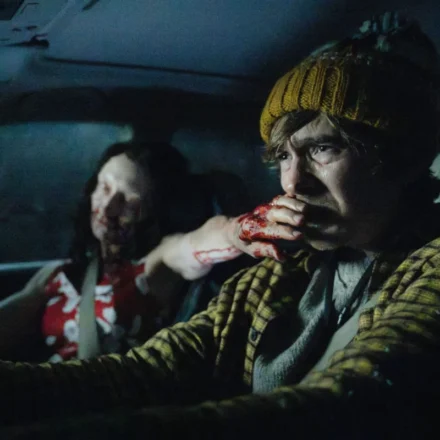


The closing of the 79th Cannes Film Festival in May 2026 left many industry pundits scrambling for a narrative. The conventional wisdom, whispered in the corridors of the Palais des Festivals and echoing across social media, labeled the edition as "muted" or "ho-hum." Critics complained of a lack of singular, earth-shattering masterpieces—the kind of white-knuckle, genre-defining cinema that defined the 2025 season. However, this dismissive consensus missed a profound undercurrent: a quiet, cumulative revolution in storytelling.
The 2026 selection was not defined by singular, explosive shocks, but by an incremental, visceral power. Films like Ryusuke Hamaguchi’s All of a Sudden, Valeska Grisebach’s The Dreamed Adventure, and Marine Atlan’s La Gradiva functioned as vessels for dramatic muscle memory, grounding the audience in the complexities of the present moment.
The Anatomy of Connection: All of a Sudden
Ryusuke Hamaguchi’s latest feature, All of a Sudden, serves as the quintessential example of the festival’s thematic pivot. Rather than relying on high-octane plot mechanics, the film charts the burgeoning, organic friendship between Mari, a Japanese playwright, and Marie-Lou, a French eldercare manager.
The film’s emotional resonance is derived from its extended, intimate dialogue—a hallmark of Hamaguchi’s style. It transforms the act of reflection into an adventure, framing the characters’ concern for one another as a bulwark against a world in decline. The film’s development was deeply rooted in reality; the scenario was inspired by the correspondence between Hamaguchi and the late philosopher Makiko Miyano. During the festival, the presence of Japanese anthropologist Maho Isono on the red carpet highlighted the film’s authentic intellectual lineage, grounding the cinematic experience in real-world grief and resilience.
Despite its critical acclaim, the film was bypassed for the Palme d’Or, which instead went to Cristian Mungiu’s Fjord. Mungiu’s film, a sprawling indictment of Norwegian child protective services, sparked significant controversy. Critics noted a stark divide: while Hamaguchi’s work focused on the nuances of care, Mungiu’s work was viewed by some as an exercise in "reactionary" storytelling, sparking intense debate regarding the festival’s shifting ideological leanings.
Gradualist Cinema and the Return to Realism
The festival’s "gradualist" trend—films that build their narrative tension through long-form observation—found its apex in Valeska Grisebach’s The Dreamed Adventure. Running over three hours, this Eastern European borderland saga follows an archaeologist, Veska (played by nonprofessional Yana Radeva), as she navigates the decaying machismo of post-Soviet gangsterism.
Grisebach’s work is a masterclass in subverting the Western genre. By focusing on the lived experience of women in a region defined by "chest-bumping, gun-toting men," Grisebach successfully interrogated the power dynamics of the modern era. Her own words, shared during the festival, encapsulate the film’s brutal honesty: "It was more interesting to address ideas about who is strong and who is weak… Who is, to speak frankly, fucking, and who is being fucked?"
Chronology of a Festival: Period Dramas and Political Mirrors
The 2026 lineup featured a distinct trend of historical introspection, using the past to mirror the fractures of the present.

- Pawel Pawlikowski’s Fatherland: A swift, elegant road movie capturing the 1949 speaking tour of Thomas Mann. The film juxtaposes 19th-century humanist ideals against the rising shadow of authoritarianism, creating a haunting parallel to our own contemporary political climate.
- Emmanuel Marre’s A Man of His Time: Using 16mm stock to evoke the tactile reality of Vichy France, Marre tracked the moral rot of a municipal bureaucrat. Based on his own great-grandfather’s letters, the film serves as a chilling reminder of how easily the gears of bureaucracy can facilitate genocide.
Supporting Data: Awards and Critical Reception
The hierarchy of attention at Cannes is often determined by the competition section, but 2026 proved that the real vitality of the festival lay in the sidebars.
The Critics’ Week Triumph: La Gradiva
Marine Atlan’s La Gradiva stood out as the most widely praised debut of the festival. Filmed in Naples, the movie captures the fragile interiority of teenagers on a school trip to Pompeii. Its refusal to rely on cynical humor or "winking" at the audience allowed it to become an instant, electric success, earning a rave review in The New Yorker and solidifying its status as a counter-narrative to the Competition’s hierarchy.
Other Notable Mentions:
- Camera d’Or: Awarded to Clarissa, an ambitious Nigerian reimagining of Mrs. Dalloway by Arie and Chuko Esiri, which provided a sharp, necessary critique of colonial legacies.
- Un Certain Regard: The top prize went to Sandra Wollner’s Everytime, a harrowing exploration of grief elevated by the precise sound design of Gregory Oke.
- Genre-Defying Work: Arthur Harari’s The Unknown—starring Léa Seydoux—refused to be categorized as a mere body-swap film, instead using the concept of bodily displacement as a floating signifier for trauma and the estrangement of the self.
Official Responses and Political Implications
The festival concluded on a note of stark political defiance. Andrei Zvyagintsev, the Grand Prix winner for Minotaur, used his platform to issue a direct, anti-authoritarian message regarding the ongoing war in Ukraine. Zvyagintsev’s critique of Vladimir Putin, delivered to an audience of international press, underscored the festival’s role as a site of political discourse, even as the industry grapples with the global shift toward nationalist cinema.
This political urgency was matched by the works of Radu Jude and Ira Sachs. Jude’s Diary of a Chambermaid update offered a poignant look at the "double binds" of modern labor and motherhood, while Sachs’ The Man I Love reframed the 1980s AIDS crisis through the lens of memory loss, focusing on identity rather than physical decay.
Implications for the Future of Film
If 2026 is to be remembered, it should not be for a perceived lack of "star power" or "palatable" masterpieces. Instead, it marks a transition toward a cinema of stamina—a move away from the "wham-bam" impact of previous years toward films that demand a longer, more thoughtful engagement.
The audience, too, is changing. As noted in the reception of All of a Sudden and The Dreamed Adventure, viewers are increasingly seeking out stories that bridge the gap between individual, desperate dialogue and global existential dread. The "muted" nature of Cannes 2026 was, in reality, a form of concentration.
As we look toward the 2027 season, the legacy of this festival will likely be found in the films that were initially overlooked. The refusal to adhere to the standard industry templates for "success" is precisely what makes works like La Gradiva or Everytime so vital. The Lumière Theater curtains may have closed, but the "dramatic muscle memory" instilled by this year’s selection will continue to shape the cinematic landscape for years to come. Cannes 2026 was not a failure of imagination; it was a testament to the endurance of the medium in a world that feels increasingly fragmented.