The Silicon Screenplay: Hollywood’s Traditional Storytellers Begin to Embrace the AI Frontier

For years, the mere mention of artificial intelligence within the hallowed halls of Hollywood’s writers’ rooms triggered a visceral reaction. It was the "third rail" of industry discourse: a technological bogeyman that threatened to automate creativity, devalue the human soul of storytelling, and render the labor of the WGA (Writers Guild of America) obsolete. Consequently, screenwriters have largely kept their distance, viewing AI as a tool to be used in the shadows—perhaps for a quick prompt when the cursor blinks mockingly on a blank page—but never something to be credited in a trade announcement.
To put one’s name on an AI-enabled film was once considered a career-limiting move, a scarlet letter in an industry that prides itself on human-centric craftsmanship. But as the "AI filmmaking era" matures, that stigma is beginning to crack. A cohort of established, credited screenwriters and directors is now stepping out from the shadows, openly partnering with Promise AI, a Los Angeles-based startup, to bring a new generation of hybrid, AI-assisted cinema to life.
The Paradigm Shift: Bridging the Gap Between Tech and Talent
The shift is being led by a small but formidable group of creatives who are moving beyond the tentative, experimental dabbling seen by industry titans like Martin Scorsese. While legends may be "sampling" the technology, these writers are integrating it into the core of their creative workflow.
Among the vanguard are Jamie Magnus Stone, a director whose pedigree includes eight episodes of the modern Doctor Who (seasons 12 and 13), and Micho Rutare, a seasoned producer and writer known for his work on the Sharknado franchise and Hulu’s Predator: Killer of Killers. Their partnership with Promise AI signals a deliberate move to marry the "wild west" potential of generative AI with the structured narrative discipline of traditional Hollywood storytelling.
The strategy behind these pairings is rooted in the belief that AI filmmaking, left to its own devices, often lacks the narrative backbone required to sustain a feature-length project. Promise AI, founded by a duo of YouTube veterans, is betting that by injecting high-level human writing into the algorithmic process, they can create a superior, more coherent product.
"People who work on AI films have a mastery that very few people have — you need to learn dozens of tools," explains Tyler Mitchell, a former Imagine Entertainment executive who now oversees development for Promise. "But a [traditional] writer can bring in all their talent. It really provides a very strong map and aligns everyone creatively."
Chronology: From Underground Experimentation to Official Development
The evolution of this trend has been rapid, moving from the peripheries of the internet to the center of development offices in less than two years.
- The "Silent" Phase (2022–2023): During the initial explosion of Large Language Models (LLMs), writers used AI in strict privacy. It was a period of clandestine prompt engineering, where the goal was to keep the usage hidden from agents, managers, and studios.
- The Institutional Pivot (Late 2023): Startups like Promise AI began actively courting industry veterans. By securing financing from major entities—including the Peter Chernin-founded North Road—these companies moved from "experimental" to "funded."
- The Education Bridge (Early 2024): The launch of AI-focused film education initiatives, which saw industry legends like Academy Award-winning production designer Rick Carter participating in workshops, helped legitimize the tech in the eyes of long-time professionals.
- The Current Era (Late 2024–Present): The formal announcement of specific projects with named, credited writers signifies the final stage of the transition. The focus has shifted from "can we do this?" to "what can we build with this?"
The Slate: A New Wave of AI-Assisted Narratives
The projects currently under development illustrate the diverse ways AI can be applied to genre storytelling:
- Everything is Within Tolerance: Written by Jamie Magnus Stone and paired with AI filmmaker Guillaume Hurbault, this project explores the claustrophobic tension of a hidden bunker where scientists are not only conducting experiments but are themselves the subjects of unseen masters.
- Ninja Punk: Micho Rutare is teaming with Promise’s chief creative officer, Dave Clark, to write this animated feature. Set in a 2065 Los Angeles, the film promises a hyper-stylized world of ninjas, Yakuza, and a supernatural underworld.
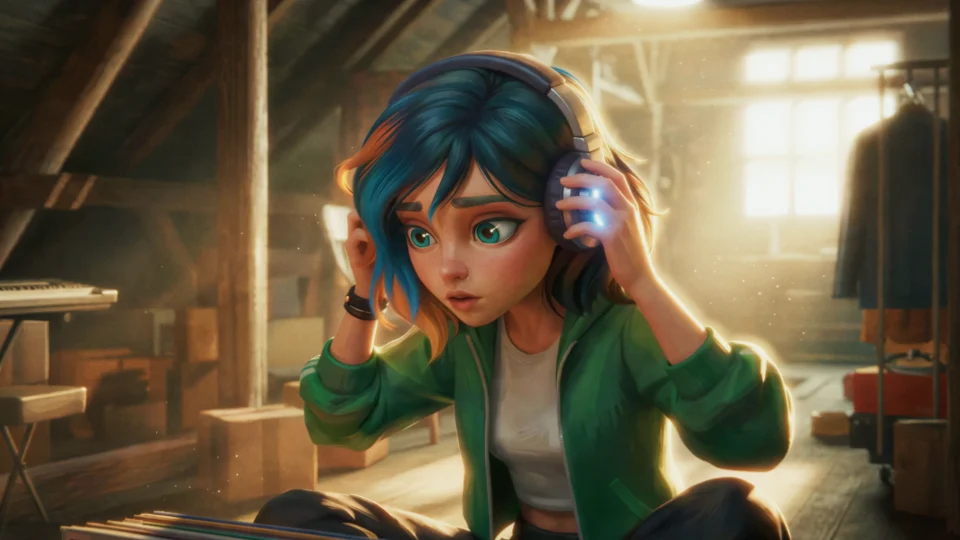
- Tuning In: A collaboration between Robert Rugan (co-writer of The Curse of Bridge Hollow) and Dave Clark, this animated supernatural coming-of-age musical explores the intersection of music and the afterlife.
- Hardcore 94: Already in production, this animated short series is led by Ivan Rome, Dave Clark, and AI artist Metapuppet. It focuses on an extraterrestrial invasion of 1994-era Compton, blending historical aesthetic with sci-fi absurdity.
Official Responses and the "Humanity" Factor
While Promise AI did not make its AI-native filmmakers available for direct interview, the human writers attached to these projects have begun to address the industry’s skepticism directly.
Micho Rutare, in an email exchange regarding the potential backlash from the creative community, acknowledged the tension but emphasized the potential for growth. "In my conversations with fellow screenwriters, there is some fear of the unknown, but there’s also a sense of excitement around what opportunities these new tools will unlock," Rutare noted.
When asked if his previous work on the high-concept Sharknado franchise—which functioned as a "proto-LLM" by mashing up familiar tropes into a new, absurd package—informed his current pivot, Rutare was candid. "For sure," he wrote. "That was an exercise in tone, a Goldilocks hybrid of earnestness and ridiculousness. Experimenting with things like tone and pioneering new microgenres will become less of a crapshoot and more of a science."
Tyler Mitchell echoes this sentiment, framing the move not as a destruction of tradition, but as an optimization of it. He draws a direct parallel to the iterative process used by studios like Pixar, where stories are "put up on a feed" and rewritten repeatedly. "But that’s really expensive," Mitchell says. "AI can do it much faster and cheaper — and not just for animation."
Implications: The Future of the Creative Economy
The implications for the industry are profound and multifaceted.
1. The Death of the "Development Hell"
One of the most significant arguments for AI is the speed at which a project can move from concept to visualization. Writers often struggle with the "limbo" of the pitch process, where months or years are spent waiting for a green light. Mitchell notes that for many of the writers he speaks to, the ability to see their work move from page to screen in near-real-time is intoxicating. It provides an instant feedback loop that traditional pre-production cannot match.
2. A New Skill Set for Screenwriters
The role of the writer is evolving. The screenwriter of the future may need to be a "narrative architect," someone who understands not just dialogue and character, but the technical capabilities of the models they are prompting. The collaboration between "AI natives" (who understand the tools) and "traditional writers" (who understand the story) is becoming the standard operating procedure for this new wave of content creation.
3. The Question of Distribution
Despite the technological breakthroughs, a major hurdle remains: the marketplace. Mitchell admits that while financing for these smaller, AI-hybrid projects is manageable, securing distribution with mainstream streamers and theatrical exhibitors remains a "big unknown." Will audiences accept AI-assisted films, or will the "uncanny valley" of production quality continue to be a barrier to entry?
4. The Ethical and Artistic Stigma
The fundamental conflict remains: Is the "gleeful absurdity" of a film like Sharknado—or any future AI-generated project—the same as human art? Critics argue that AI simply automates existing patterns, potentially leading to a flood of derivative, hollow content. Supporters, however, argue that the technology is merely a new paintbrush. The success of these projects will likely be judged by their ability to evoke human emotion—the ultimate litmus test for any narrative.
As Promise AI moves forward, the company is positioning itself not as a replacement for Hollywood, but as a laboratory for its future. "We want to be among the first to make great stories with this new technology," Mitchell says. "At the end of the day, that’s how we will be judged, and that’s how we want to be judged."
For now, the industry watches with a mix of trepidation and curiosity. If Stone, Rutare, and their colleagues can prove that AI can facilitate, rather than replace, the human spark, the current "stigma" may evaporate as quickly as the next technological breakthrough. But until then, the debate over the soul of the machine continues to rage in the background of every script revision.