
In the tapestry of American cultural history, few figures have navigated the treacherous waters of systemic exclusion and artistic defiance with as much grace as Luis Valdez. The pioneering playwright, filmmaker, and founder of El Teatro Campesino has spent six decades forcing the American consciousness to expand, demanding that the stories of the Mexican American experience be recognized not as “minority interest,” but as central to the national narrative.
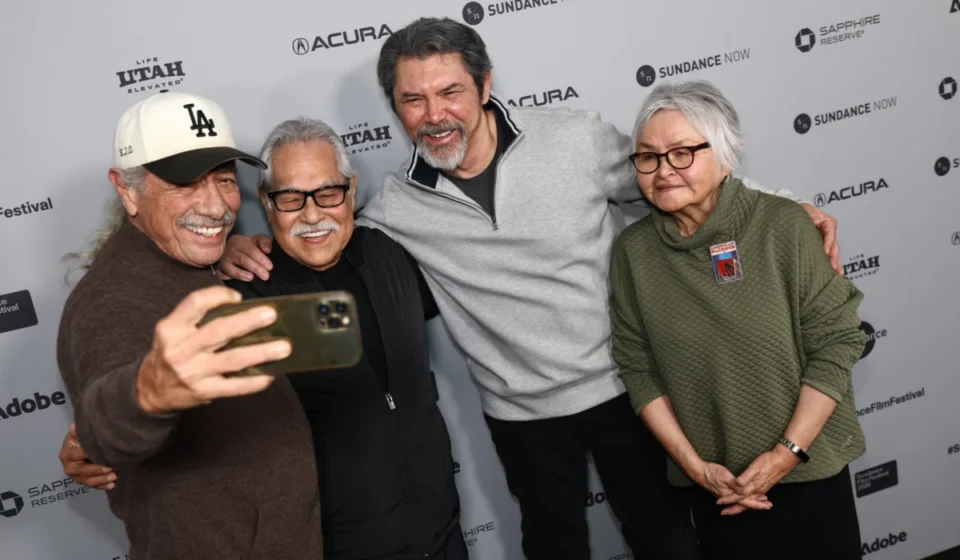
Now, with the release of the documentary American Pachuco: The Legend of Luis Valdez, director David Alvarado attempts to cement the legacy of a man whose work was once dismissed by the Broadway establishment as a niche curiosity. Premiering to acclaim at the 2026 Sundance Film Festival, the documentary serves as both a retrospective of a career that spanned the picket lines of the United Farm Workers and the bright lights of Hollywood, and a timely call to action in an era of renewed political polarization.
A Legacy Forged in Defiance
The genesis of American Pachuco lies in a candid reflection on the 1979 Broadway reception of Zoot Suit. Valdez, the mastermind behind the evocative exploration of Mexican American urban life in Los Angeles, recalled to director David Alvarado the biting, dismissive nature of the New York critics.
"I knew that it was more than just artistic judgment that was coming through," Valdez told IndieWire during a recent interview from his home in San Juan Bautista, California. "It was a political, racist-inspired vision of my work as a stereotype. They had no willingness to stretch themselves just a little bit."
Critics like Walter Kerr infamously questioned Valdez’s command of the English language, taking issue with his use of Caló—a culturally vibrant, syncretic dialect that weaves together Mexican Spanish slang and English. For Valdez, the critique was a fundamental misunderstanding of the Chicano experience. "My work has always been bilingual, because I needed the flavor of some Spanish in with the English, because that’s the way Chicanos talk," Valdez explained. "Una palabra en Español and another one in English. You go back and forth. It’s code-switching."
Chronology of a Cultural Pioneer
The trajectory of Luis Valdez’s life is a masterclass in the power of storytelling as a tool for social transformation. Born into a family of migrant farmworkers, Valdez’s early exposure to the indignities of agricultural labor became the fuel for his creative fire.
In the 1960s, he founded El Teatro Campesino, a theater troupe designed to educate and inspire farmworkers on the front lines of the labor movement. These politically charged, grassroots performances laid the foundation for a career that would eventually bridge the gap between rural struggle and the heights of mainstream entertainment.

By the late 1980s, Valdez had achieved what many thought impossible for a Chicano artist: mainstream success with the biopic La Bamba. The film, which chronicled the life of rock-and-roll pioneer Ritchie Valens, did more than just sell tickets; it signaled to broader America that Latino stories were, inherently, American stories.
For director David Alvarado, who grew up watching La Bamba on repeat, the film was a formative experience. "It meant so much to us, not just because it was a story about a Latino family, but because it was also a signal to broader America that this is an American story," Alvarado noted. This personal connection drove the structure of American Pachuco, which the director envisioned as a protagonist’s journey—a narrative arc befitting the man who had written so many of his own.
The Archival Resurgence
One of the most significant contributions of the American Pachuco project is its commitment to historical preservation. Working with the El Teatro Campesino archive at UC Santa Barbara, Alvarado and his team undertook the massive task of digitizing 80,000 feet of celluloid.
"We’re making it available for researchers and other folks through UC Santa Barbara and the Internet Archive," Alvarado said. This act of archival justice ensures that the visual record of the Chicano movement—the protest plays, the behind-the-scenes rehearsals, and the raw, unpolished footage of a generation in struggle—will be accessible to future generations, effectively protecting it from the historical erasure that often follows marginalized communities.
Evolution and Ethical Reflexivity
Journalism and documentary filmmaking often encounter the unexpected, and American Pachuco was no exception. During production, the national discourse regarding civil rights icon Cesar Chavez shifted significantly following reports of his past behavior.
In a move that highlights the ethical responsibility of the filmmaker, Alvarado decided to recut the documentary, removing segments that painted Chavez in an exclusively hagiographic light. "I’d never quite been in a position before where history changed under our feet as we were releasing the film," Alvarado reflected. "And then we as a film team had to change for the new historical understanding that was happening live."
This reflexive approach elevates the documentary, turning it from a static biography into a living document that acknowledges the complexity of its subjects and the evolving nature of historical truth.

Official Voices and Artistic Synthesis
The film draws on an impressive roster of voices, including Dolores Huerta, Cheech Marin, Lou Diamond Phillips, and Taylor Hackford. However, the most striking creative choice is the narration by Edward James Olmos.
Returning to his iconic role as the ghostly Pachuco from Zoot Suit, Olmos provides a haunting, meta-textual layer to the documentary. "It’s kind of a strange idea for a character from the subject’s work to be aware of the documentary and comment on the work in the documentary and himself at the same time," Alvarado said.
Valdez found the choice to be an "intuitive stroke of genius." By utilizing the Pachuco character, the film disarms the traditional "Angloness" of standard documentary narration. As Valdez notes, "You can speak English, but you don’t have to do it in a totally Anglo kind of way."
Implications for a Divided Nation
The release of American Pachuco comes at a time of profound national anxiety. For Alvarado, who grew up grappling with the shame of his heritage and the pressure to assimilate, the film is a meditation on the cost of belonging.
"If you try to fit in in America, you have two choices: one is you try to assimilate and be as un-Mexican as you can, get rid of your accent, don’t speak the language. Or two, you just say, ‘This is what I am,’" Alvarado said.
This tension is exacerbated by the current climate of anti-immigrant sentiment and the profiling of brown bodies. "I always set off to make this film about belonging in America, and I had no idea that Trump would be back by the time we were done," the director added. In this context, the documentary is not just a look back; it is an urgent defense of cultural identity.
A Final Statement on Belonging
Despite the industry’s historical failure to provide adequate space for Latino voices, Valdez remains optimistic about the future of the medium. Data from institutions like the USC Annenberg Inclusion Initiative consistently show that Latinos remain one of the most underrepresented groups in film and television, despite being a massive consumer base.

"They could make so much money if they just allowed us to begin to tell our story the way it needs to be told," Valdez asserted. "But that would require certain people to admit that we’re not just another minority. That we’re a sign that America has changed, that we are America."
As the credits roll on American Pachuco, the viewer is left with the image of a man who has successfully navigated the friction between his roots and his rise to prominence. For Luis Valdez, the film is a "final statement"—though he is quick to add that he is far from finished.
"Our ancestors have left signposts. Beto Juarez left a signpost. Emiliano Zapata left a signpost. Frida Kahlo left a signpost. That’s all we can do really, is leave a signpost for the next generations," Valdez concluded. "The work I’ve done, I hope, is a signpost to say, ‘It’s possible to be a migrant farm worker and still make it to Broadway or be a movie director.’"
American Pachuco: The Legend of Luis Valdez opens at New York’s Film Forum on Friday, July 17, with a national rollout to follow, offering audiences a long-overdue invitation to see the American story through the lens of a true pioneer.