The Absurdist Alchemy of The Kidnapping of Arabella: A Cinematic Oddity for the Ages

In the landscape of contemporary independent cinema, few filmmakers possess the singular, idiosyncratic voice of Carolina Cavalli. With her latest feature, The Kidnapping of Arabella, Cavalli cements her reputation as a chronicler of the beautifully broken, delivering a film that is as much a mood-board of existential malaise as it is a traditional narrative. The film, which has already sparked intense discourse for its daring tonal shifts and an inexplicable, mesmerizing performance from Chris Pine, stands as one of the most unpredictable cinematic experiences of the year.
The Premise: An Unlikely Meeting of Minds
The Kidnapping of Arabella opens with a sequence so surreal it feels like a fever dream. Chris Pine, appearing in a skin-tight suit that channels a "yassified" Nick Cave, delivers a monologue seething with professional jealousy over the literary success of Jonathan Franzen—all performed in impeccable, fluid Italian. It is a moment of pure, unadulterated shock that serves as a thesis statement for the film: if you can accept this, you can accept anything.
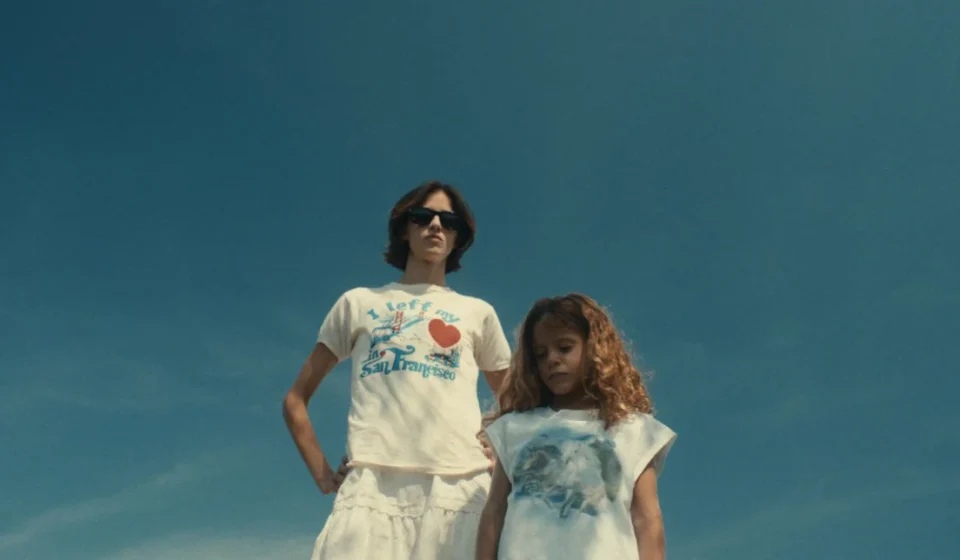
The narrative centers on seven-year-old Arabella (Lucrezia Guglielmino), the daughter of the pompous, self-obsessed writer Oreste D. While her father is busy navigating the intellectual vacuum of the literary elite, Arabella is left to her own devices in the parking lot of a local Taco King. Here, she encounters Holly (Benedetta Porcaroli), a twenty-something adrift in the wake of her own shattered aspirations. Once a promising young ballerina, Holly now toils at a decrepit ice rink in Veneto, a place she morbidly characterizes as a "gigantic frozen butthole."
Seeing the young girl mimicking a limp for attention, Holly projects her own history onto the child. Convinced that Arabella is a younger version of herself, and that this encounter is a fated opportunity for a "do-over," Holly impulsively spirits the girl away. What follows is a picaresque, often hilarious, and deeply melancholic journey through the Italian countryside.
A Chronology of Chaos
The journey of The Kidnapping of Arabella is not linear in the traditional sense; it is a series of erratic, thematic vignettes that trace the psychological development of its two leads.
- The Catalyst: The encounter at the Taco King serves as the inciting incident, establishing the shared, albeit deluded, bond between Holly and Arabella.
- The Escape: The pair embark on a road trip, defined by petty crimes and bizarre survival strategies. They crash weddings to secure free meals, check into motels under the moniker "Brittany the Pooh," and eventually find shelter in an unconventional setting: a room shared with a deaf goat.
- The Internal Conflict: Throughout these travels, the film periodically cuts back to the aftermath of the abduction. We see the father, Oreste D., descending into a spiral of performative grief, punctuated by his visits to a sex worker where he contemplates suicide.
- The Climax of Understanding: The resolution of the film does not come from a dramatic rescue, but from an internal shift in perspective. As Holly and Arabella confront the reality of their "kidnapping," they begin to understand that their connection is not about erasing the past, but about acknowledging the fragility of the futures they once imagined.
Supporting Data and Creative Context
The film’s aesthetic and narrative DNA are heavily influenced by a specific lineage of European and American offbeat cinema. Cavalli’s collaboration with editor Babak Jalali—known for his work on the critically acclaimed Fremont—is palpable. The film shares a dry, deadpan humor with Napoleon Dynamite, yet it maintains a pace that feels distinctly Italian, echoing the freewheeling, wandering spirits found in classics like Dino Risi’s Il Sorpasso.

The casting of Chris Pine is a masterstroke of meta-textual irony. As reported, Pine took the initiative to study Italian specifically to land a role in an authentic Italian production, rather than waiting for a role that demanded language training. This commitment underscores the film’s central conceit: that to find the "right" life, one must sometimes perform the impossible.
The visual language of the film, particularly the recurring gag involving a Lorenzo Lotto painting, serves as a bridge between the characters’ internal angst and the external world. The soundtrack acts as a "patina of cool," smoothing over the rougher, more abrasive edges of the narrative and allowing the audience to settle into the film’s specific, melancholic "vibe."
Official Perspectives and Behind-the-Scenes Insights
While Cavalli has remained somewhat enigmatic regarding the specific inspirations for the script, the film reflects a growing trend in indie cinema toward "vibe-based" storytelling. By choosing to set the film in an unspecified "anytime" that avoids the clutter of modern technology, Cavalli opts for a generalized, timeless charm over a sharp, contemporary critique.
Critics have noted that the film’s success hinges almost entirely on the chemistry between Porcaroli and Guglielmino. Porcaroli, who previously collaborated with Cavalli on Amanda, brings a depth of "embittered narcissism" to the role of Holly that prevents the character from becoming a caricature. She captures the precise, stinging pain of a woman who knows exactly what she wanted to be, but is forced to watch her life move in a different, less graceful direction.
"It takes so little to keep you from living the right life anymore," Holly laments at one point, a line that has become the emotional anchor of the film. It speaks to a collective anxiety about the "roads not taken" that seems to resonate deeply with modern audiences.
The Implications: Why It Matters
The Kidnapping of Arabella is more than just a quirky road-trip comedy; it is a meditation on the nature of identity and the stories we tell ourselves to survive. By framing the "kidnapping" as a quest for self-actualization, Cavalli challenges the audience to consider the ethics of projection. Is it truly a crime to steal a life, if that life is the only one you were ever supposed to have?

The film’s implications for the industry are equally significant. It proves that there is an appetite for high-concept, low-budget, and stylistically bold cinema that refuses to hold the audience’s hand. The success of the "vibe" as a narrative engine suggests that, in an increasingly fragmented media landscape, viewers are drawn to films that offer a distinct, cohesive, and unapologetically strange emotional atmosphere.
Ultimately, The Kidnapping of Arabella finds its strength in its imperfections. As the film suggests through its own fractured timeline and surreal character arcs, it is often the things that do not add up—the erratic detours, the bizarre coincidences, and the unexpected casting choices—that provide the most profound meaning.
In a cinematic year dominated by massive intellectual properties and formulaic storytelling, Carolina Cavalli’s latest work serves as a necessary, if slightly surreal, reminder that the most compelling stories are often the ones that defy logic. It is a B-grade film that aspires to A-grade philosophical complexity, and in its pursuit of that goal, it manages to capture something profoundly human.
Grade: B-
The Kidnapping of Arabella is now playing in theaters nationwide.