A Global Celebration of Storytelling: Highlights and Honorees from the Karlovy Vary Film Festival

The curtain has fallen on another landmark year at the Karlovy Vary Film Festival (KVIFF), a gathering that continues to cement its reputation as a vital nexus for global cinema. This year’s edition, marked by a powerful blend of geopolitical reflection, artistic vulnerability, and the pursuit of new cinematic languages, culminated on Saturday with the announcement of the festival’s prestigious award winners. From the lush, haunting landscapes of Myanmar to the intimate, domestic struggles of Danish families, the festival once again proved that the power of the moving image lies in its ability to bridge disparate worlds.
The Triumph of Fruit Gathering: A New Voice from Myanmar
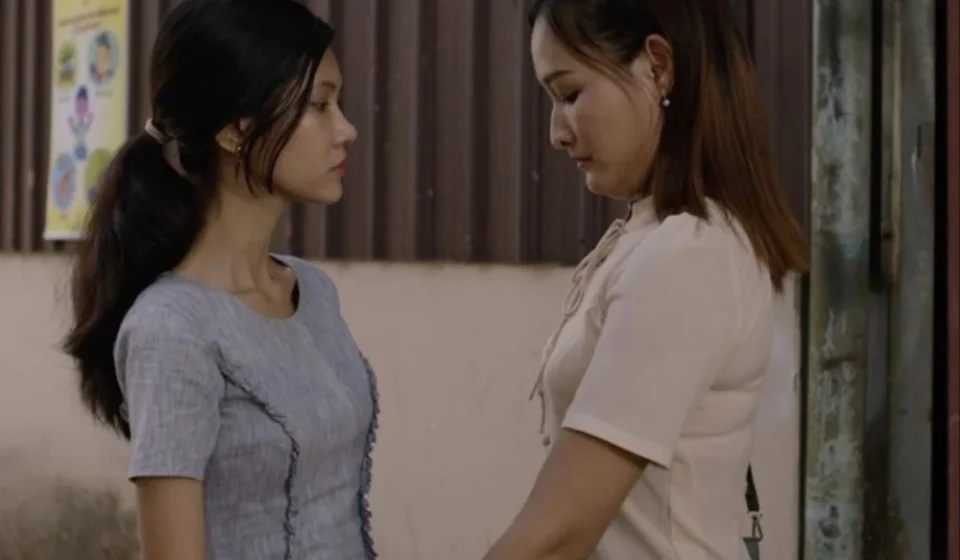
The festival’s highest honor, the Crystal Globe, was awarded to Aung Phyoe’s Fruit Gathering. Set against the backdrop of contemporary Myanmar, the film serves as a testament to the resilience of independent filmmakers working in volatile regions. The narrative centers on the evolving connection between two young women working within the rigid, mechanical environment of a textile factory.
The festival jury, composed of luminaries such as Justin Chang and Eskil Vogt, lauded the film for its narrative arc. They noted that it “begins as a lush and meditative portrait of work and friendship before morphing, unexpectedly and organically, into a harrowing drama of obsession and queer desire.”
In an emotional acceptance speech, Phyoe expressed his deep gratitude to his production team, acknowledging the immense logistical and personal hurdles involved in bringing the film to the screen. “My producers have gone through many difficulties to make this film—and they had to deal with me, too. I don’t know why they believed in me. I don’t believe in myself,” he remarked. He also paid tribute to his mother, whom he described as the “mother of a long-suffering artist for many, many years.”
Speaking with Variety ahead of the ceremony, Phyoe highlighted the isolation of the Burmese film industry. “We are trying to achieve our own national language of cinema. We are very behind, and for most of the things we don’t have support; it’s very difficult to make films in this country,” he said. He emphasized that the film’s atmosphere was a reflection of a world he intimately knows, one where political realities must be navigated with extreme subtlety. By focusing on rhythm and lived experience, Phyoe has managed to craft a work that transcends its borders to speak to universal human longing.
The Intimate Dramas: The Guest and the Proxima Competition
While Fruit Gathering captured the top prize, the Danish drama The Guest, directed by Mads Mengel and starring Trine Dyrholm, emerged as a critical darling. Securing both the Special Jury Prize and the Best Director award, the film was praised for its precise modulation and “squirmingly funny” exploration of complex family dynamics.
Mengel’s approach to filmmaking is rooted in the shifting perceptions of adulthood. “What fascinated me wasn’t telling my own story, but exploring something many people can recognize: how our understanding of our parents changes as we grow older,” Mengel noted. “I was interested in that moment when certainty begins to crack. When the people we’ve spent years judging slowly become more complicated and human.”
In the Proxima Competition—the festival’s section dedicated to boundary-pushing and emerging talent—Martina Buchelová’s Lover, Not a Fighter took home the Grand Prix. The jury praised the film’s “extraordinary lightness,” noting how it balances the absurdity of family life with the intensity of young love, all delivered with what they termed “luminous sincerity.”
Honoring Artistic Contribution: Juliette Binoche and Jeffrey Wright
Beyond the competitive sections, the festival took time to honor two figures who have significantly shaped the landscape of modern cinema. Juliette Binoche received the Crystal Globe for Outstanding Artistic Contribution to World Cinema.
Addressing the audience, Binoche reflected on the nature of the actor’s craft, acknowledging the sacrifices made by those around her—her children and their nannies—that allowed her to dedicate herself to her art. Her speech took a sobering turn as she pivoted to the global political climate. “I’m thinking about Palestine, Lebanon, Ukraine,” she stated. “We need artists to tell stories, to tell the truth. Passion is really the heart of what we do. Life goes by very quickly, so let’s give ourselves as much as possible. We need to unite.”
Jeffrey Wright, recipient of the Festival President’s Award, delivered a poignant address that linked the history of cinema to the necessity of cultural preservation. Recalling his friendship with the late festival president Jiří Bartoška and his interactions with director Miloš Forman, Wright spoke of the power of art to combat the forces of division.
“There are forces in this world, right now, that insist on disconnecting us. But our stories, our films, our history insists otherwise,” Wright said. He shared an anecdote about a dream project—a film about Alexander Pushkin—that he had once discussed with Forman and Quincy Jones. While that specific iteration never came to fruition, Wright used the moment to reaffirm his commitment to the creative process. “I will take this award as an incentive to continue to create in an effort to bring us together. As an American, I think this is our greatest power. It’s not what we destroy—it’s what we create.”
Implications for Global Cinema
The awards at Karlovy Vary this year underscore a shift in the global film landscape. There is a clear appetite for films that navigate the intersection of the personal and the political with restraint and artistic rigor. Whether it is the subtle political critique embedded in Burmese factory life or the exploration of generational trauma in European family dramas, the selected films demonstrate a common goal: to find the universal within the specific.
The festival’s commitment to supporting development, as evidenced by the array of grants awarded to projects like They Bloom at Dawn and Selamlik, ensures that this cycle of innovation will continue. By providing both financial backing and a platform for international visibility, KVIFF remains a crucial pillar for filmmakers who are often under-resourced yet brimming with necessary, urgent stories.
Full List of Major Winners: Crystal Globe Competition
- Grand Prix – Crystal Globe: Fruit Gathering (Myanmar, Czech Republic, France), Dir. Aung Phyoe
- Special Jury Prize: The Guest (Denmark), Dir. Mads Mengel
- Best Director: Mads Mengel (The Guest)
- Best Actress: Anna Schinz (A Happy Family)
- Best Actor: Ghassan Saad (Pipes)
- Právo Audience Award: Bára – Diary of a Rockstar (Czech Republic), Dir. Helena Třeštíková
Proxima Competition Winners
- Grand Prix: Lover, Not a Fighter (Slovak Republic, Czech Republic), Dir. Martina Buchelová
- Special Jury Prize: Incinerator (Japan), Dir. Shuntaro Uchida
- Best Director: Efthimis Kosemund-Sanidis (A Whole Person Almost)
- Special Mention: 33 Steps (Slovak Republic, Czech Republic), Dir. Anna Domček, Šimon Domček
Looking Forward
As the festival concludes, the resonance of these films will likely be felt in the coming months as they embark on their wider international release schedules. The message from this year’s Karlovy Vary is clear: in an era defined by fragmentation and discord, cinema remains one of our most potent tools for empathy. From the haunting, restrained performances to the bold, experimental narratives of the Proxima section, the festival has succeeded in its mission to honor the craft of filmmaking while holding a mirror to the complexities of the human experience. As Jeffrey Wright so aptly put it, the power of humanity lies not in what we destroy, but in the stories we dare to tell and the connections we forge through them.