
In an era where the cinematic landscape is increasingly populated by "goody-two-shoes" sorceresses and sympathetic enchantresses, Disney’s latest animated venture, Hexed, arrives with a specific mission: to bridge the gap between wholesome coming-of-age tropes and the visceral thrill of supernatural empowerment. Directed by Fawn Veerasunthorn and Jason Hand, the film represents a pivotal moment for Disney Animation Studios as it attempts to navigate a post-Wish environment while competing with a flurry of witch-centric media, from the blockbuster heights of Wicked to the cult-adjacent Practical Magic 2.
Main Facts: The Genesis of ‘Hexed’
Hexed marks the first original animated feature from the Disney stable since 2023’s Wish, a film that, despite its anniversary-year hype, struggled to leave a lasting mark on the cultural zeitgeist. With Hexed, Disney shifts its focus toward a contemporary, suburban setting, blending the mundane frustrations of teenage life with a vibrant, albeit familiar, occult mythology.
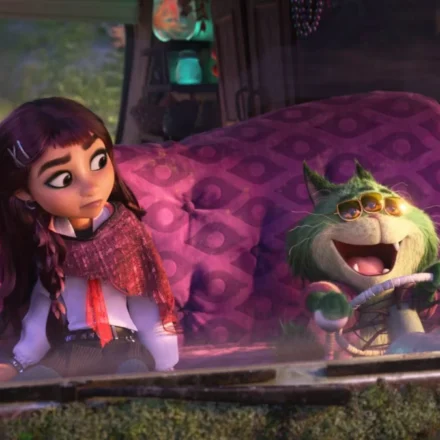
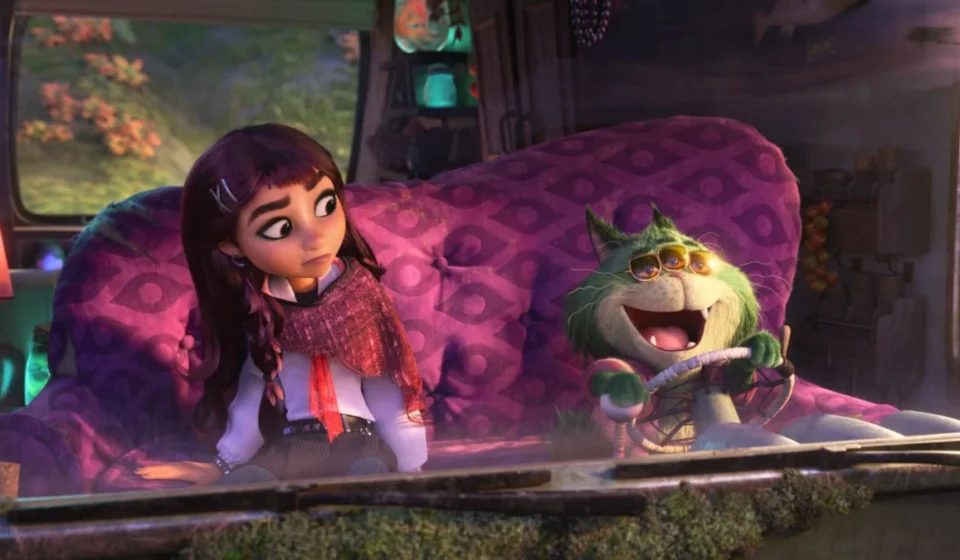
The film boasts a high-profile voice cast led by Hailee Steinfeld as Billie, a headstrong teenager who discovers her magical lineage. She is joined by Rashida Jones, who voices Billie’s protective mother, Alice, and Academy Award winner Jodie Foster, who lends a "silky-toned" menace to the antagonist, Queen Celeste. Adding a layer of eccentric humor is Walton Goggins as Beef Roger Crummchuck, a three-eyed feline familiar.
Technically, the film departs from the traditional Disney musical formula. Eschewing original Broadway-style showstoppers, the production leans heavily on a curated pop soundtrack featuring hits from Dua Lipa and Demi Lovato. This shift suggests a strategic move to appeal to the "TikTok generation," though critics argue it may come at the expense of the timeless "classic" status Disney usually craves.
Chronology of the Narrative
The Salem Prologue and the Blahville Exile
The story begins with a "chatty and irreverent" prologue, utilizing a jagged, collage-style animation technique that differs from the rest of the film’s polished CGI. This sequence establishes the history of Hexe—a magical queendom defined by power struggles and a lost legacy of sorcery. The narrator dismissively describes the loss of magic as a "real bummer," setting a tone of modern cynicism that permeates the film.
The action then shifts to modern-day Salem, where we meet Billie as an infant. In a moment of high tension, the newborn demonstrates telekinetic abilities, nearly opening an otherworldly portal in her nursery. To protect her daughter from the dangers of the magical realm, Alice (Jones) neutralizes Billie’s powers with an unassuming safety bracelet and relocates the family to the aptly named "Blahville, Ohio," where Billie grows up in total ignorance of her heritage.
The Awakening and the Journey to Hexe
Sixteen years later, Billie (Steinfeld) is a rebellious high-schooler chafing under Alice’s helicopter parenting. After a particularly volatile escapade leads to her expulsion, Billie finally removes the safety bracelet that has bound her magic for over a decade. The result is instantaneous: she is "whooshed" away through a portal into the realm of Hexe.
In Hexe, Billie discovers that her abilities—specifically the rare gift of flight—mark her as a significant threat to the status quo. The realm is ruled by Queen Celeste (Foster), a silver-haired sorceress who governs with "chic cruelty." Alice soon follows her daughter through the portal, revealing her own deep-seated connections to Hexe and a past she had hoped to bury.
The Confrontation and the Battle for the Queendom
The final act of the film follows the classic Disney blueprint of reconciliation and resistance. Billie and Alice must overcome their generational divide to save the embattled queendom from Celeste’s tyranny. They are aided by Beef Roger Crummchuck, the Southern-drawled feline whose design has been compared to a "ChatGPT-misremembered Cheshire Cat."
The climax features a high-octane chase and a magical duel that plays out against a cacophonous soundtrack. The film concludes with the inevitable restoration of balance, though it leaves the door open for the "witchin’ is bitchin’" philosophy to resonate with its young audience.
Supporting Data: Visuals, Music, and Market Competition
The Aesthetic Choices
Critics have noted that Hexed feels like a "quilting together" of previous occult-tinged tales. Its color palette, dominated by lurid violets and jade greens, arrives perhaps too soon after the ubiquitous green-and-pink branding of the Wicked marketing machine. While the animation is fluid and professional, it struggles to establish a unique visual identity, often falling back on "cookie-cutter characterization" and "throwback design elements."
The Soundtrack Strategy
One of the most debated aspects of Hexed is its reliance on existing pop hits. Dua Lipa’s "Levitating" is featured prominently twice, and Demi Lovato’s "Confident" serves as the backdrop for the final battle. This "needle-drop" approach, more common in DreamWorks or Illumination features, marks a departure from the Kris Bowers-composed orchestral score, which often finds itself battling the pop vocals for dominance. The absence of original songs is seen by some as a "concession to modernity" and by others as a "corner-cutting" measure.
Box Office Outlook
The film’s release over the Thanksgiving weekend is a strategic play for family audiences. With competitors like the live-action The Cat in the Hat underperforming, Disney’s "kid-friendly" approach positions Hexed as the primary choice for holiday moviegoers. However, industry analysts point out that Hexed faces stiff creative competition from Laika’s stop-motion feature Wildwood, which also features a young girl entering an enchanted realm with malevolent ravens, albeit with a more distinct and "stunning" visual style.
Official Context and Studio Strategy
While Disney has not issued a formal "defense" of the film’s derivative elements, the involvement of Fawn Veerasunthorn and Jason Hand signals the studio’s desire to empower a new generation of internal talent. Veerasunthorn, who co-directed Wish, is clearly attempting to refine the "modern fairytale" formula that Disney has been iterating on since Frozen.
The casting of Jodie Foster is a notable "prestige" get for the studio. Foster’s performance is credited with elevating the material, providing a level of sophisticated menace that contrasts with the film’s otherwise "peppy" tone. The studio’s decision to lean into "chatty irreverence" suggests an attempt to mimic the success of the Spider-Verse or Mitchells vs. the Machines style of dialogue—fast-paced, self-aware, and slightly cynical.
Implications: The "Disney-fication" of the Occult
The release of Hexed raises several questions about the current state of Disney’s creative output and the broader cultural fascination with witches.
1. The Dilution of the "Villainess"
The article highlights a growing trend in cinema: the humanization of the witch. While Hexed attempts to "split the difference" by making its protagonist wholesome but empowered, it contributes to a landscape where "pure, malicious evil"—like the "Aunt Gladys" figure mentioned in the text—is becoming a rarity. By making witchery "bitchin’" rather than terrifying, Disney is aligning the occult with teenage self-actualization, a move that is commercially safe but narratively predictable.
2. The Risk of Brand Familiarity
The "patchwork" nature of Hexed—borrowing elements from Salem, Cheshire Cat tropes, and coming-of-age clichés—suggests a studio playing it safe. In an era where audiences are increasingly vocal about "franchise fatigue" and "formulaic storytelling," Hexed may succeed at the box office while failing to secure a place in the pantheon of Disney classics. The film’s "risk-averse" nature is its greatest hurdle; it is pleasant enough for children but lacks the "edge" required to enchant older viewers or critics.
3. The Future of the Disney Musical
The shift away from original songs in Hexed could indicate a broader change in Disney’s strategy for non-sequel films. If pop soundtracks become the norm, the studio risks losing the "Broadway-on-screen" identity that has defined its most successful eras. While pop songs provide immediate relatability, they lack the narrative integration and long-term royalty potential of a "Let It Go" or a "Part of Your World."
Conclusion
Hexed is a "bright, chipper" addition to the Disney catalog that will likely dominate the Thanksgiving box office through sheer brand power and family-friendly appeal. However, for a film centered on the thrill of opening new worlds, its creative boundaries feel decidedly familiar. It serves as a reminder that while "witchin’ is bitchin’," the magic of original storytelling requires more than just a vibrant color palette and a Dua Lipa track—it requires the courage to be truly wicked.