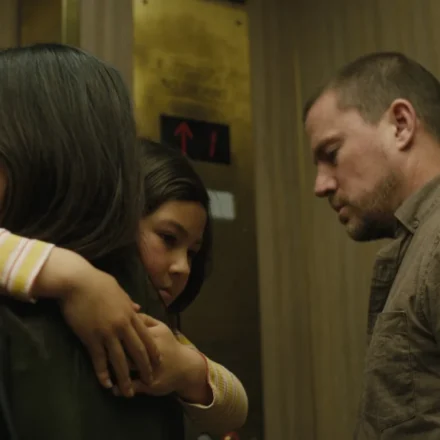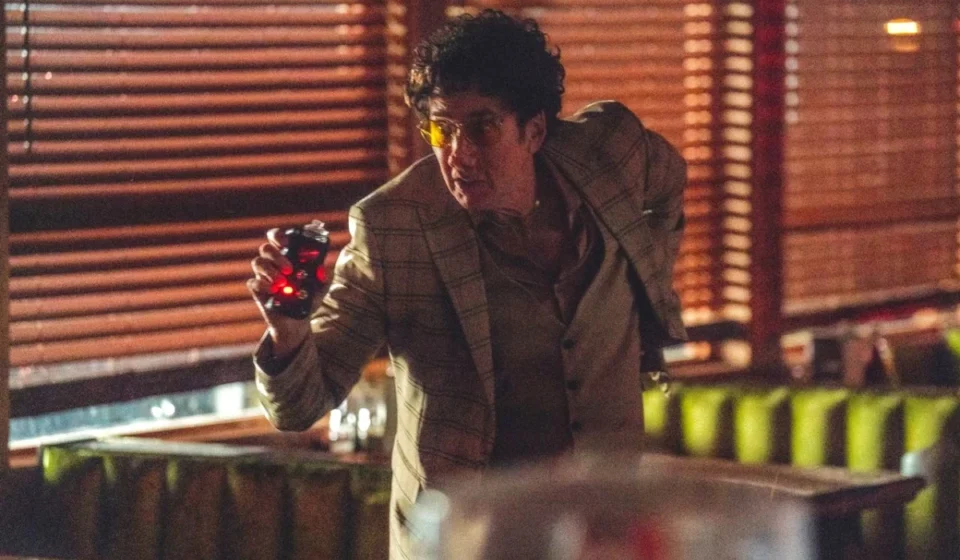

The trope of the "diner standoff" is as old as the celluloid it is printed on. From the existential dread of The Petrified Forest to the explosive tension of When You Comin’ Back, Red Ryder? and the gritty claustrophobia of Albino Alligator, the setting of a remote roadside eatery has long served as a pressure cooker for disparate characters. It is a microcosm of society where the social contract is shredded by the arrival of a gun-toting catalyst. In his latest feature, Best Pancakes in the County, writer-director Ken Sanzel attempts to breathe new life into this "whiskery" setup. However, the result is a film that struggles to find its own voice, trapped between the towering shadow of 1990s neo-noir and the eccentricities of its leading man, Nicolas Cage.
Main Facts: A Production of Mismatched Ambitions
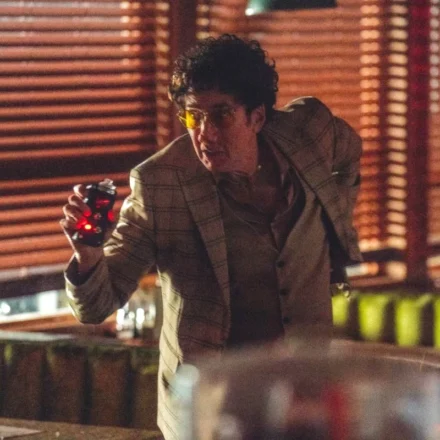
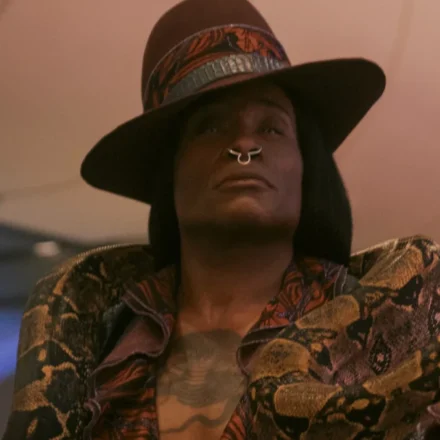
Best Pancakes in the County enters the market during a particularly prolific era for its star, Nicolas Cage. The film is one of two concurrent releases featuring the Oscar-winning actor in transformative, if somewhat distracting, prosthetics—the other being the sports biopic Madden. In Pancakes, Sanzel casts Cage as a high-level, enigmatic criminal known simply by the acronym "S.O.B."
The film is a product of independent financing, aiming for a "cult classic" status through its use of stylized violence and verbose, "show-offy" dialogue. The production features a notable ensemble cast, including Justin Long, Shelley Hennig, Ravi Patel, and Lauren German. Despite its modest budget, the film attempts a grand narrative scale, revolving around a digital McGuffin—a hard drive—that holds the power to topple or enrich the criminal and federal underworlds alike.
Directed by Ken Sanzel, a veteran of procedural television and action cinema, the film seeks to emulate the "seriocomic" tone popularized by early Quentin Tarantino. However, as the film unfolds, it becomes clear that while the ingredients of a classic noir are present, the execution lacks the culinary precision suggested by its title.
Chronology: From the Stash House to the Short-Order Station
The narrative arc of Best Pancakes in the County follows a traditional, albeit disjointed, three-act structure that relies heavily on character introductions and delayed gratification.
The Heist and the Disappearance
The film opens with a sequence designed to establish the lethality and cunning of S.O.B. (Cage). We find him in an FBI stash house, purportedly cracking a safe containing $11 million. The tension of the heist is undercut by a revelation of betrayal: S.O.B.’s partner has lied about the quantity of the loot. In a moment of characteristic "Cage-ian" intensity, the protagonist expresses his disappointment through nonverbal, visceral reactions rather than dialogue.
However, the heist is not a total loss. S.O.B. secures a hard drive, the film’s primary McGuffin, and subsequently vanishes from the screen. This marks the beginning of a significant narrative lull where the lead actor—decked out in garish 1970s attire and a prosthetic upturned nose reminiscent of the film Penelope—is absent, leaving the supporting cast to carry the weight of the exposition.
The Gathering at the Diner
The action shifts to the titular diner, a remote location famous for its breakfast fare. Here, the "Tarantinoesque" elements come to the forefront. Two rival groups arrive, turning the diner into a powder keg.
- The Hired Guns: Led by Ryder (Ravi Patel), these are S.O.B.’s associates, waiting for their boss to arrive with the drive.
- The Corrupt Feds: A group of rogue FBI agents led by the steely Margot (Lauren German), who are determined to intercept the drive at any cost.
Caught in the crossfire are the diner’s staff: Cookie (Justin Long), a weary fry cook, and Dolly (Shelley Hennig), a waitress who appears far more capable than her job description suggests. The middle act of the film is a slow-burn exercise in posturing, as the two armed factions trade insults and wait for S.O.B.’s inevitable arrival.
The Climax and the "Godot" Moment
As the title suggests, the film eventually delivers its "Godot." S.O.B. arrives at the diner, and the movie shifts from a talky standoff into a chaotic showdown. The final act involves a series of revelations regarding the true identities of Cookie and Dolly, leading to a frantic, albeit inconsistently staged, sequence of violence that attempts to resolve the various power struggles established in the opening hour.
Supporting Data: Technical Merit and Performance Metrics
While the film has been criticized for its derivative script, certain technical and performance aspects provide a more nuanced picture of the production.
The Editing Anomaly
One of the most striking elements of Best Pancakes in the County is a specific sequence of hand-to-hand combat. Editors Magnus Häll and Håkan Karlsson are credited with a masterfully executed montage that cuts between two simultaneous fights—one involving a face and a deep-fryer. This sequence stands in stark contrast to the rest of the film’s action, which has been described by critics as "clumsily staged" and "borderline incoherent." The data suggest a disconnect between the film’s peak technical moments and its general directorial execution.
The "Cage" Factor and Supporting Highlights
Nicolas Cage’s performance is a polarizing data point. While he "dials it up to 11" upon his arrival at the diner, his limited screen time makes the film feel less like a "Nicolas Cage Movie" and more like a genre exercise featuring a guest appearance.
Conversely, the supporting cast provides much of the film’s successful humor.
- Brandon Mychal Smith: Playing a corrupt agent, Smith delivers a deadpan performance that provides the film’s most genuine laughs, particularly when his character questions the validity of the diner’s "Best Pancakes" claim.
- Justin Long: Long’s portrayal of Cookie provides a necessary emotional anchor. His "sad-sack" demeanor allows the audience to find a point of sympathy amidst a cast of otherwise unlikable criminals and corrupt officials.
Aesthetic Choices
The use of prosthetics on Cage remains one of the film’s most discussed "supporting" elements. The decision to give an Oscar-winning actor a "fake upturned nose" and ’70s-era costuming appears to be an attempt at character-driven eccentricity, though critics argue it serves more as a distraction than a tool for immersion.
Official Responses: Critical Reception and Director’s Vision
While official studio "spin" often highlights the "high-octane" and "witty" nature of such thrillers, the critical response to Best Pancakes in the County has been largely skeptical.
The Tarantino Comparison
The most frequent critique leveled against Ken Sanzel is his reliance on "faux-Tarantino dialogue riffs." Industry analysts note that the era of the Tarantino clone peaked in the late 90s (with films like 8 Heads in a Duffel Bag or Things to Do in Denver When You’re Dead). Sanzel’s attempt to revive this style in the 2020s has been met with the observation that "show-offy wordplay" requires a level of rhythmic precision that Pancakes fails to achieve.
Director’s Intent
Sanzel has previously found success in the "crime-procedural" space, and his intent with Pancakes appears to have been an exploration of the "absurdist thriller." However, the consensus suggests a failure to balance the "serio" with the "comic." When characters spend ten minutes debating the veracity of a menu while holding shotguns, the dialogue needs to be sharp enough to justify the suspension of the plot. In this case, many critics felt the dialogue resulted in "indigestion" rather than entertainment.
Implications: The Future of the Mid-Budget Indie Thriller
The release and reception of Best Pancakes in the County hold several implications for the current state of independent cinema and the career trajectory of its lead star.
The "Nicolas Cage" Content Machine
Cage has entered a phase of his career where he is essentially a subgenre unto himself. By appearing in multiple films per year—often with varying levels of quality—he has created a market where his presence alone guarantees a certain level of VOD (Video on Demand) success. However, Pancakes suggests a diminishing return on this strategy if the actor is underutilized or obscured by unnecessary prosthetics. For indie filmmakers, the implication is clear: casting a "star" is not enough if the script cannot sustain the stretches where that star is off-camera.
The Persistence of the Diner Trope
The film’s failure to innovate within the "stranded in a diner" premise suggests that the subgenre may be reaching a point of exhaustion. Unless a filmmaker can bring a radical new perspective (as The Hateful Eight did by moving the "diner" to a haberdashery in a blizzard), audiences may continue to find these setups "whiskery" and predictable.
Distribution and Audience Fatigue
In an era of "content saturation," Best Pancakes in the County serves as a cautionary tale. While it features a capable cast and moments of technical brilliance (the Häll/Karlsson montage), its reliance on "overcompensating posing" and derivative styles makes it difficult to stand out. The implication for the industry is a growing need for original voices that move beyond the "Hey, I can do Tarantino!" mindset.
In conclusion, Best Pancakes in the County is a film that offers a few savory bites—primarily through its supporting cast and a singular well-edited action sequence—but ultimately leaves the viewer feeling overstuffed with half-baked ideas. It is a reminder that in the world of cinema, as in the world of breakfast, the quality of the ingredients matters far less than the skill of the cook.