The Architecture of Existence: Don Hertzfeldt’s Paper Trail Redefines the Animated Medium

By Alex Billington
November 11, 2026
In the landscape of modern animation, few names command the reverence and anticipation reserved for Don Hertzfeldt. An artist who has consistently challenged the boundaries of the medium—moving from the crude, subversive sketches of Rejected to the existential profundity of the World of Tomorrow trilogy—Hertzfeldt has returned with his latest masterwork, Paper Trail. After a triumphant, year-long festival run that saw the film sweep top honors across the globe, Paper Trail is finally available for a limited online premiere via Vimeo, offering audiences a profound meditation on the passage of time, the weight of legacy, and the fragility of the human experience.
The Core Concept: A Life, Seen Through Paper
At its heart, Paper Trail is deceptively simple. As the film’s official logline states: "A life, seen through paper."
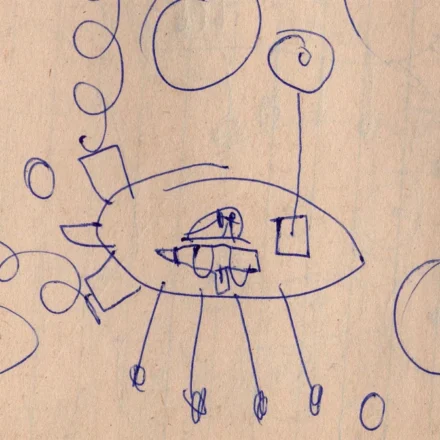
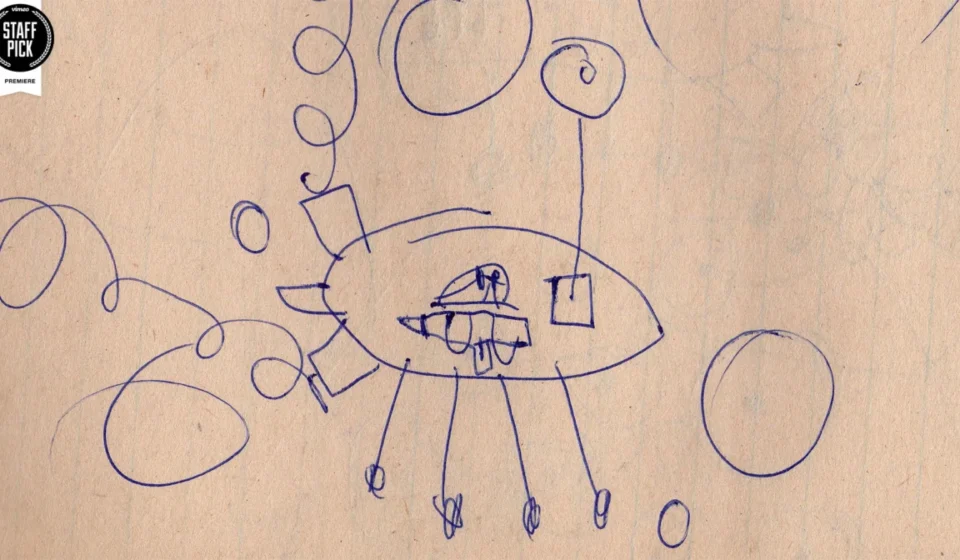
While many filmmakers attempt to capture the breadth of a human lifespan through grand narrative gestures or sweeping cinematography, Hertzfeldt chooses a tactile, claustrophobic, and deeply intimate constraint. We do not see the face of our protagonist, a character referred to as "Stevie." Instead, we bear witness to his evolution through the medium of the written and drawn word.
The film begins in the chaotic, unbridled energy of childhood—scribbles that lack form but overflow with intent. As the narrative progresses, the medium shifts. We transition into the structured, angst-ridden cursive of a teenage diary, the frantic scribbling of academic stress, and eventually, the cold, repetitive, and authoritative signatures of adulthood. By distilling a human existence down to the documents one leaves behind, Hertzfeldt forces the viewer to confront the stark reality of our own legacy. We are not just our memories; we are the paper we sign, the letters we write, and the marks we leave on a world that ultimately treats our history as a series of filed documents.

A Festival Darling: From Sundance to Annecy
The journey of Paper Trail to the digital screen has been nothing short of a victory lap. The film’s critical trajectory began at the 2026 Sundance Film Festival, where it was awarded the Special Jury Award for Creative Vision. The jury noted the film’s ability to "transcend the limitations of traditional animation, using minimalism to evoke maximalist emotional resonance."
The momentum did not stop in Utah. At SXSW, Paper Trail secured both the Jury Award and the Audience Award for Best Animated Short, a rare double-crown that speaks to the film’s dual appeal: it satisfies the high-minded critical establishment while remaining deeply accessible to the casual viewer. Finally, at the prestigious Annecy International Animation Film Festival—the gold standard for the industry—it took home the top prize for Best Short, cementing its status as the definitive animated work of 2026.
This success is not merely a testament to the film’s visual ingenuity but to its timing. In an era increasingly dominated by hyper-realistic CGI and algorithmic content, Hertzfeldt’s commitment to the tactile—the physical sensation of ink on a page—resonates with a generation grappling with the ephemeral nature of digital existence.
Supporting Data: The Hertzfeldt Canon
To understand the weight of Paper Trail, one must look at the body of work that preceded it. Don Hertzfeldt, based in Austin, Texas, has spent over two decades cultivating a singular aesthetic that bridges the gap between comedy and existential dread.
- The Early Years: His 2000 short Rejected earned him his first Academy Award nomination and became a cult phenomenon, proving that animation could be both aggressively funny and deeply unsettling.
- The Existential Period: With the 2012 feature It’s Such a Beautiful Day, Hertzfeldt shifted into more melancholic, philosophical territory, exploring mental illness, memory, and the inevitable decay of the body.
- The World of Tomorrow Trilogy: Between 2015 and 2020, Hertzfeldt produced his sci-fi opus. By utilizing simple stick-figure aesthetics to discuss time travel, consciousness, and the end of the universe, he proved that the quality of a film is not determined by its budget, but by the clarity of its vision.
Paper Trail represents a synthesis of these eras. It carries the brevity of his early work, the emotional gravity of It’s Such a Beautiful Day, and the sophisticated narrative architecture of the World of Tomorrow series.

Official Releases and Collector’s Editions
For the dedicated fanbase that has followed Hertzfeldt’s career through his independent production company, Bitter Films, the release of Paper Trail is a significant event. Unlike many short films that vanish into the ether of streaming platforms, Hertzfeldt has curated a comprehensive physical release for this project.
The film is currently available for pre-order on a special edition Blu-ray. This collection is not merely a vessel for the short; it includes his 2024 animated film ME, providing a cohesive look at his recent creative evolution. Furthermore, the disc features exclusive audio commentaries by Hertzfeldt, providing a rare glimpse into the technical processes behind his hand-drawn animations. Perhaps most notably for collectors, the original motion picture soundtrack, composed by the acclaimed musician Naomi Alligator, has been pressed to vinyl. This soundtrack is integral to the film’s pacing, utilizing a minimalist, atmospheric score that mirrors the cyclical nature of Stevie’s life.
Implications: The Future of Short-Form Storytelling
The release of Paper Trail arrives at a pivotal moment in the industry. As major studios continue to struggle with the "blockbuster fatigue" affecting both live-action and animation, indie creators like Hertzfeldt are filling the void with works that are bite-sized yet deeply nourishing.
The Power of Constraint
Hertzfeldt’s insistence on "less is more" serves as a counter-narrative to the current trend of AI-generated assets and bloated production cycles. By limiting the scope of the film to paper, he creates a universal language. Whether the viewer is a child or an elder, the imagery of a diary or a signed document is universally understood.
Legacy in the Digital Age
The film’s thematic preoccupation—what we leave behind—is particularly poignant in 2026. We are the first generation to leave behind a digital footprint that is both massive and fragile. Hertzfeldt’s focus on physical paper acts as a metaphor for the struggle to maintain a tangible identity in an increasingly virtual world. Paper Trail asks a haunting question: If our lives are defined by the documents we leave behind, what happens when those documents are no longer made of paper?

The "Hertzfeldt Effect"
His influence on the next generation of animators is undeniable. By proving that a single person in a room in Austin can produce work that wins top honors at Sundance and Annecy, he has provided a roadmap for independent filmmakers. The "Hertzfeldt effect" is the rejection of the studio system in favor of absolute creative autonomy. It is a model that prioritizes the artist’s voice over marketability, yet ironically, it is a model that consistently produces the most marketable and enduring art.
Final Reflections
Paper Trail is a film that demands multiple viewings. On the first pass, the viewer is swept up in the narrative momentum—the rapid evolution of a life from the innocence of youth to the bureaucracy of the grave. On the second viewing, one begins to notice the details: the slight tremors in the handwriting during moments of grief, the bold, confident strokes of success, and the fading, shaky ink of old age.
Don Hertzfeldt has once again managed to distill the human condition into a container that should be too small to hold it. He has not only created a film; he has created a mirror. As we watch Stevie’s life unfold through the scratching of pens and the turning of pages, we are forced to look at our own desks, our own diaries, and our own pile of documents. We are reminded that while our time is limited, the "trail" we leave behind is the only evidence that we were here at all.
Paper Trail is currently playing on Vimeo for a limited time. It is, without question, the most important short film of the year. Whether you are a long-time admirer of Hertzfeldt’s work or a newcomer to his strange, beautiful universe, this is a journey that will leave you fundamentally changed.
What are your thoughts on this latest exploration of mortality? Does the simplicity of the medium enhance the narrative, or does it leave you wanting more? Join the conversation in the comments below.