
The legacy of James Maitland Stewart is one of the most enduring in the history of American cinema. Known to the world as "Jimmy," he was the lanky, stuttering personification of mid-century American virtue—a man who transitioned seamlessly from the whimsical romance of The Philadelphia Story to the desperate, soulful yearning of It’s a Wonderful Life. However, a new biopic directed by Aaron Burns, simply titled Jimmy, attempts to look behind the silver screen to find the man in uniform.
While the film aims to celebrate Stewart as a patriot and a man of faith, it has sparked a rigorous debate among critics and historians regarding the thin line between hagiography and insightful biography. As a portrait of one of Hollywood’s staunchest Republicans and a genuine war hero, Jimmy leans heavily into a conservative, faith-adjacent narrative that often prioritizes sentimentality over the complex psychological truth of its subject.
Main Facts: A Star in the Crosshairs of History
Produced under the auspices of Fathom Events and directed by Aaron Burns—a filmmaker whose pedigree is deeply rooted in the Christian cinema landscape—Jimmy focuses less on the artistry of Stewart’s acting and more on his pivotal transition from Academy Award winner to combat pilot during World War II.
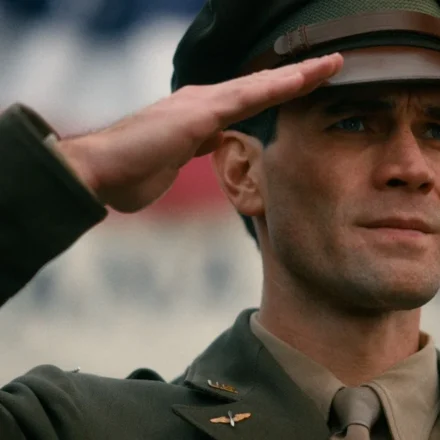
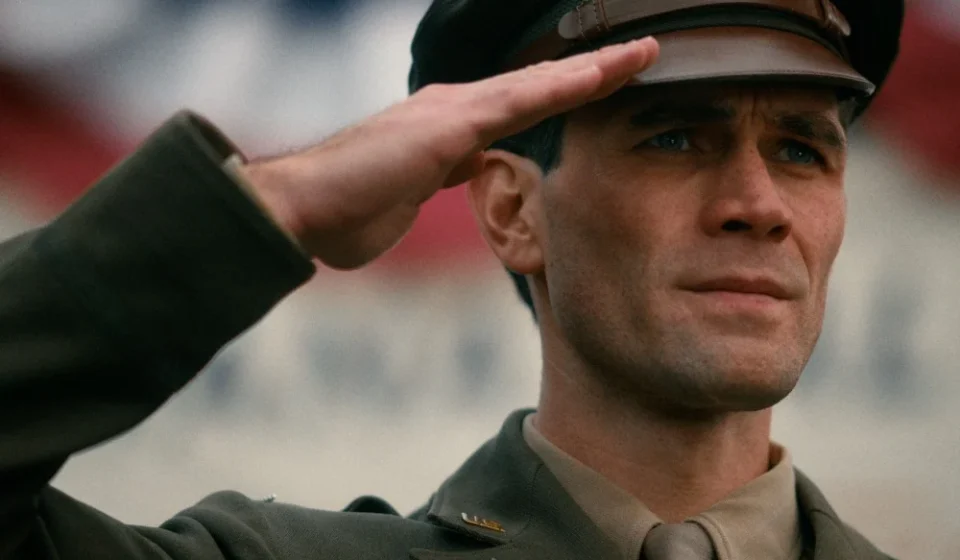
The film stars KJ Apa, the New Zealand actor best known for his role in Riverdale, who takes on the daunting task of channeling Stewart’s signature drawl and "aw-shucks" persona. The supporting cast includes veteran actors such as Jason Alexander as the formidable MGM mogul Louis B. Mayer, Neal McDonough as Stewart’s stern father, and Max Casella as the legendary director Frank Capra.
The narrative core of the film revolves around Stewart’s decision to pause his skyrocketing career at the height of his fame to enlist in the U.S. Army Air Forces. It is a story of "patriotic duty over Hollywood glamour," a theme that resonates strongly with the film’s intended audience but, according to early reviews, fails to capture the internal grit that made Stewart a truly modern actor.
Chronology: From the Oscars to the English Skies
The film utilizes an in medias res structure, beginning at a pivotal moment in 1946. We find a weary, post-war Stewart on the set of It’s a Wonderful Life, being pitched the concept of George Bailey by Frank Capra. The scene serves as a framing device for a flashback that takes us back five years to the turning point of Stewart’s life.
1. The 1941 Turning Point
In 1941, James Stewart was at the zenith of Hollywood. He had just secured the Academy Award for Best Actor for The Philadelphia Story. However, the film depicts a man restless with the artifice of Tinseltown. When his draft letter arrives, it sets off a conflict between his professional obligations and his personal convictions. Louis B. Mayer, portrayed by Jason Alexander with a "ripe" theatricality, is shown attempting to shield his investment, viewing Stewart’s potential enlistment as a PR disaster and a waste of a bankable star.
2. The Influence of the Patriarch
A significant portion of the film’s first act is dedicated to Stewart’s relationship with his father, Alex Stewart. Played by Neal McDonough, the elder Stewart is depicted as a "salt-of-the-earth" Presbyterian who is initially skeptical of his son’s military ambitions. His dismissal—"Go back to Hollywood and make peace with the fact that you are what you are"—serves as the catalyst for Jimmy’s determination to prove his worth beyond the soundstage.
3. The War Years
The middle act of the film follows Stewart’s time as a bomber pilot for the 453rd Bombardment Group, stationed in Tibenham, England. This period is the film’s primary focus, portraying Stewart not as a celebrity mascot but as a commander responsible for the lives of his crew. The narrative introduces a fictionalized romantic interest, an English aristocrat named Julia (Kara Killmer), intended to ground the wartime experience in a more traditional cinematic structure.
4. The Return and the Bridge
The final act brings the story full circle to the production of It’s a Wonderful Life. The film suggests that Stewart’s iconic performance in the "bridge prayer" scene—which the real Stewart often cited as his favorite—was directly informed by his wartime trauma and his Presbyterian faith. The movie concludes by framing his return to Hollywood not as a resumption of fame, but as a mission to provide "truth" to an audience recovering from the scars of global conflict.
Supporting Data: Aesthetics and Critical Reception
Despite the compelling nature of Stewart’s real-life biography, Jimmy has faced criticism for its execution. Industry analysts point to several key areas where the film struggles to match the stature of its subject:
- Visual Fidelity: Critics have noted that the aerial combat sequences, meant to highlight Stewart’s bravery in the B-24 Liberator, often suffer from a "synthetic video game style" that clashes with the historical gravity of the era. Cinematographer James Mather employs a "smoothly gilded finish" throughout, which some argue prevents the audience from feeling the "seismic shift" between the comfort of Hollywood and the grit of the European theater.
- Performance Metrics: KJ Apa’s portrayal is described as "enthusiastic but thin." While he successfully mimics the vocal mannerisms that made Stewart a household name, reviewers suggest the script—written by Justin Strawhand—leaves him with little more than "clunky platitudes" to deliver.
- The "Faith-Adjacent" Factor: Director Aaron Burns, previously associated with Affirm Films (the streaming arm of a Christian studio), infuses the film with religious epiphanies. While Stewart was indeed a man of faith, the film’s heavy-handedness in these moments has been described as "hokey" and "sentimental," potentially alienating secular audiences while catering strictly to a faith-based demographic.
Official Responses: The Production’s Stance
While official statements from the estate of James Stewart have been quiet, the production team at Fathom Entertainment and director Aaron Burns have been vocal about their intentions. In promotional interviews, Burns has emphasized that Jimmy was designed to be an "inspirational alternative" to the typical Hollywood biopic.
"We wanted to tell a story about a man who had everything—fame, money, an Oscar—and was willing to risk it all for a cause greater than himself," Burns stated during a press junket. "Jimmy Stewart wasn’t just an actor; he was a citizen-soldier. We felt that his faith and his service were the most important parts of his legacy to highlight in today’s world."
Fathom Events, known for its limited theatrical releases and specialty programming, defended the film’s tone, noting that there is a significant "underserved market" for patriotic, family-friendly historical dramas that celebrate traditional American values.
Implications: The Legacy of the "Everyman"
The release of Jimmy raises broader questions about how modern cinema handles the icons of the "Greatest Generation." Stewart was a man who famously refused to talk about his war experiences for decades, preferring to let his work speak for itself. By attempting to "get under his skin," the film faces the inherent risk of devaluing the very stoicism that defined him.
The Rise of "Niche" Biopics
Jimmy represents a growing trend in the film industry: the targeted biopic. Rather than aiming for a broad, "prestige" Oscar-contender status (like Oppenheimer or Maestro), Jimmy is crafted for a specific ideological and cultural niche. This approach ensures a dedicated box office return from faith-based and conservative groups but often limits the film’s ability to engage in the complex, "warts-and-all" storytelling that defines the highest tier of the genre.
The Challenge of Portraying PTSD
The film’s attempt to address Stewart’s wartime trauma—often cited by historians as a reason for the darker, more intense roles he took in the 1950s (such as those in Hitchcock’s Vertigo or Rear Window)—is seen by many as a missed opportunity. By landing on a "fairly generic snapshot" of PTSD, the film fails to connect Stewart’s military service to his subsequent artistic evolution.
Conclusion: A Soul in Semblance
Ultimately, Jimmy serves as a reminder of why James Stewart remains so difficult to capture on film. He was a man of contradictions: a shy stutterer who became a commanding officer; a conservative traditionalist who worked with the most avant-garde directors of his time; and a movie star who seemed most at home in the cockpit of a bomber.
While the film succeeds in reminding audiences of Stewart’s undeniable bravery and his "all-American mensch" persona, it arguably fails to provide the "truth" that the script itself claims the audience needs. For those looking for the real Jimmy Stewart, the best evidence remains not in this biopic, but in the flickering shadows of the films he made—where his ordinary decency was always underpinned by an extraordinary, and often haunted, depth.